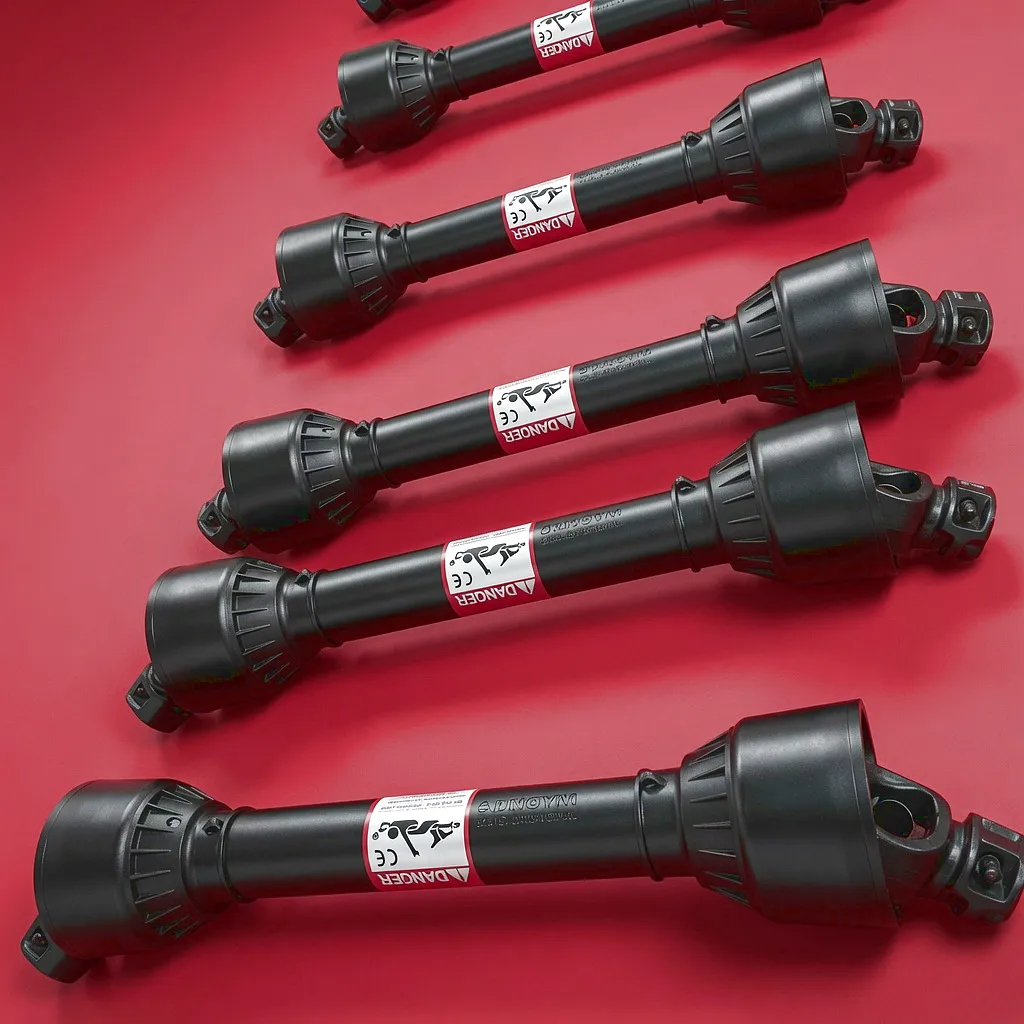
 Telescoping tubes form the mechanical heart of every PTO drive shaft assembly. On farms across Yorkshire and Lincolnshire, on construction sites in the Midlands, and in fabrication plants throughout Sheffield and Birmingham, these sliding inner-outer tube sets absorb the constant length changes that happen whenever a tractor turns, a machine lowers into the soil, or a hydraulic attachment shifts its angle of attack. They look straightforward — two profiled steel sections that slide within each other — but the engineering tolerances they depend upon are remarkably tight. A gap of just a fraction of a millimetre between the inner and outer tube can translate into measurable vibration, uneven torque delivery, and accelerated wear at the universal joint crosses. Over time, contamination, seasonal exposure to moisture, fertiliser residue, and the sheer mechanical cycling of a working season combine to degrade that precision fit.
Most breakdowns attributed to universal joint failure actually originate in an overlooked telescoping section. The joint fails because it has been running at exaggerated working angles caused by a bent or corroded tube, or because vibration originating in a worn sliding interface has fatigued the bearing caps. Knowing how to inspect the telescoping assembly systematically — measuring wall wear, identifying surface corrosion types, checking protective covers, and evaluating lubrication condition — can extend the working life of a PTO drive shaft by years and prevent the kind of sudden field failure that costs far more in downtime than a replacement shaft ever would.
Need a replacement telescoping tube or a full PTO drive shaft assembly?
Ever Power engineers custom profiles and standard series for every application. Reach out today.
Understanding What the Telescoping Tube Actually Does
A PTO drive shaft connects a tractor or prime mover to an implement, transmitting rotational power that typically operates at 540 RPM or 1,000 RPM depending on the application. During field work, the distance between the tractor’s output shaft and the implement’s input shaft changes continuously — particularly when navigating undulating ground, headland turns, or adjusting working depth. The telescoping section accommodates this length variation while maintaining torque transmission. It achieves this through a precisely machined inner tube that slides within a profiled outer tube. The cross-sectional profile — most commonly a lemon, triangular, star, or splined form — prevents relative rotation between the two members while permitting axial movement.
The clearance between inner and outer tube is intentional but critical. Too tight and the shaft cannot slide freely under load, causing binding, stress concentrations, and sudden stall. Too loose and the torque path becomes imprecise, generating impact loads at each reversal of backlash — exactly the kind of dynamic stress that fractures universal joint bearing caps. Most commercial profiles are manufactured to an interference clearance of 0.1 mm to 0.5 mm in the new condition. As the profiles wear through repeated sliding under load, that gap grows. When it reaches 2 mm or more across the contact faces, vibration becomes perceptible to the operator and measurable with basic instrumentation. At that point, the tube set is well past its serviceable life, and the risk of catastrophic failure rises sharply.
The profile shape matters enormously for wear pattern analysis. Lemon (two-lobe) profiles concentrate contact on two opposing faces, meaning wear is distributed between just two load-bearing zones. Triangular (three-lobe) profiles spread the load more evenly. Splined sections, used on heavy-duty agricultural and industrial shafts, offer the greatest torque capacity but require more rigorous inspection because wear is distributed across multiple teeth, each of which can fail individually. Knowing the profile type before you inspect helps you understand where to look for the earliest signs of material loss and surface degradation.
Preparing for a Safe and Effective Inspection
Before any physical inspection begins, safety must take absolute precedence. PTO drive shafts on agricultural and industrial machinery present serious entanglement hazards when the power source is live. The UK Health and Safety Executive’s guidance on PTO machinery specifies that inspection and maintenance must always be carried out with the prime mover fully shut down, the PTO disengaged and confirmed stationary, and where possible the key removed from the ignition. On equipment with hydraulic systems — common in farm machinery across East Anglia and the Fens — residual hydraulic pressure can cause unexpected movement even after engine shutdown, so the implement must be fully lowered to the ground or positively locked before the operator approaches the driveline.
Shut down the tractor or prime mover completely. Disengage the PTO and wait for all rotation to stop. Remove the ignition key and place it in your pocket.
Lower the implement fully to the ground. If the implement cannot be lowered, use approved stands or blocks. Never work under a suspended load.
Wear appropriate PPE: heavy gloves to protect against sharp edges and burrs, eye protection if you are pressure-washing the assembly, and steel-toed footwear.
Clean the shaft assembly before inspection. Caked mud and crop residue hide the very cracks and corrosion zones you are looking for. Use a stiff brush and, where accessible, a low-pressure water wash followed by air drying.
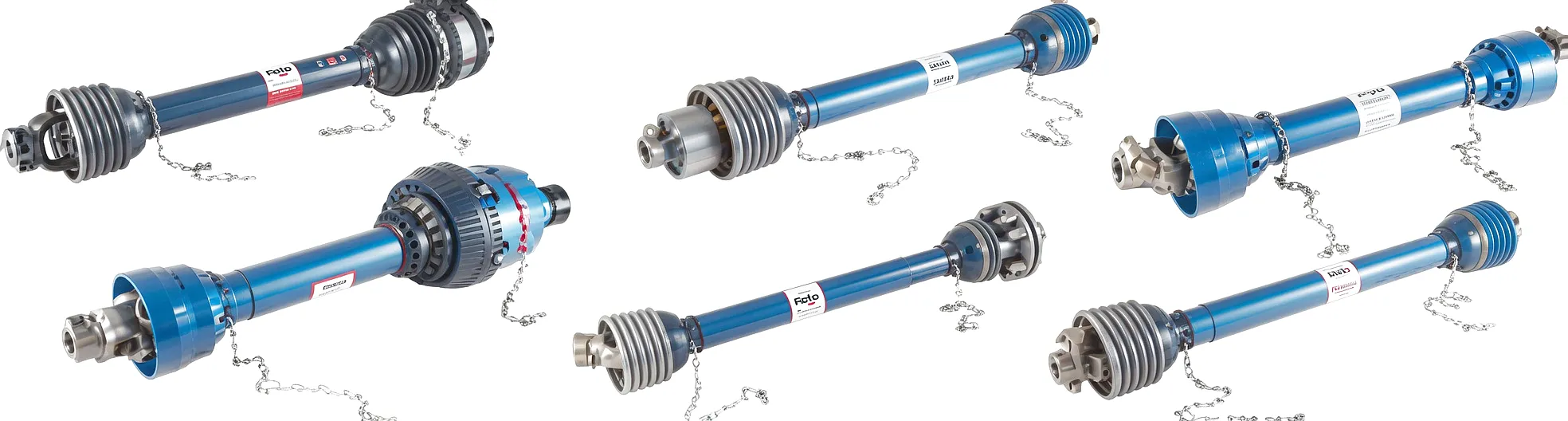
Once you have a clean, stationary, and safe assembly in front of you, you need a few basic tools to conduct a thorough inspection. A steel rule or vernier calliper for measuring tube diameter and wall thickness, a feeler gauge set for checking telescoping clearance, a strong torch, and a marker pen to note measurement locations are the minimum requirement. For more formal inspections — as expected by machinery dealerships and agricultural contractors working to ISO maintenance schedules — a digital micrometer and inspection mirror round out the toolkit.
How to Inspect Telescoping Tubes for Mechanical Wear
Mechanical wear in telescoping tubes presents itself in several distinct forms, and recognising each type tells you something different about the operational history and the likely failure mode. The most common pattern is abrasive wear along the contact faces of the profile. This appears as a smooth, burnished strip running along the high points of the inner tube’s profile, typically extending across the full sliding length that the tube traverses during normal operation. On a lemon-profile tube, you will see two such strips on directly opposite faces. On a triangular profile, three strips are present at 120-degree intervals. When these strips feel noticeably depressed compared to the surrounding surface — run your fingernail across the transition — the wear has progressed beyond the run-in phase and material removal is occurring at a rate that will affect clearance within one or two operating seasons.
A second wear mechanism is impact wear, which produces a different surface texture: small craters, pitting, or a rippled appearance rather than smooth burnishing. This indicates that the tube has been operating with excessive clearance, allowing the inner to rattle within the outer during rotation. The resulting low-level impacts gradually erode the contact faces in an irregular pattern. Impact wear accelerates abrasive wear by breaking up the lubricant film and introducing hard wear debris into the sliding interface. On older shafts that have been used without adequate lubrication maintenance — a common finding during pre-season inspections on farms in the North of England where shafts may sit unused through a wet winter — impact pitting is often found alongside heavy corrosion, making it difficult to distinguish wear from corrosion damage without measurement.
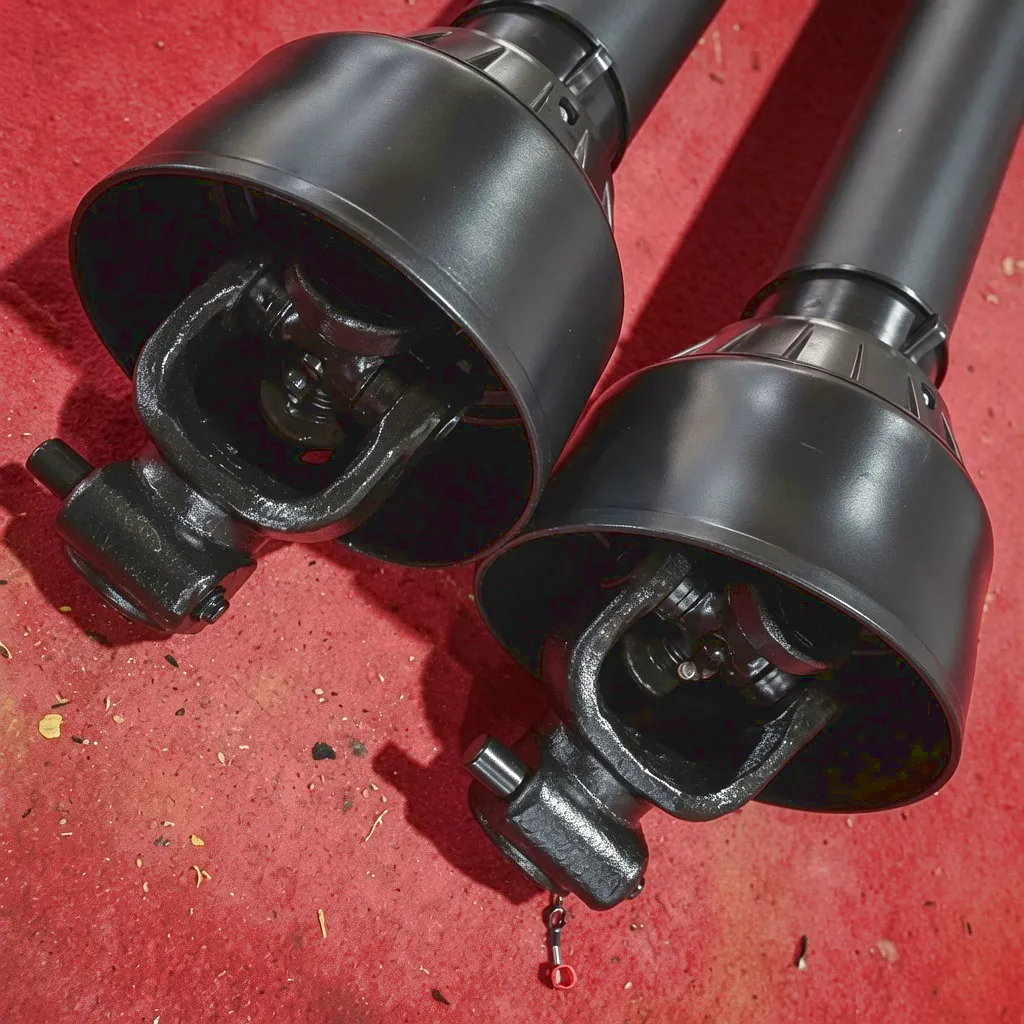
Slide the inner tube to its maximum extension, then measure clearance with feeler gauges at multiple points around the profile circumference. Record values at both the full-extension and mid-stroke positions — uneven wear often produces a tapered clearance that is greater at one end.
The measurement process for clearance involves extending the inner tube to its operational limit and inserting feeler gauges between the inner and outer tube at the contact faces. For a lemon profile, measure at both contact zones. For splined profiles, measure at several adjacent spline teeth. A clearance below 1.0 mm indicates acceptable condition. Values between 1.0 mm and 1.8 mm should be flagged for monitoring and a lubrication service performed immediately. Any measurement above 2.0 mm indicates a tube set that should be removed from service and replaced before the next operational season. Some manufacturers, including Ever Power, publish specific clearance limits for each profile size in their product documentation, and these should always take precedence over general guidelines when they are available.
| Measured Clearance | Condition Assessment | Recommended Action | Urgency |
|---|---|---|---|
| 0 – 0.5 mm | As-new / Excellent | Continue standard lubrication schedule | No Action |
| 0.5 – 1.0 mm | Good / Normal Wear | Lubricate, re-inspect next service interval | Monitor |
| 1.0 – 1.8 mm | Moderate Wear — Attention Needed | Service immediately; source replacement tubes | Plan Replacement |
| 1.8 – 2.5 mm | Heavy Wear — Nearing Limit | Remove from service; replace before next use | Replace Soon |
| > 2.5 mm | Critical — Beyond Service Limit | Do not operate. Replace immediately | Stop & Replace |
Corrosion in Telescoping Tubes — Types, Causes, and How to Identify Each One
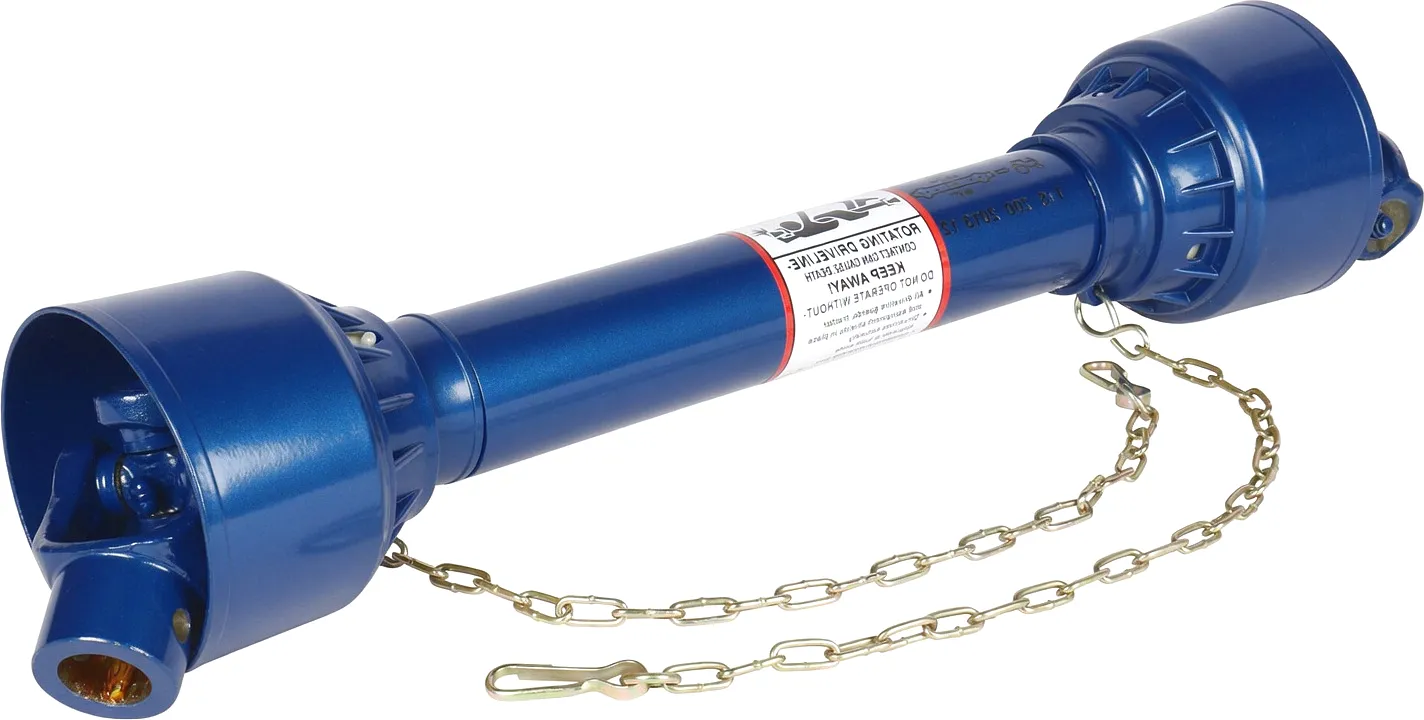 Corrosion is the single largest cause of premature telescoping tube failure in the UK’s agricultural sector. The combination of winter storage in damp environments, spring operation through waterlogged fields, exposure to nitrogen and potassium-based fertilisers, and the residue from crop protection chemicals creates a particularly aggressive corrosive environment. Unlike many continental climates, British weather oscillates frequently between wet and dry conditions within a single working week, which accelerates the electrochemical cycles that drive steel corrosion. Understanding the type of corrosion you are looking at is essential because each type has a different implication for tube integrity and remaining service life.
Surface oxidation — the familiar reddish-brown rust film — is the least serious form when caught early. It forms on unpainted or worn-coating areas and, while unsightly, typically represents a surface depth of less than 0.1 mm when the shaft has had only one or two exposed winters. Treat this by wire brushing the affected area to bare metal, cleaning with a solvent wipe, applying a penetrating anti-corrosion product, and re-coating with zinc-rich paint or grease depending on whether the location is on the tube body or the sliding interface.
The most dangerous form for structural integrity. Small, deep pits penetrate through the wall locally and act as stress concentration points. Common in areas where the protective cover has cracked and admitted moisture directly onto bare metal. Pits larger than 1.5 mm in diameter or deeper than 20% of wall thickness require immediate tube replacement.
Occurs in the gap between inner and outer tube, particularly at the overlap zone when the shaft is stored in a partially extended position. Moisture trapped in this crevice loses oxygen over time, creating a differential aeration cell. The result is accelerated metal loss precisely where it matters most — the sliding contact interface. Inspect by extending the tube fully and examining the area that was previously covered.
Occurs when the steel tube makes electrical contact with a dissimilar metal component — such as an aluminium protective cone, brass grease nipple, or cast-iron yoke — in the presence of an electrolyte such as water with dissolved fertiliser salts. The less noble metal corrodes preferentially. Check the interface between tube and yoke components carefully, particularly on retrofit assemblies where the coupling hardware may be from a different manufacturer.
Fretting corrosion deserves particular attention because it is often misidentified as mechanical wear. It occurs at the sliding interface when small-amplitude oscillation displaces the lubricant film and allows the metal surfaces to make direct contact under the cyclic stress of PTO operation. The result is a reddish-brown powder — iron oxide — mixed with small metallic particles at the interface, often described as “rust dust” rather than conventional rust. If you find this material when pulling the inner tube out for inspection, the surface texture beneath it will show fine scoring aligned with the direction of oscillation. Fretting corrosion progresses faster than abrasive wear and reduces wall thickness more unevenly, making measurement at multiple points around the profile circumference essential.
The Protective Cover — Its Role in Tube Longevity and What to Look for When It Fails
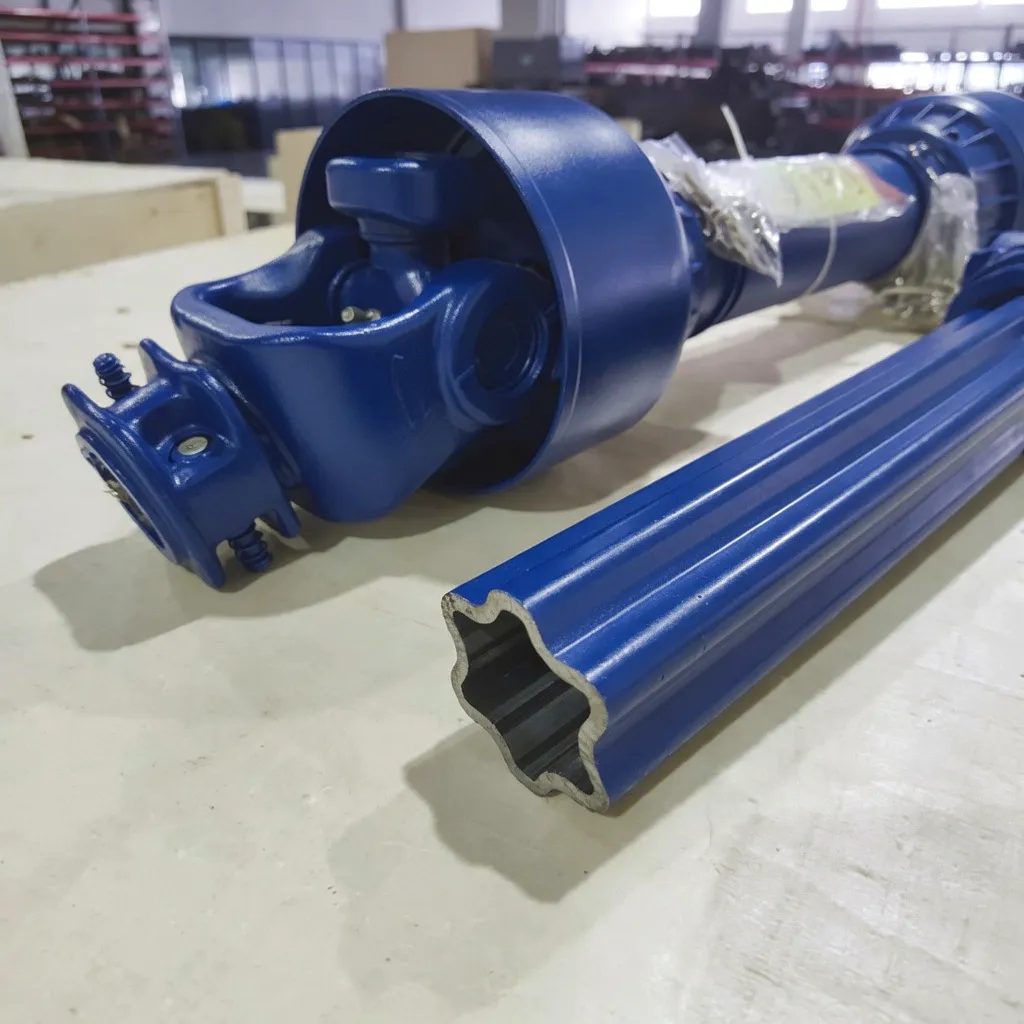 The plastic safety guard that surrounds the PTO drive shaft assembly serves a dual purpose that is frequently underestimated. Its primary function in UK health and safety regulation is to prevent operator contact with rotating components — under the Health and Safety at Work Act and specifically the PUWER Regulations 1998, all rotating PTO shafts used by agricultural contractors and farm businesses must be guarded throughout their operational length. But the cover also acts as the first line of environmental protection for the telescoping tubes beneath it. A well-fitting, undamaged cover keeps mud, water, crop residue, and chemical splatter away from the tube surfaces and, critically, away from the grease that lubricates the sliding interface.
When inspecting telescoping tubes, always inspect the protective cover first. A cracked or split cover indicates that the assembly has suffered an impact — either from striking ground obstructions or from an object entering the drive line. Any impact severe enough to crack the cover may have also bent the inner tube slightly, which will appear as uneven radial clearance when you measure after cover removal. Covers missing their end caps — the cone-shaped components that seal each end of the guard — allow ingress of straw, soil, and moisture directly into the overlap zone of the telescoping section, accelerating all forms of corrosion described above.
Cover rotates freely around the shaft when you spin the shaft by hand — correct operation
End caps intact and seated fully — no gaps allowing debris ingress
Cover binds on the shaft during rotation — bearing or chain inside guard may be seized
Any visible cracks, splits, or missing sections — replace immediately; do not operate without full guarding
Reading Lubrication Condition as Part of the Wear Inspection
The grease condition visible when you slide the inner tube out of the outer provides a diagnostic record of the shaft’s recent operating history that complements your dimensional measurements. Fresh, correctly specified grease — a lithium-complex or NLGI Grade 2 product with EP additives is standard for telescoping tube applications — should appear as a uniform, smooth layer across the contact faces, yellowish to light brown in colour, free of hard lumps or dark discolouration. Any significant deviation from this baseline is telling you something about the environment the shaft has been working in and the adequacy of the lubrication service it has received.
Indicates contamination with wear particles and oxidised metal. A sign that lubrication intervals have been missed or that the grease type used has insufficient oxidation resistance for the operating temperature.
Water contamination has broken down the grease structure. The film-forming ability of the lubricant is severely compromised. This is common on shafts used in irrigation applications or on implements working in permanently saturated soils in the Somerset Levels or similar low-lying areas.
The grease has been ejected from the interface or has oxidised and hardened until it no longer provides a fluid film. This condition causes rapid abrasive and adhesive wear. Inspect the contact faces carefully for scoring lines running parallel to the tube axis.
Contaminated lubricant acts as a lapping compound, accelerating abrasive wear on all contact surfaces. Check the condition of the cover seals and end caps, as soil ingress means they are not functioning correctly. The interface must be thoroughly cleaned and re-greased before any further assessment of surface condition.
After noting the lubricant condition, clean the tube surfaces with a lint-free cloth and a suitable parts-cleaning solvent before attempting to assess surface condition. Attempting to evaluate metal surface condition through contaminated grease produces unreliable results. Once clean and dry, the surfaces should be examined in good light — ideally natural daylight supplemented by a directional torch held at a shallow angle to reveal surface relief. Scoring lines, pitting, and fretting oxide deposits all become clearly visible under raking light that would be invisible under direct illumination.
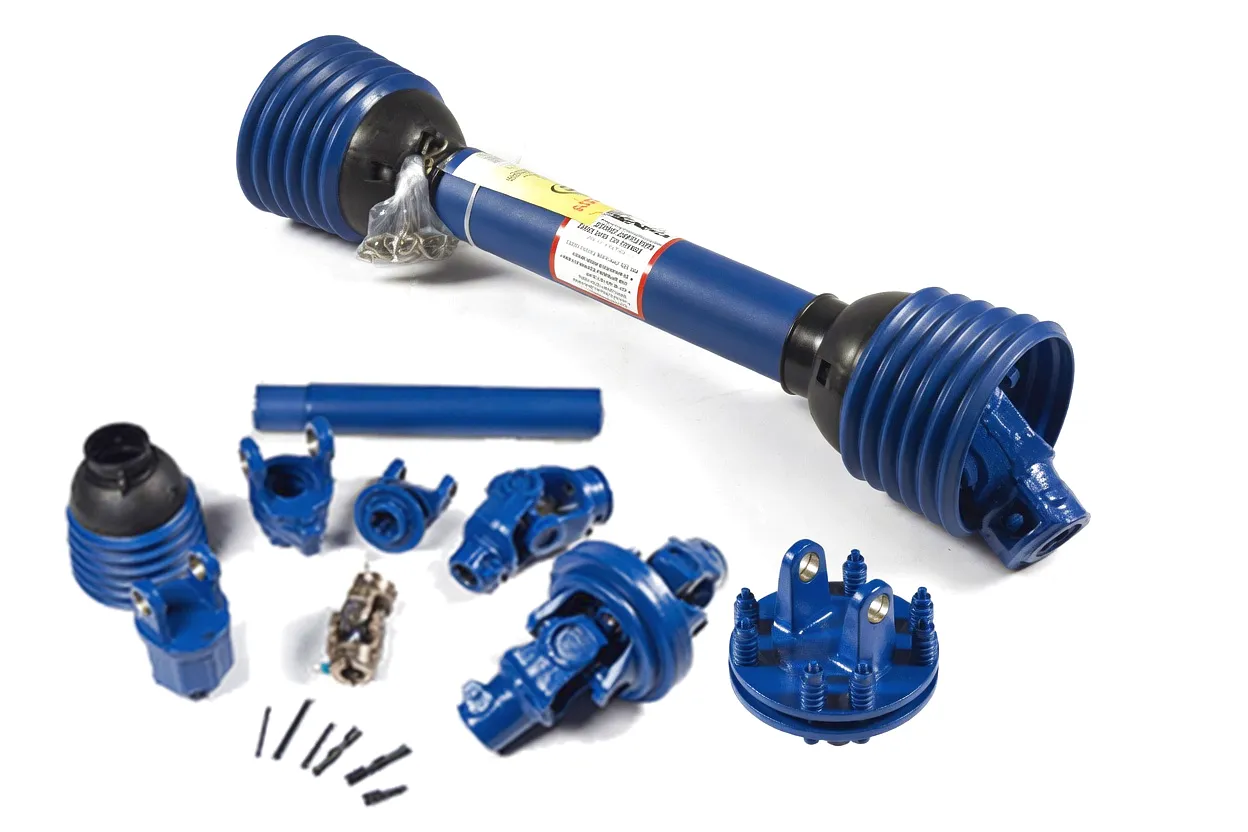
PTO Drive Shaft Telescoping Tube — Technical Specification and Performance Parameters
The following parameters represent the principal technical specifications for Ever Power’s standard range of telescoping tube assemblies, covering the most common agricultural and light-industrial PTO applications in the UK market. Custom profiles and material specifications are available on enquiry.
| パラメータ | Lemon Profile | Triangular Profile | Star (6-lobe) Profile | Splined (Z6) |
|---|---|---|---|---|
| Outer Diameter Range | 38 – 70 mm | 38 – 90 mm | 45 – 100 mm | 50 – 120 mm |
| Max Torque Rating | Up to 800 Nm | Up to 1,500 Nm | Up to 2,500 Nm | Up to 4,000 Nm |
| 動作速度 | 540 / 1,000 RPM | 540 / 1,000 RPM | 540 / 1,000 RPM | Up to 1,200 RPM |
| Wall Thickness (New) | 3.5 – 5.0 mm | 4.0 – 6.0 mm | 4.5 – 7.0 mm | 5.0 – 10.0 mm |
| 主要素材 | C35E / C45 Carbon Steel | C45 / 42CrMo4 | 42CrMo4合金鋼 | 42CrMo4 / 40Cr |
| 表面処理 | Zinc phosphate + grease | Zinc phosphate + grease | Induction hardened + epoxy | Case-hardened + zinc primer |
| Sliding Length Range | 100 – 450 mm | 100 – 500 mm | 120 – 600 mm | 150 – 800 mm |
| New Clearance (Mfg.) | 0.1 – 0.3 mm | 0.1 – 0.4 mm | 0.1 – 0.4 mm | 0.05 – 0.25 mm |
| Service Limit Clearance | 2.0 mm | 2.0 mm | 2.5 mm | 1.5 mm per flank |
| Grease Type (Recommended) | NLGI 2 EP Lithium Complex | NLGI 2 EP Lithium Complex | NLGI 2 MoS2-enhanced | NLGI 2 MoS2-enhanced |
| Working Angle (Max) | 15° (dependent on joint type) | 15° (dependent on joint type) | 25° with CV joint | 30° with CV joint |
UK Industrial and Agricultural Application Scenarios Where Telescoping Tube Inspection Is Critical
Telescoping tube wear and corrosion present differently depending on the application environment. The following scenarios represent the most demanding PTO drive shaft operating contexts found across British industry and agriculture, each with distinct inspection priorities.
When Should Inspection Happen?
Agricultural: Before each season, after every 200 operating hours, and immediately after any impact or shock-load event.
Industrial continuous-duty: Every 200–500 hours depending on application severity.
Forestry / High-shock: Before each contract and immediately after any stall or blockage event.
Ever Power — Precision Telescoping Tube Manufacturing and Custom Solutions
Ever Power has supplied PTO drive shaft components and complete shaft assemblies to agricultural machinery dealers, OEM manufacturers, and industrial equipment builders across the UK and Europe for over two decades. The telescoping tube product range reflects a manufacturing philosophy built on dimensional precision, material integrity, and the recognition that the tube set is the component that makes or breaks the service life of an entire driveline system. Every tube profile — lemon, triangular, star, or splined — passes through CNC cold-forming or precision extrusion processes that hold tolerances to within 0.05 mm of nominal dimension throughout the full tube length, not just at the ends where measurement is easiest.
Non-standard profiles, wall thicknesses, and material grades available. Engineering drawings accepted directly from OEM customers. Prototype lead time as low as 10 working days.
C45, 42CrMo4, 40Cr available as standard. Induction hardening, zinc phosphate, hot-dip galvanising, and epoxy powder coating available for enhanced corrosion and wear performance in demanding UK environments.
Stock held in standard profile sizes for rapid despatch to agricultural merchants and machinery repairers across England, Scotland, and Wales. DDP pricing available. Palletised delivery to dealer premises within 3–5 working days for standard orders.
ISO 9001:2015 certified manufacturing processes. Full dimensional inspection reports and material certification available on request. Every tube is inspected for straightness (max 0.3 mm per metre deviation) before despatch.
Request a custom tube specification or check stock availability
Our technical team responds to quotation requests within one business day.
Customer Success Story — Grimsby-Based Agricultural Contractor Reduces Shaft Downtime by Over 60%
 Northfield Agricultural Services, an arable contracting business operating across the Lincolnshire Wolds and the Humber lowlands, was experiencing an average of four PTO駆動シャフト failures per harvesting season across its fleet of 11 tractors and associated equipment. The company’s workshop records showed that three of those four failures were attributable to telescoping tube issues — either tubes seized from corrosion that was only discovered during a breakdown, or tubes worn beyond their service limit causing universal joint failure at the yoke attachment point. Each failure in the field during combine header operation cost the business an average of four hours of productive time plus the cost of emergency parts procurement, which frequently meant premium-rate courier deliveries from agricultural suppliers in Boston or Gainsborough.
The workshop manager contacted Ever Power to discuss whether a structured inspection and replacement programme, combined with a switch to a higher-specification tube set for the most intensively used shafts, could address the problem systematically. Ever Power’s technical team reviewed the equipment list and operating conditions, recommending 42CrMo4 triangular-profile tubes with MoS2-enhanced grease for the forage harvester and mower conditioner applications, and standard C45 lemon-profile tubes with an accelerated greasing schedule for the power harrow and fertiliser spreader shafts. The Ever Power team supplied a simple clearance measurement card for each shaft model, laminated and hung in the workshop, specifying the go/no-go feeler gauge dimensions for that particular profile.
Over the following two harvesting seasons, Northfield Agricultural Services recorded zero telescoping tube failures during operational periods. The inspection routine — carried out by the farm’s own workshop staff using the feeler gauge cards — identified two tubes at their service limit before the second season. Those tubes were replaced during a scheduled maintenance window in April, with Ever Power delivering the parts within four days of the order being placed. The business calculated that the combined saving in avoided breakdown time and emergency parts costs across the two seasons exceeded the total investment in the new tube sets and the small amount of additional maintenance labour involved.
“The difference in dimensional consistency between the Ever Power triangular tubes and what we had been buying locally is immediately obvious when you put a vernier on them. Every set we measured came within 0.1 mm of the stated clearance. After two seasons without a telescoping failure, the case for sticking with them is straightforward.”
“We had a 540 RPM forage harvester shaft that we could not keep from vibrating above certain engine loads. Two universal joint changes did not solve it. When Ever Power suggested checking the telescoping clearance and it measured at 2.4 mm, everything made sense. The replacement tube was despatched next-day and the vibration disappeared immediately.”
“The MoS2-enhanced grease recommendation made a real difference in our wood chipper application. Previously we were servicing the shaft every 150 hours; now we are at 300 hours with no evidence of fretting in the profile. Ever Power’s technical advice was genuinely useful rather than just telling us to buy more product.”
よくある質問
Ready to Replace or Upgrade?
Get Expert Support from Ever Power’s Technical Team
Whether you need standard replacement tube sets, custom-profile solutions, or technical guidance on a specific application, our engineering team is here to help.
📧 Contact Ever Power — [email protected]
gzlによる編集