PTO Drive Shafts · Technical Guide · UK Edition
Seasonal PTO Shaft Storage:
Cleaning, Coating & Inspection Steps
A professional maintenance protocol for UK agricultural and industrial operators — protecting your investment through every off-season.
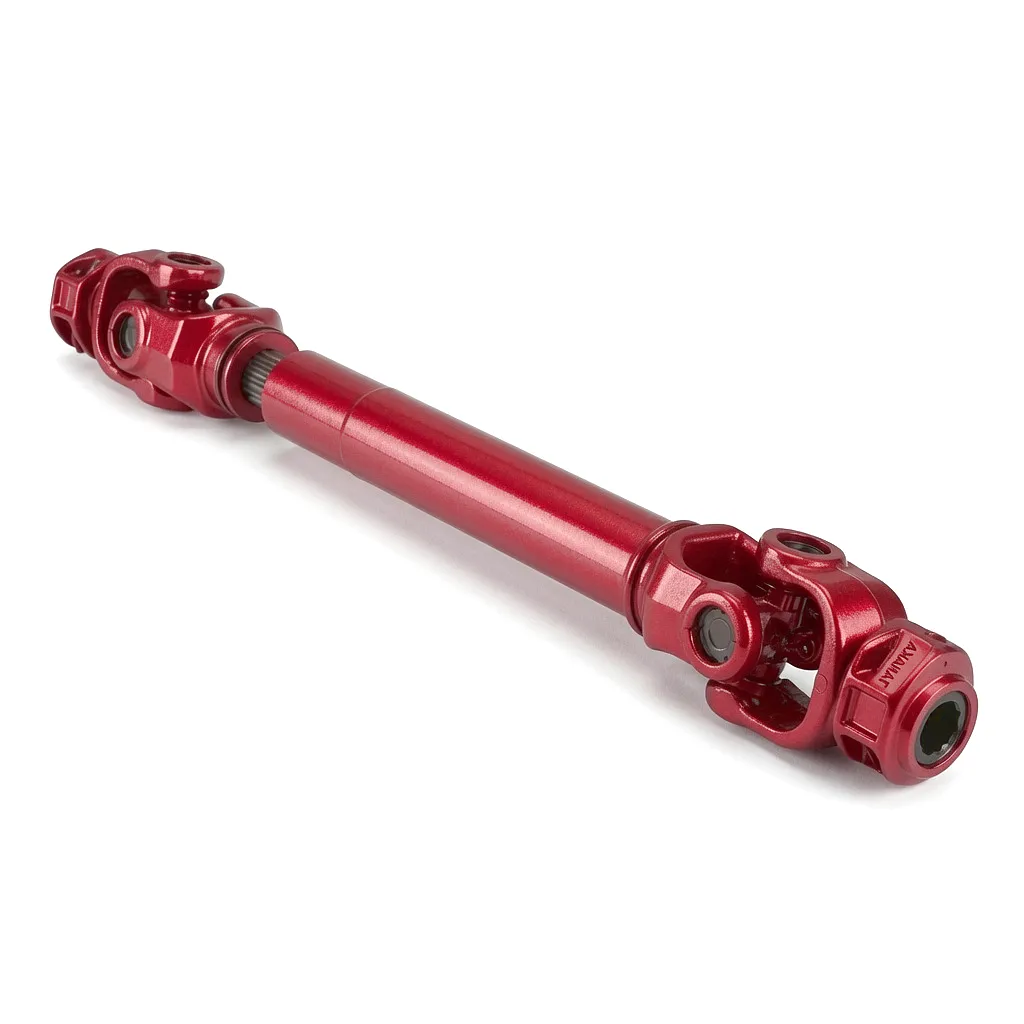 A PTO drive shaft is not a set-and-forget component. Across Britain’s agricultural heartlands — from the Lincolnshire fens to the Welsh borders and the arable plains of East Anglia — these hardworking shafts endure months of punishing field operation: vibration, moisture, soil contamination, and relentless torque cycles. When the harvest is in and equipment moves to winter shelter, what happens next to your PTO drive shaft will determine whether it starts the spring season running smoothly or demands costly emergency repair. Proper seasonal storage is not simply a matter of tidying the barn; it is a precision maintenance procedure that protects universal joints, telescopic tubes, safety guards, and bearing surfaces from the twin threats of corrosion and mechanical fatigue.
Operators in Sheffield’s light engineering sector, farmers running mixed livestock and arable enterprises in Yorkshire, and groundscare contractors servicing estates across Surrey all share the same vulnerability: a PTO drive shaft stored without a structured protocol will deteriorate invisibly. Surface rust penetrates yoke bores. Dried crop residue traps moisture against shaft tubes. Guard bushes harden and crack. The cost of a seized universal joint or a collapsed telescopic section discovered at spring planting is dramatically higher than the hour or two invested in systematic end-of-season care. This guide delivers that system — step by step, material by material, component by component.
Why Off-Season Storage Determines Long-Term PTO Shaft Life
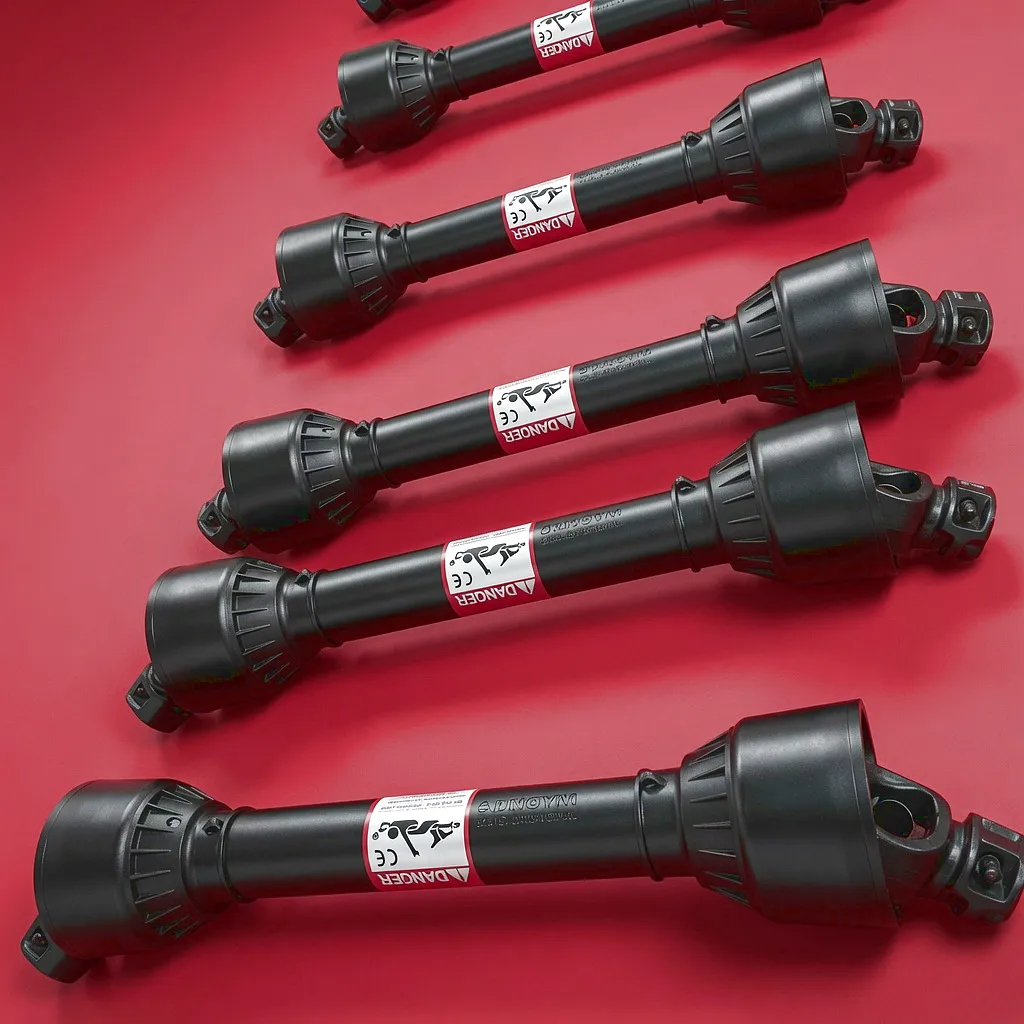 The steel alloys used in PTO drive shaft construction — typically 20CrMnTi or 40Cr for yokes and cross kits, with seamless drawn tubes in SAE 1020 or equivalent — are engineered for strength under load, not passive corrosion resistance. When a shaft sits idle for four to six months in a damp UK outbuilding, electrochemical reactions accelerate dramatically. A single millimetre of surface rust on a splined yoke bore can translate to measurable play in the connection to the tractor or implement, generating fretting wear that propagates into the shaft body itself. In Birmingham’s subcontracting machine shops, engineers routinely encounter PTO drive shaft assemblies that have suffered more damage during storage than during their entire operating season — and the root cause is almost always the same: no post-season cleaning, no corrosion inhibitor, no moisture control.
British weather compounds every risk. The climate between October and March delivers persistent humidity, cycling freeze-thaw events, and condensation that penetrates even seemingly well-sealed sheds. A PTO drive shaft hanging on wall hooks in an unheated Derbyshire barn will experience dozens of condensation cycles before February. Without a protective coating on the sliding surfaces and a light grease film on the universal joint crosses, each of those cycles deposits a thin layer of corrosion product that gradually seizes telescopic movement and increases rolling resistance in the bearing cups. The consequence is not always a dramatic failure; more often it is a subtle efficiency loss — slightly elevated tractor PTO fuel consumption, marginal vibration at operating speed, barely perceptible binding — that goes unnoticed until a joint lets go mid-season.
4–6
Months typical UK off-season
85%
Of failures traceable to improper storage
>60%
Longer service life with full protocol
Step One: Thorough Cleaning — What to Remove and How
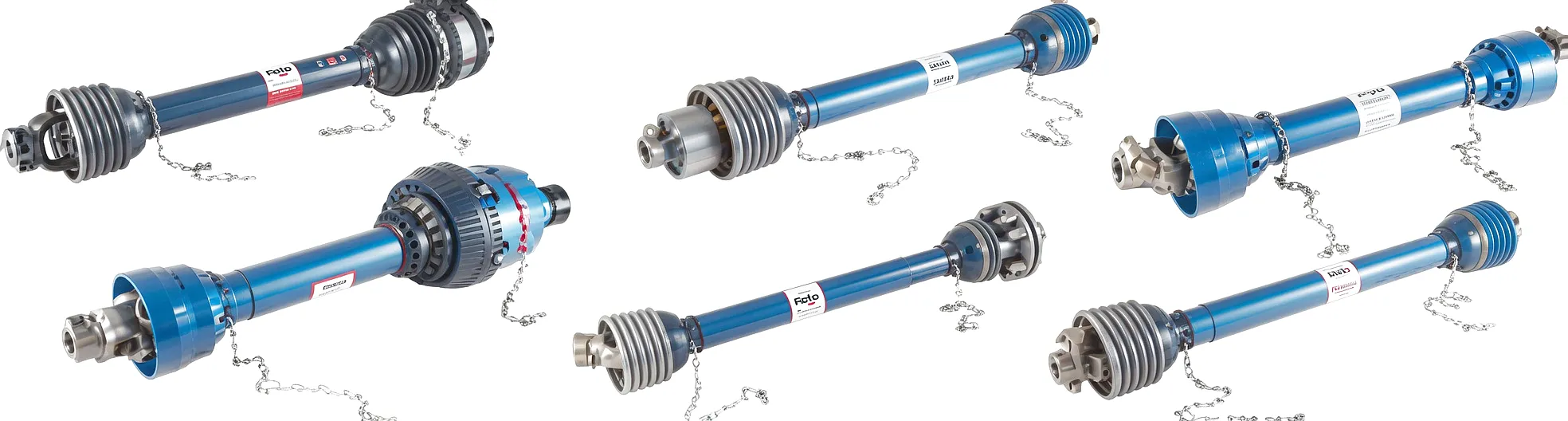
Cleaning a PTO drive shaft before storage is not a cosmetic exercise — it is the single most consequential step in the entire protocol. Agricultural crop material (silage residue, cereal chaff, soil, slurry) is hygroscopic; it absorbs and retains atmospheric moisture, pressing it directly against shaft metal surfaces for months. The cleaning sequence must be systematic: begin with the outer safety guard assembly, working from the implement end toward the tractor end. Remove guard halves where the design permits — most wide-angle PTO drive shaft assemblies used on front loaders and tedders around Yorkshire allow guard removal for cleaning. Using a high-pressure wash with water temperature between 40°C and 60°C removes most biological material efficiently without thermally stressing seals.
After pressure washing, the shaft must be dried immediately and completely. Leaving any moisture film — even a thin one — on the telescopic tube surfaces is counterproductive. Compressed air is the tool of choice in a well-equipped workshop; in the field, a combination of clean lint-free rags and patience achieves the same result. Pay specific attention to the interior of the outer tube where it overlaps the inner tube: this annular gap is exactly where corrosion initiates in neglected PTO drive shaft assemblies, because water enters during operation and surface tension prevents it from draining freely.
● Outer Guard Shells
Pressure wash, inspect for cracking at mounting points, check retaining chains
● Telescopic Tubes
Extend fully, wipe bore interior, remove all crop residue from spline profiles
● Universal Joint Crosses
Flush old grease from bearing cups; remove grit embedded in needle-roller cavities
● Yoke Connections
Clean splined bores and securing mechanisms; remove soil from locking grooves
Step Two: Systematic Inspection — Finding What the Season Has Done
With the shaft clean and dry, a structured inspection identifies components that need replacement before storage, not after. This timing matters: sourcing parts and completing repairs in autumn is almost always cheaper and faster than emergency procurement during spring planting when demand peaks across UK agricultural supply chains. The inspection covers four main systems, and each has distinct failure signatures that an experienced eye can read clearly once the surface contamination is removed.
🔍
Universal Joint Cross Inspection
Rotate each yoke through its full angular range while holding the cross stationary. Any roughness, clicking, or binding in the needle-roller bearing cups indicates wear that will worsen under torque. In PTO drive shafts used on heavy-duty tillage equipment in areas like Northumberland or the East Yorkshire Wolds, cross kit wear frequently appears first in the trunnion closest to the tractor end, where angular velocity fluctuation is greatest. A worn cross that passes an off-season inspection will almost certainly fail within the first hundred hours of the new season — and field repairs are expensive in both downtime and labour cost.
⚙
Telescopic Section Assessment
Extend the inner tube fully and measure the radial play between inner and outer profiles. For a standard agricultural PTO drive shaft operating at 540 or 1000 rpm, maximum permissible radial play is typically 0.5 mm for lemon-profile tubes and 0.4 mm for triangular-profile designs. Beyond those thresholds, vibration at operating speed becomes significant and accelerates wear across the entire drivetrain. Measure at three points along the extension range — at minimum, mid, and maximum extension — because uneven wear patterns reveal specific loading histories and help diagnose whether the implement is being operated at the correct working length.
🛡
Safety Guard and Bearing Ring Check
The safety guard is not merely a compliance feature mandated under UK PUWER regulations — it is a structural element that protects the rotating shaft from external impact and limits the debris loading that reaches the shaft body. Inspect the plastic guard shells for UV degradation (chalking surface, loss of flexibility), impact damage, and cracking at the locating bush seats. Guard bearing rings — the plastic or composite bearings at each end that allow the guard to remain stationary while the shaft rotates — are wear items that must be replaced if they show flattening, splitting, or abnormal gap at the shaft contact point.
🔔
Yoke and Connection Hardware
Push-pin yokes, interfering bolt yokes, and ball attachment yokes all use different securing mechanisms that have distinct wear patterns. A push-pin assembly should engage with a positive, spring-loaded click; any mushrooming or deformation of the pin indicates it has been subjected to overload or incorrect fitment. Interfering bolt yokes require checking the bolt torque value — these should be verified against the shaft manufacturer’s specification, as undertightened bolts allow micro-movement that rapidly corrodes the interface. Splined connection bores should be inspected for fretting marks, which appear as reddish-brown staining between the spline flanks, indicating micro-slippage under load.
For operators running mixed fleets across several farms — a situation common in the contracting sector around Birmingham and Coventry where one business services multiple clients — a standardised inspection record card for each PTO drive shaft in the inventory is genuinely worth implementing. Recording cross kit condition, tube wear measurements, guard status, and any replacement parts fitted means that service intervals can be tracked and failure patterns spotted across the fleet before they become a seasonal liability.
Step Three: Coating and Lubrication — The Chemistry of Off-Season Protection
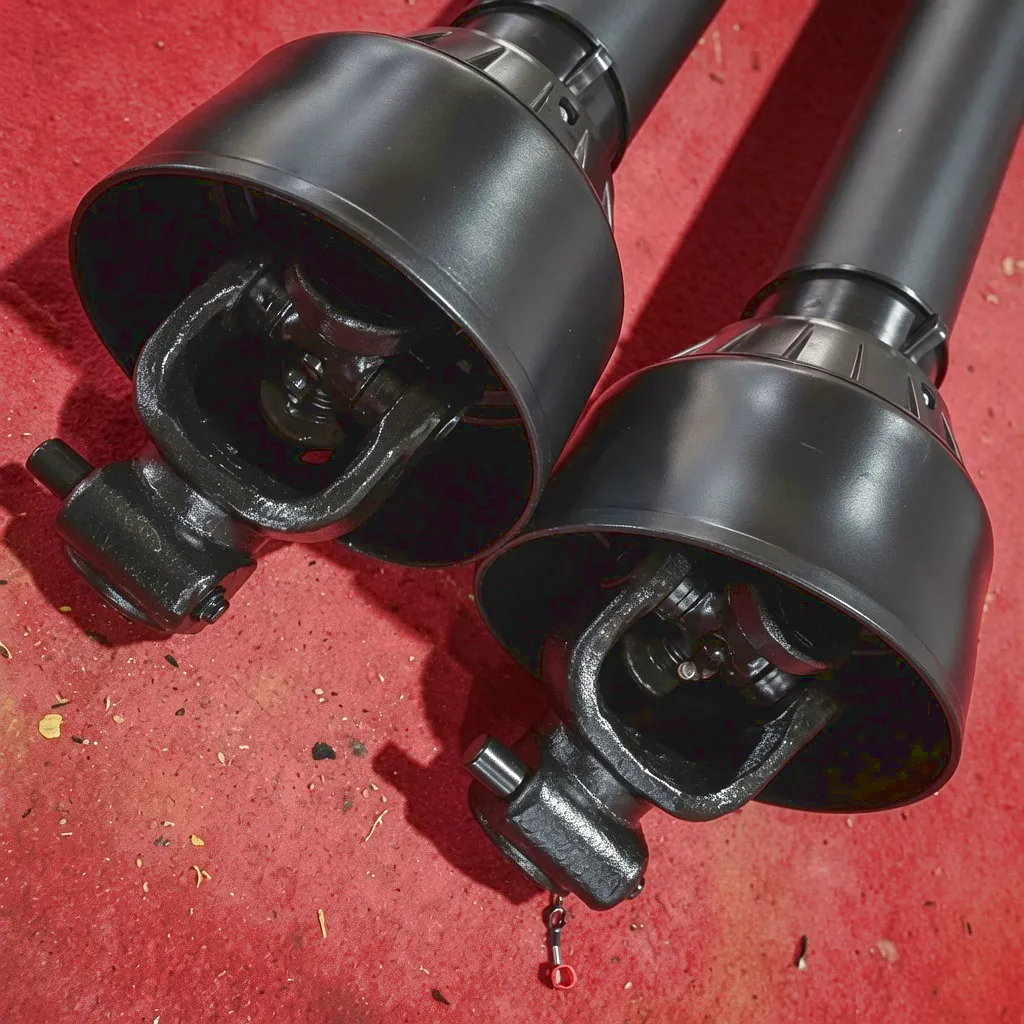 The coating and lubrication phase is where most operators make the most consequential errors — either through omission (applying nothing) or through using the wrong products on the wrong surfaces. A PTO drive shaft has at least three distinct tribological environments that require different protective chemistry: the greased bearing cups of the universal joint crosses, the sliding contact of the telescopic tube profiles, and the exposed external metal surfaces that face direct atmospheric corrosion. Treating all three with the same product is a common mistake that leads to preventable damage.
For universal joint bearing cups, a high-quality lithium complex grease with an NLGI Grade 2 specification is the standard choice across most UK agricultural machinery workshops. This type of grease maintains its consistency across the temperature range from -20°C to +120°C, meaning it neither runs out of the cups during warm summer storage nor becomes too stiff to lubricate effectively at the cold start-up temperatures common in a Cumbrian February. Apply grease through the cross kit nipples until fresh grease is visible emerging from each bearing cup seal — this confirms that old, contaminated grease has been purged from the assembly and that fresh lubricant is in contact with every needle roller.
For telescopic tube surfaces — particularly the profiles of lemon, triangular, and star tubes — the correct product is a moly-based (molybdenum disulphide) paste or a PTFE-enhanced anti-seize compound rather than conventional grease. These dry-film lubricants adhere to the profile flanks under pressure and resist the washing-out that affects grease-based lubrication on sliding surfaces. They also remain stable during long storage periods without separating or migrating away from the surfaces that need protection. Apply a thin, even film across the full accessible length of the inner tube profile, then retract the telescopic section to mid-position before storage — this ensures that both the protected inner surface and the mating outer surface are covered, and that no bare metal is exposed at the extended position.
| Component Zone | Recommended Product Type | Application Method | Muistiinpanoja |
|---|
| UJ Cross Bearing Cups | Lithium Complex EP2 Grease | Grease nipple, pump until fresh grease emerges | Replace cross if bearing play detected during inspection |
| Telescopic Tube Profile | MoS2 Anti-Seize Paste / PTFE Dry Film | Brush or applicator, thin even coat | Retract to mid-position after application |
| Yoke Splined Bores | Copper-based Anti-Seize or EP2 Grease | Manual application with clean cloth | Critical if shaft stored dismounted from tractor |
| External Steel Surfaces | Waxy Corrosion Inhibitor (e.g., Waxoyl-type) | Spray or brush, full coverage | Reapply mid-winter in high-humidity locations |
| Guard Bearing Rings (Plastic) | Silicone Spray or Dry PTFE Spray | Light spray application | Avoid petroleum-based products on plastic components |
| Push-Pin / Locking Mechanism | Light Machine Oil or Penetrating Fluid | Apply sparingly by dropper | Operate mechanism several times after application |
PTO Drive Shaft: Technical and Performance Parameters
Reference data for storage condition assessment and replacement planning
| Parametri | Standard Agricultural | Heavy-Duty Industrial | Wide-Angle Series |
|---|
| Torque Capacity (Nm) | 500 – 2,000 | 2,000 – 8,000 | 500 – 3,000 |
| Operating Speed (rpm) | 540 / 1000 | Up to 3,500 | 540 / 1000 |
| Maximum Operating Angle | 15° – 25° | 15° – 20° | Up to 80° |
| Tube Profile Type | Lemon / Star | Triangular / Gear | Star / Lemon |
| Yoke Material | 20CrMnTi / 40Cr Alloy Steel | 42CrMo4 (EN 10083) | 20CrMnTi Alloy Steel |
| Cross Kit Material | Case-hardened 20CrMnTi (58–62 HRC) | Through-hardened 42CrMo4 | Case-hardened alloy steel |
| Pintakäsittely | Yellow / green epoxy powder coat | Heavy-duty epoxy + phosphate | Epoxy powder coat + UV stabiliser |
| Max Permissible Tube Play (radial) | 0.5 mm (lemon); 0.4 mm (triangular) | 0.3 mm | 0.5 mm |
| Storage Temperature Range | -20°C to +50°C | -20°C to +50°C | -20°C to +50°C |
Optimal Storage Conditions: Environment, Position and Interval Checks
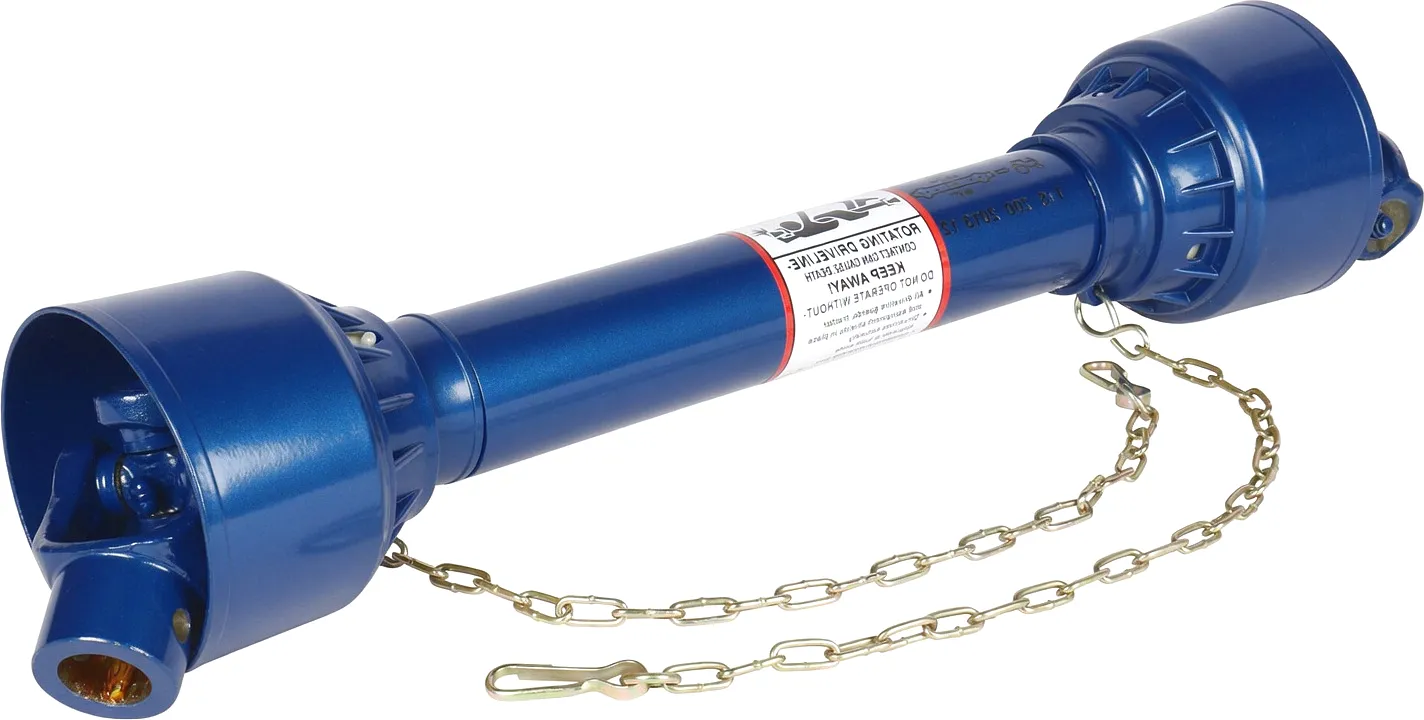 Even a perfectly cleaned and coated PTO drive shaft can deteriorate during storage if the physical storage environment is wrong. The ideal conditions are a covered, ventilated space with relative humidity below 60% and no direct contact with concrete floors or damp masonry. Concrete is alkaline and hygroscopic — a shaft resting directly on a concrete floor will develop contact corrosion at the contact points within weeks, and the cold mass of concrete will encourage condensation on the shaft body during warm spells. The recommendation from maintenance engineers serving the agricultural sector in areas such as Herefordshire and the Cheshire Plain is to store PTO drive shafts either hung horizontally on wall-mounted brackets or placed vertically in purpose-built shaft racks with wooden base blocks to prevent floor contact.
The question of horizontal versus vertical storage is not trivial. A PTO drive shaft stored horizontally with the telescopic section at mid-extension is under minimal mechanical stress and keeps grease distributed evenly across the bearing cup faces. Vertical storage — shaft hung from the implement-end yoke — places the weight of the assembly through the cross kit at the upper joint, which over a six-month period can cause the needle rollers to develop a false Brinell impression on the bearing cup surface. This micro-pitting is then a fatigue initiation site when the shaft returns to service under full operational torque. Horizontal storage, with the weight distributed across two support brackets positioned beneath the outer yokes rather than beneath the tube, eliminates this risk entirely.
A mid-storage inspection — typically around January in the UK agricultural calendar — is good practice for any shaft that will be stored for more than three months. Check that the corrosion inhibitor coating on external surfaces has not dried and cracked (a sign of insufficient initial application or unusually warm storage conditions), that no moisture has penetrated the telescopic section gap, and that the guard components have not suffered any impact damage if the storage area is shared with other machinery. This single mid-season check, taking fifteen to twenty minutes per shaft, can identify incipient problems at a stage where they remain easily remedied rather than requiring component replacement.
Application Scenarios: Where UK Industries Depend on PTO Drive Shafts
Understanding the working environment helps calibrate the storage protocol to match actual usage demands
🌾
Arable Farming — East Anglia and East Yorkshire
Cereal and root crop operations in Cambridgeshire and Lincolnshire use PTO drive shafts intensively from April through October on cultivators, mowers, and forage wagons. The accumulated chaff and dust loading during harvest means end-of-season cleaning here requires more attention than average — crop residue packs into every gap, and a compressed air blowdown before washing is essential to avoid creating mud during pressure washing. Shafts on stubble cultivators operating in stony soils around the Yorkshire Wolds also show accelerated yoke spline wear, making the connection hardware inspection particularly important in this context.
🏭
Industrial Power Transmission — Midlands Manufacturing
Birmingham and Coventry’s subcontract manufacturing base uses PTO drive shafts as intermediate couplings in process machinery — mixers, conveyors, and specialist test rigs. These applications rarely have a true seasonal storage cycle, but planned maintenance shutdowns during the Christmas fortnight and August plant closure present identical storage challenges. The industrial operating environment typically means more frequent exposure to chemical splatter and metalworking coolant, which can degrade standard grease formulations significantly faster than agricultural use. For shafts in these applications, a synthetic grease with higher oxidation resistance is the appropriate specification.
🌻
Groundscare and Estate Management — Across the UK
Local authority parks departments, National Trust estates, and private groundscare contractors from the Scottish Borders to the South Downs rely on PTO drive shafts for flail mowers, gang mowers, and aerators. These users often store shafts for extended periods when mowing finishes in October, and because the equipment is council or trust property, maintenance budgets are subject to seasonal procurement cycles. Getting the storage protocol right here prevents the need for emergency shaft replacements that fall outside the annual maintenance budget and create procurement headaches. Wide-angle shaft assemblies on offset mowers see particular stress at the universal joints and benefit from an additional mid-storage grease application.
⛽
Construction and Utilities — Compact Equipment
Compact tractor operators working on utility corridors, road verge maintenance, and small construction sites throughout the North of England use PTO drive shafts seasonally for post-hole borers, soil stabilisers, and compact cultivation equipment. Shafts in this sector see some of the most demanding use cycles — high-torque, low-speed applications that load the universal joints asymmetrically. After seasonal use on rocky or clay-heavy ground in areas like North Yorkshire and County Durham, the telescopic profile wear is often more severe than the universal joint wear, reversing the typical inspection priority order. These operators should also check the shear bolt protection devices fitted to many agricultural PTO drive shafts, as these may have been activated during overload events and require inspection even if no failure occurred.
Why Material and Manufacturing Quality Define Storage Durability
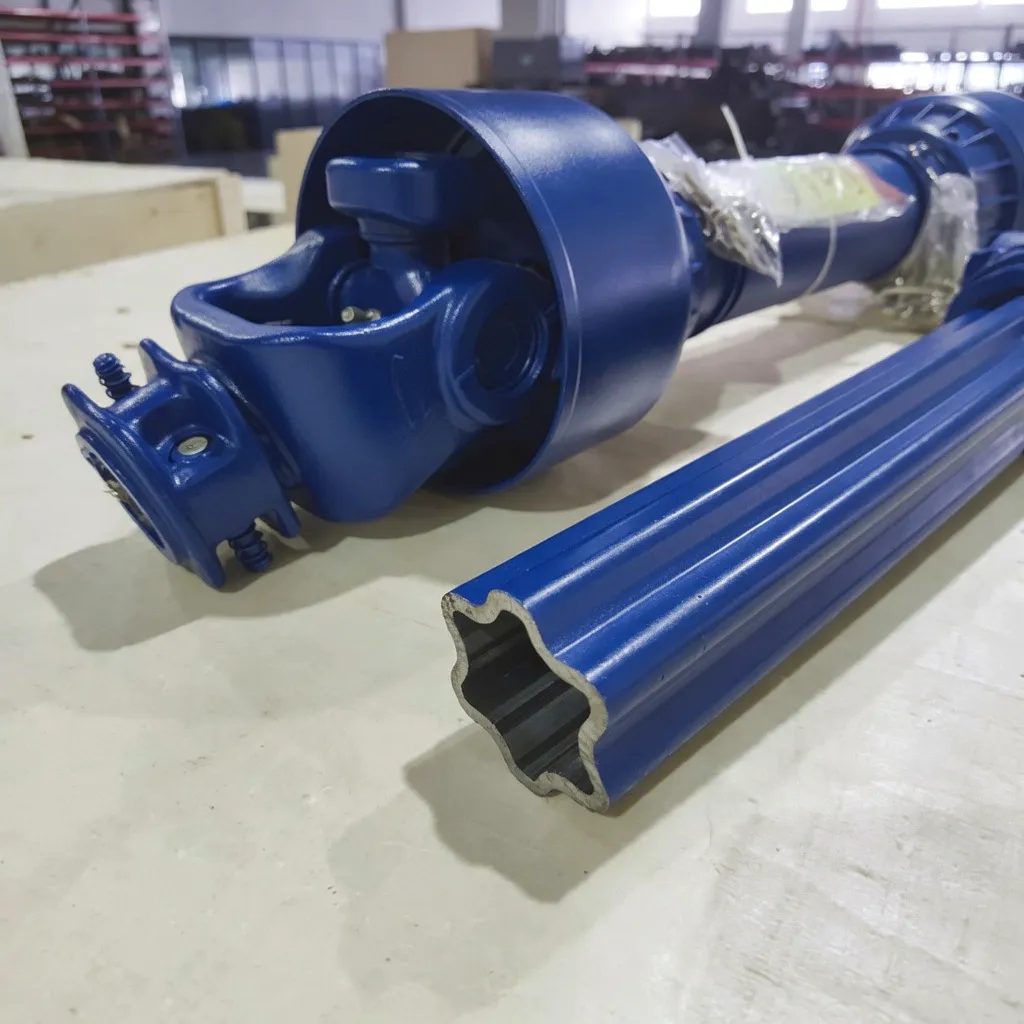 The storage protocol described in this guide assumes a PTO drive shaft that was manufactured to appropriate quality standards in the first place. A shaft with yokes forged from correctly specified 20CrMnTi or 40Cr alloy steel, properly case-hardened to 58-62 HRC at the bearing surfaces, with cross kits machined to tolerance and needle rollers correctly pre-loaded in the cups, will respond well to the storage protocol and emerge in spring ready for immediate service. A shaft with sub-standard yoke castings, incorrectly hardened bearing surfaces, or under-dimensioned tube wall thickness will deteriorate faster during storage and fail earlier in service regardless of how carefully it is maintained.
The powder coat surface finish applied at manufacture is the first line of defence against corrosion during storage. A properly applied two-stage epoxy powder coat — primer followed by topcoat, cured at the correct oven temperature — will show no rust breakthrough after six months of UK winter storage conditions even without additional wax inhibitor application. A single-stage coat, inadequately cured or applied over insufficiently prepared metal, will begin showing rust at sharp edges and weld zones within weeks. When sourcing replacement PTO drive shafts for a fleet going into winter storage, understanding what coating specification the manufacturer uses is not a trivial question.
✓ Alloy Steel Forgings
Yokes forged from 20CrMnTi or 42CrMo4 resist impact and maintain bore geometry through thermal cycling
✓ Case-Hardened Crosses
58–62 HRC surface hardness prevents false Brinelling during extended static storage periods
✓ Seamless Drawn Tubes
Consistent wall thickness and surface finish maintain tight telescope fit after extended idle periods
✓ Two-Stage Epoxy Coat
Primer + topcoat system provides corrosion protection at all edges and weld zones without additional inhibitor
Ever Power: Custom PTO Drive Shaft Manufacturing and Supply Chain
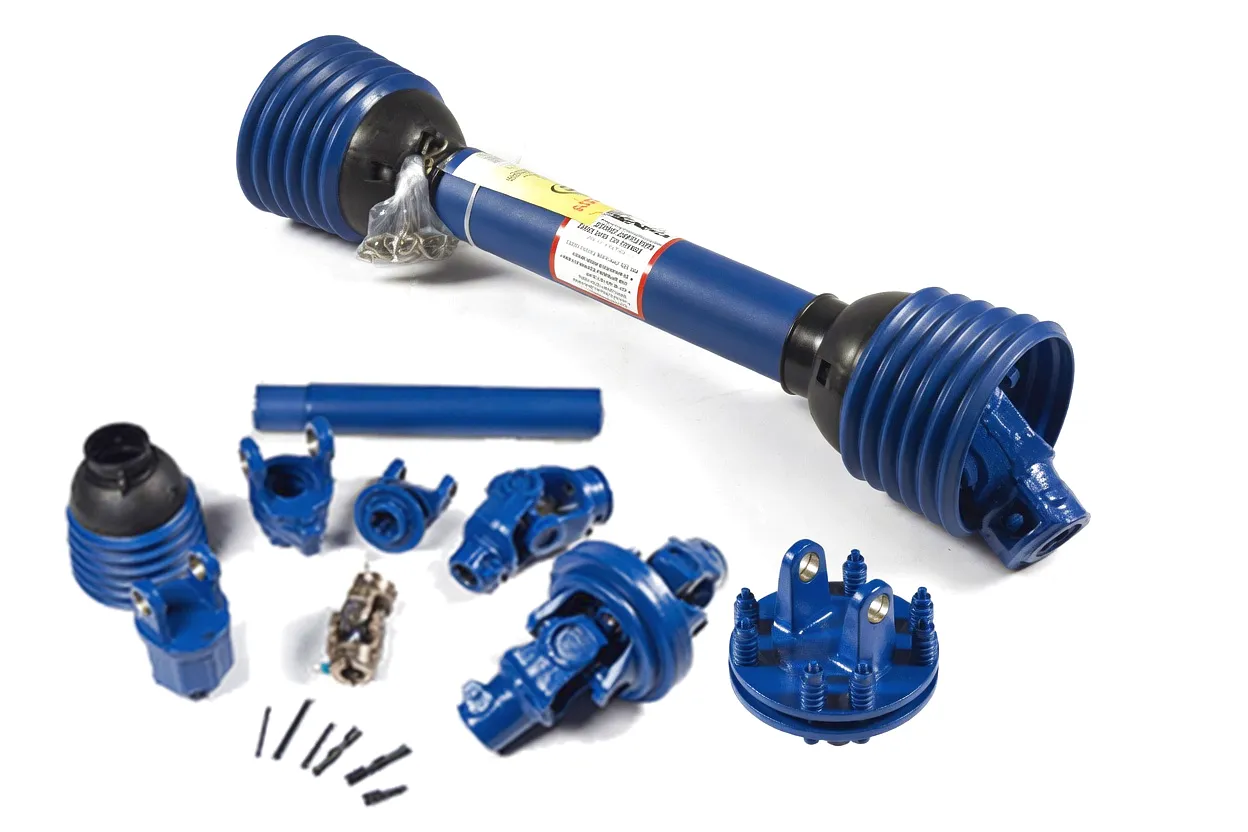 Ever Power operates as a specialist PTO drive shaft manufacturer with deep roots in precision mechanical transmission engineering. The manufacturing capability covers the full product range — from standard agricultural shafts for 540/1000 rpm tractor applications through to custom industrial assemblies engineered for specific torque and speed combinations that fall outside catalogue ranges. For UK buyers, this matters particularly because British agricultural and industrial applications frequently involve implement combinations and machine configurations that demand non-standard shaft geometries: different extended lengths, specific yoke connection types on each end, or unusual tube profile combinations to interface with legacy equipment.
The customisation capabilities at Ever Power span every parameter that determines PTO drive shaft performance and storage characteristics. Yoke connection type can be specified independently for the tractor and implement end — push-pin on one end and interfering bolt on the other is a common request from UK contractors who standardise their tractor fleet on one coupler type but operate a mixed implement inventory. Tube length, both collapsed and extended, is manufactured to order rather than trimmed from stock, meaning the customer receives a shaft that is correctly sized from the outset rather than one that has been shortened with attendant risk to the tube profile geometry. Surface treatment can be specified with enhanced corrosion protection — a two-stage marine-grade epoxy coat is available for shafts destined for use in coastal areas of Cornwall, North Wales, or the Scottish Islands where salt-laden air dramatically accelerates corrosion during storage.
Supply chain reliability is a recurring concern for UK agricultural machinery dealers and fleet operators, particularly in the months approaching the spring season when shaft replacement demand peaks. Ever Power maintains substantial stock of all standard cross kit sizes, guard components, and telescopic tube profiles, with documented lead times for custom assemblies that allow UK purchasers to plan procurement well ahead of the critical spring maintenance window. The technical support team can work from drawings, existing shaft dimensions, or direct specification discussions to ensure that a custom shaft arrives dimensionally correct and ready to fit — eliminating the costly downtime that results from receiving incorrect components during a narrow operational window.
Ready to specify a PTO drive shaft built to your exact requirements? Ever Power’s engineering team is ready to assist with technical consultation and pricing for standard and custom assemblies.
✉ Pyydä tarjous — [email protected]
Customer Success Story: Lincolnshire Agricultural Contracting
Riverside Contracting Ltd, based near Boston in Lincolnshire, operates a fleet of twelve tractors and over forty implements across a 3,200-acre arable enterprise and contracting territory. In 2023, the business was experiencing recurring PTO drive shaft failures in the April-May window — exactly when the season intensifies with spring planting, sugar beet drilling, and fertiliser spreading. Fleet engineer James Hartley identified that the majority of failures were occurring on shafts that had been stored directly on the floor of the machinery shed over winter, without any cleaning or lubrication protocol. The Voimanottoakseli assemblies were failing because of corrosion-induced seizing in the telescopic sections, which was generating destructive torque spikes as operators forced seized shafts into operation under load.
Riverside approached Ever Power for a combination of replacement shaft supply and a technical consultation on storage protocol. Ever Power supplied a full set of replacement shafts across the fleet, specifying heavier-duty cross kits for the high-torque tillage implements and enhanced corrosion protection for all units given the coastal proximity and high humidity typical of the South Lincolnshire fens. Along with the shaft supply, Ever Power provided a documented storage and maintenance protocol that Riverside implemented as a formal fleet maintenance procedure from the autumn of 2023 onwards.
The results in spring 2024 were unambiguous: zero in-season PTO drive shaft failures across the entire fleet, compared to six replacements in the same period of 2023. James Hartley estimates that the combination of correct shaft specification and disciplined seasonal storage protocol saved the business approximately £4,200 in emergency part costs and a conservatively estimated 85 tractor-hours of downtime — downtime that in the spring season translates directly into missed contracting revenue and late drilling penalties from farm clients.
What UK Operators Say About Ever Power PTO Drive Shafts
★★★★★★
“We replaced all our tillage implement shafts with Ever Power units before the 2024 season. The cross kit hardness specification is noticeably different from our previous supplier — after a full cereal growing season including heavy disc cultivation, the joints show minimal wear. We followed the seasonal storage protocol from day one and every shaft came out of winter in near-new condition.”
Tom Brealey
Farm Manager, North Yorkshire
★★★★★★
“The customisation service from Ever Power was genuinely impressive. We needed a wide-angle shaft with a push-pin tractor end and a specific flange on the implement end to match our bespoke hopper drive — not something any UK distributor had in stock. Ever Power quoted within 24 hours, confirmed the geometry matched our drawings, and delivered ahead of the stated lead time. The shaft fit first time with no modification.”
Sarah Mitcham
Technical Director, Midlands Agricultural Engineering, Coventry
★★★★★★
“We run eight compact tractors across three estate sites in Surrey and Hampshire. The Ever Power shafts we specified for the flail mowers have performed extremely well through two full seasons and two storage cycles. The corrosion protection on the tubes is markedly better than what we experienced with our previous supplier — after the second winter storage there was no surface rust at all on the yoke hardware, which was a first for this equipment.”
David Kellaway
Head Groundsman, Private Estate Portfolio, South East England
Spring Recommissioning: Returning the PTO Drive Shaft to Service
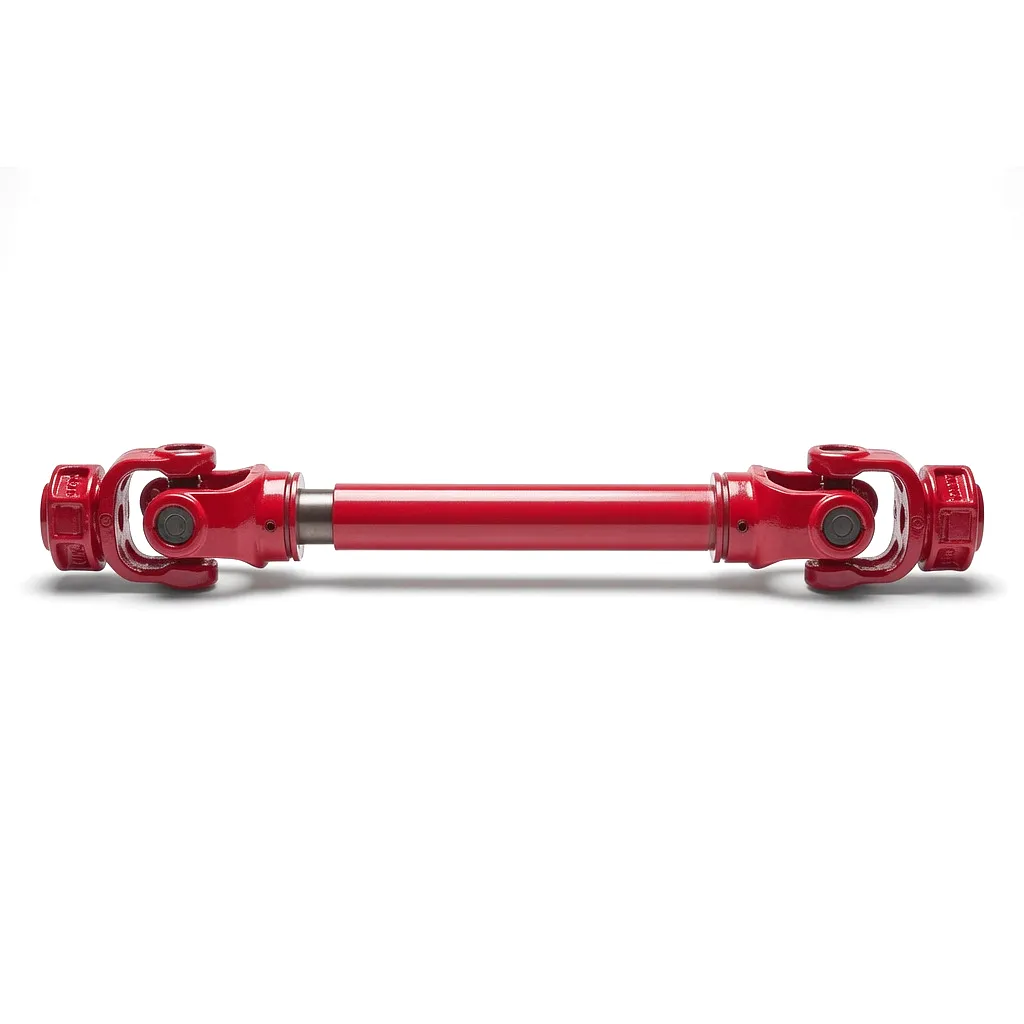 Bringing a stored PTO drive shaft back into service should be as systematic as the process that prepared it for storage. The recommissioning sequence starts with a visual inspection of the corrosion inhibitor coat — any areas showing breakthrough rust should be treated and noted; persistent breakthrough in the same location across multiple seasons indicates a paint adhesion defect or a surface preparation issue that requires attention before the next storage cycle. The corrosion inhibitor wax is typically wiped from external metal surfaces before operation, as it can attract dust and debris during field use; however, the lubrication applied to internal surfaces remains beneficial and should not be removed.
Before first connection to the tractor or implement, extend the telescopic section to its working length and verify that it slides freely through its full range without binding. A shaft that was correctly lubricated before storage should extend and retract with one-hand effort; any stiffness indicates that the storage lubricant has hardened or that moisture ingress has occurred, and the shaft should be re-lubricated before use. Operate the push-pin or ball attachment mechanism on each yoke end to verify positive engagement; test the retaining function by applying axial pull after engagement before committing the shaft to operational torque. Recheck all guard securing chains and end cap positions. This pre-season check takes under thirty minutes per shaft but is the logical completion of the entire seasonal care cycle — the work done in autumn has value only if it is verified at the moment of return to service.
Usein kysytyt kysymykset
Real questions from UK agricultural and industrial operators
▶
How do I properly clean and store a PTO drive shaft on my UK farm at the end of the harvest season?
The recommended sequence for UK farm conditions is: pressure wash with warm water (40–60°C) to remove all crop residue and soil; dry immediately with compressed air or clean cloths; inspect universal joint crosses, telescopic tubes, guard components, and yoke connections; apply lithium complex EP2 grease through cross kit nipples; coat telescopic profiles with MoS2 paste; spray external metal surfaces with a wax-based corrosion inhibitor; and store horizontally on brackets in a covered, ventilated space above concrete floors. Conduct a mid-storage check in January.
▶
What type of grease should I use on the universal joint crosses of my PTO shaft when storing it over a Yorkshire winter?
For Yorkshire winter storage conditions, a lithium complex EP2 grease (NLGI Grade 2) is the standard recommendation. This specification maintains working consistency from -20°C to +120°C, handles the freeze-thaw cycles common in North and East Yorkshire, and provides adequate extreme-pressure protection for the needle roller bearing surfaces. Apply through the grease nipple until fresh grease emerges from each bearing cup seal, confirming that old, contaminated grease has been fully purged.
▶
Where can I get a competitive price or quote for replacement PTO drive shaft cross kits delivered to my agricultural holding in the East Midlands?
Ever Power supplies cross kits across all standard sizes to UK agricultural buyers including operators across the East Midlands — Derbyshire, Nottinghamshire, Leicestershire, and Lincolnshire. Contact the team directly at
[email protected] for current pricing and availability. Custom cross kit specifications with enhanced surface hardness are available for high-torque applications on cultivators and heavy tillage equipment.
▶
How often should I inspect the safety guard bearing rings on my PTO shaft and what are the signs that they need replacing on a UK tractor?
Guard bearing rings should be inspected at every seasonal storage preparation and again at spring recommissioning — so at minimum twice per year. Replacement is needed when you observe: visible flattening of the ring contact surface (the ring should maintain a circular cross-section); splitting or cracking of the plastic material; abnormal gap between the ring and the shaft tube indicating material loss; or any tendency for the guard to rotate with the shaft rather than remaining stationary during operation, which is a clear indication of bearing ring failure.
▶
Which UK supplier offers custom PTO drive shafts with specific lengths and yoke types at a reasonable cost for a Sheffield engineering business?
Ever Power manufactures custom PTO drive shafts to specification, including mixed yoke types (push-pin one end, interfering bolt the other), non-standard collapsed and extended lengths, and bespoke tube profile combinations. For engineering businesses in the Sheffield area and across South Yorkshire, Ever Power can work from technical drawings or dimensional specifications. Request a technical consultation and pricing via
[email protected] — the engineering team typically confirms feasibility and provides indicative pricing within one working day.
▶
What maximum radial play is acceptable in a PTO shaft telescopic section before the shaft should be replaced or repaired on UK agricultural equipment?
Maximum permissible radial play varies by tube profile type: lemon profile — 0.5 mm; triangular profile — 0.4 mm; star profile — 0.5 mm; gear profile (heavy-duty) — 0.3 mm. Measurement should be taken at three points along the extension range (minimum, mid, and maximum extension) as wear is rarely uniform. Play exceeding these values at any measurement point indicates that the telescopic section should be replaced, as operational vibration at 540 or 1000 rpm will accelerate wear exponentially once the wear threshold is passed.
▶
When is the best time of year in the UK to carry out a full PTO drive shaft inspection and order replacement parts before the spring season starts?
The optimal window for full inspection and parts ordering in the UK agricultural calendar is October through November, immediately after the main harvest season concludes. Carrying out the inspection at storage time — rather than in January or February — means that any required parts can be ordered during a period of lower demand, typically before the spike in agricultural component orders that occurs from January onwards as spring approaches. Parts arriving in December or January allow full servicing and any necessary guard or tube replacements to be completed before recommissioning pressure builds in March.