The Component That Keeps Automated Warehouses Moving Around the Clock
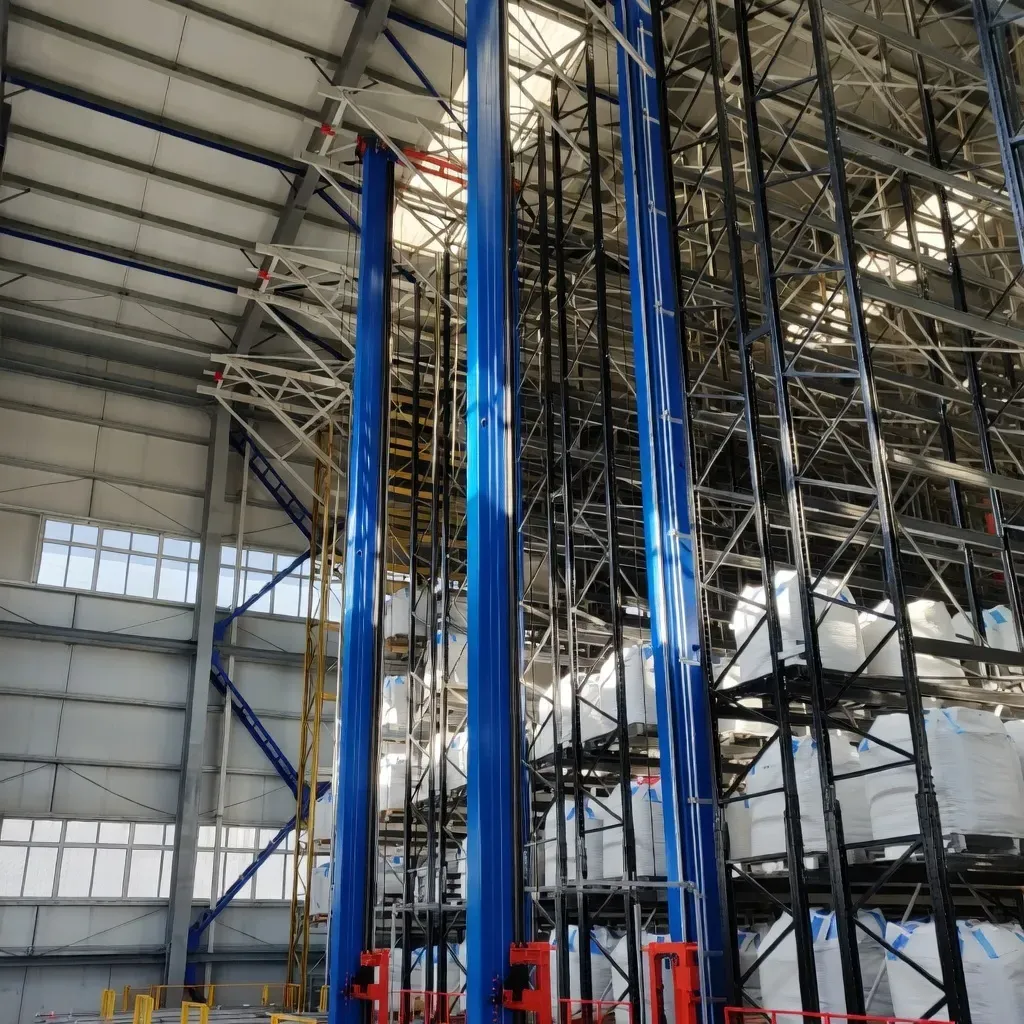 Inside every high-bay automated storage and retrieval system (AS/RS) — whether it’s a frozen food distribution hub in the East Midlands, an automotive parts store in the West Midlands, or a pharmaceutical dispatch centre in Hertfordshire — the automated stacker crane is the workhorse that makes the entire operation viable. It shuttles loads with unerring accuracy, runs through hundreds or thousands of cycles every day, and is expected to do so without interruption across a working life of 15 to 25 years. Yet for all the engineering attention lavished on sensors, servo drives, and control software, the industrial drive shaft connecting motor power to wheel axles or hoist drums is often the component whose specification gets the least scrutiny — right up until the moment it fails and the entire facility comes to an unplanned standstill.
At Ever Power, our application engineers have been specifying, manufacturing, and supplying industrial drive shafts for automated material handling equipment for well over a decade. That body of real-world deployment experience — spanning cold-store logistics, just-in-time automotive supply chains, GMP-regulated pharmaceutical warehousing, and high-throughput e-commerce fulfilment — has shaped a product range and a technical consultancy approach that is genuinely different from catalogue-based power transmission suppliers. We understand that a stacker crane drive shaft is not simply a torque conduit; it is a precision-engineered assembly that must cope with shock loading, structural misalignment, thermal cycling, and demanding maintenance intervals, all simultaneously and without complaint.
This article sets out the engineering case for taking the drive shaft specification seriously, walks through the technical parameters that matter in AS/RS stacker crane applications, and illustrates with a documented UK customer case study how the right drive shaft selection translates directly into reduced downtime, lower maintenance cost, and better whole-life asset economics. Whether you are an OEM crane builder, a warehouse integrator sourcing components for a new project, or a maintenance engineering manager dealing with recurring drive shaft failures on an existing fleet, the information here is intended to be practically useful.
Ever Power cardan drive shaft assembly — engineered for AS/RS stacker crane travel drive, hoist drive, and fork shuttle applications. UK supply with full EN 10204 3.1 material certification.
Why the Industrial Drive Shaft Carries More Risk Than Most Engineers Realise
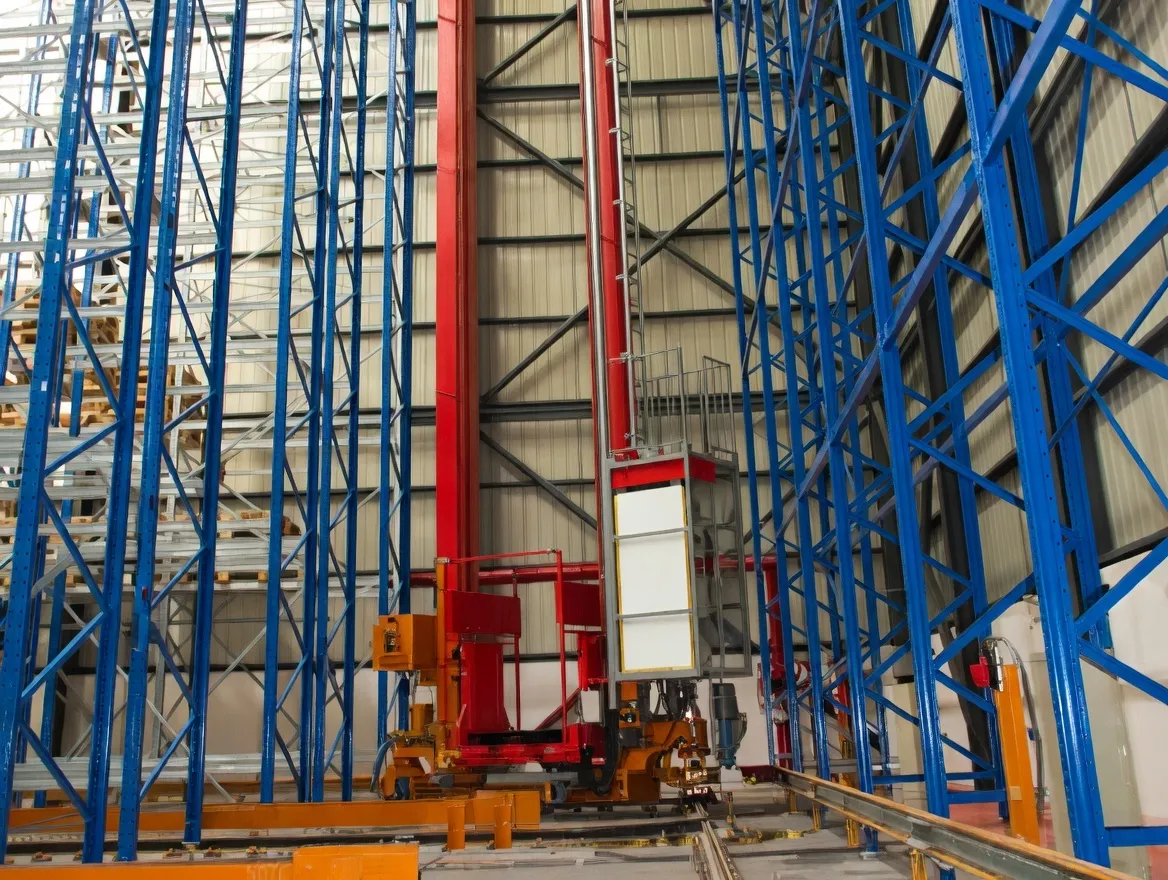 Automated stacker cranes operate in conditions that are, by almost any mechanical engineering standard, genuinely extreme. Consider a typical ambient-temperature AS/RS serving a retail distribution centre: the stacker crane runs 24 hours a day, seven days a week, accelerating from rest to maximum travel speed and back to rest dozens of times every hour, with payloads ranging from a few hundred kilograms to five tonnes or more. Each acceleration event delivers a torque impulse to the drive shaft that can exceed three to five times the nominal running torque — and this shock loading is repeated many hundreds of thousands of times over the crane’s service life. A stacker crane drive shaft operating in this environment accumulates fatigue damage at a rate that standard general-purpose cardan shafts are simply not designed to handle.
Compounding the loading challenge is the misalignment environment. As a stacker crane travels at speed along its rail, minor deflections in the crane mast, carriage, and chassis — entirely normal structural behaviour under dynamic load — produce continuous angular variation at the drive shaft’s universal joint assemblies. At the same time, thermal expansion and contraction of the crane structure cause axial displacement that the shaft’s slip element must accommodate without transmitting axial thrust loads back into the motor gearbox or drive wheel bearings. Getting both of these factors — angular capacity and axial slip performance — right in the same component, at the torque rating and speed range of the application, is where an experienced drive shaft supplier adds real value over a catalogue selection.
The consequences of drive shaft failure in an automated warehouse are severe and immediate. Unlike a conventional forklift truck, which can be substituted while repairs are made, an AS/RS stacker crane is typically a single crane per aisle — and when it stops, every pallet stored or required in that aisle becomes inaccessible. For a UK third-party logistics operator running under client service level agreements, an unplanned stoppage of even four hours can trigger financial penalties, service credits, and reputational damage that vastly exceed the cost of a properly specified replacement shaft. The economics of correct drive shaft specification are therefore overwhelmingly favourable, even before the extended service life and reduced planned maintenance cost are taken into account.
There is also an energy dimension that is increasingly relevant for UK warehouse operators working toward net-zero supply chain commitments. A drive shaft with excessive parasitic friction — from poorly graded lubricant, worn cross-journal needle rollers, or a spline profile with inadequate surface finish — increases the effective motor load across every cycle of the crane’s operation. At the scale of a modern AS/RS running tens of thousands of cycles per week, even a one percent increase in drive train efficiency loss has a measurable effect on annual energy consumption and the facility’s carbon reporting metrics.
Technical Performance Parameters
The table below summarises the standard operating parameters of Ever Power industrial drive shafts as applied to the three primary drive positions on an automated stacker crane: travel drive, hoist drum drive, and fork/shuttle unit drive. All figures represent the standard product range; non-standard specifications beyond these envelopes are available on request. Contact our UK technical sales team for application-specific engineering calculations and a detailed quotation.
| Parameter | Travel Drive Shaft | Hoist Drive Shaft | Fork / Shuttle Drive |
|---|---|---|---|
| Nominal Torque | 500 – 8,000 Nm | 800 – 12,000 Nm | 200 – 3,500 Nm |
| Peak Torque Capacity | Up to 24,000 Nm | Up to 36,000 Nm | Up to 10,500 Nm |
| Max Operating Speed | 1,500 rpm | 1,000 rpm | 2,000 rpm |
| Angular Misalignment | Up to 8° | Up to 6° | Up to 10° |
| Operating Temperature | -30°C to +80°C | -30°C to +80°C | -25°C to +70°C |
| Shaft Material Grade | 42CrMo4 alloy steel | 42CrMo4 / 34CrNiMo6 | C45E / 42CrMo4 |
| Surface Treatment | Induction hardened, zinc-phosphated | Case hardened, anti-corrosion coated | Hard chrome or zinc-phosphated |
| Balancing Grade (ISO 1940) | G6.3 standard / G2.5 on request | G6.3 standard | G6.3 / G2.5 on request |
| Connection Interface | Bolt-on flange or spline slip yoke | Bolt-on flange | Spline or quick-release yoke |
| Lubrication Interval | 5,000 operating hours | 5,000 operating hours | 4,000 operating hours |
| Design Service Life | 30,000+ hours | 25,000+ hours | 20,000+ hours |
Six Engineering Advantages That Set Ever Power Drive Shafts Apart
High-Torque Density Through Premium Alloy Steel
Every drive shaft in our stacker crane range is produced from 42CrMo4 or 34CrNiMo6 alloy steel, processed through quench-and-temper heat treatment to achieve core tensile strengths of 900–1,100 MPa. This delivers higher torque transmission capacity in a smaller, lighter envelope than equivalent mild-steel designs — reducing unsprung mass on the crane carriage, lowering dynamic forces on wheel and rail, and improving the positioning accuracy achievable by the crane’s servo drive system. When space on the crane chassis is at a premium, the torque density of the shaft material becomes a direct enabler of a compact, high-performance drivetrain layout.
Extended Lubrication Intervals for Automated Environments
Our cross-journal needle roller assemblies are produced with full-complement needle bearings running on precision-ground trunnion journals held to h6 dimensional tolerances. The sealed bearing units are pre-packed with a synthetic grease formulation rated for 5,000 operating hours between service intervals under standard conditions — and this interval can be extended further for cold-store applications where shutdown-period grease purging is a concern. In automated warehouses where accessing crane drive components for routine greasing is costly in both labour and planned downtime, this extended service interval translates to a measurable improvement in operational cost per pallet movement over the crane’s lifetime.
Dynamic Balancing to ISO 1940 as Standard
At the rotational speeds typical of stacker crane travel drives — between 500 and 1,500 rpm — even modest residual imbalance generates vibration that propagates through the crane structure, accelerates bearing wear in wheel axles and gearbox outputs, and interferes with the position encoder feedback signals used by the crane’s precision control system. Every Ever Power drive shaft for automated stacker crane applications is dynamically balanced to ISO 1940 G6.3 as a baseline, with G2.5 grade available on request for high-speed travel drives or applications where servo positioning precision is particularly critical. A signed balancing certificate is included with every delivery to UK customers.
Cold-Store and Harsh-Environment Rated Variants
The UK food distribution sector relies extensively on automated high-bay cold-stores, and the drive shaft specification for an environment at -20°C to -25°C is fundamentally different from an ambient-temperature installation. Our cold-store variant uses a synthetic grease base oil with a pour point below -45°C to guarantee adequate lubrication film at the cross-journal needle contact during cold-start conditions. Seal compounds are selected for retained elasticity at sub-zero temperatures, and the alloy steel grades specified for yoke and flange forgings maintain adequate Charpy impact toughness at the lowest expected operating temperatures. These are not marketing claims — they are supported by traceable material data and validated through documented deployment experience in UK cold-store facilities.
OEM Interface Compatibility and Drop-In Fit
We maintain a continuously updated engineering database of drive shaft interface dimensions for the principal automated stacker crane OEMs active in the UK market, including Dematic, Jungheinrich, SSI Schäfer, Swisslog, and TGW. In the large majority of maintenance replacement scenarios, we can supply a dimensionally compatible industrial drive shaft that fits directly without any modification to the crane structure, gearbox output shaft, or drive wheel axle. Where proprietary flanges, non-standard spline forms, or unusual bore diameters are involved, our engineering team designs and validates a custom interface solution — and does so within five to ten working days of receiving a dimensional survey or failed component sample from the customer.
Complete Traceability and Quality Documentation
Every industrial drive shaft shipped from our facility is accompanied by a full quality documentation package: EN 10204 3.1 material certificate, dimensional inspection report signed by a named inspector, hardness survey results, and a dynamic balancing certificate with residual imbalance values. For customers operating under ISO 9001:2015 quality management systems — standard practice across UK logistics, automotive, and pharmaceutical warehouse sectors — this documentation set satisfies incoming goods inspection requirements, supports asset management records, and provides the evidence base needed to demonstrate component traceability for safety-critical crane assemblies under the Machinery Directive.
Materials, Manufacturing Process, and How Quality Is Built In — Not Inspected In
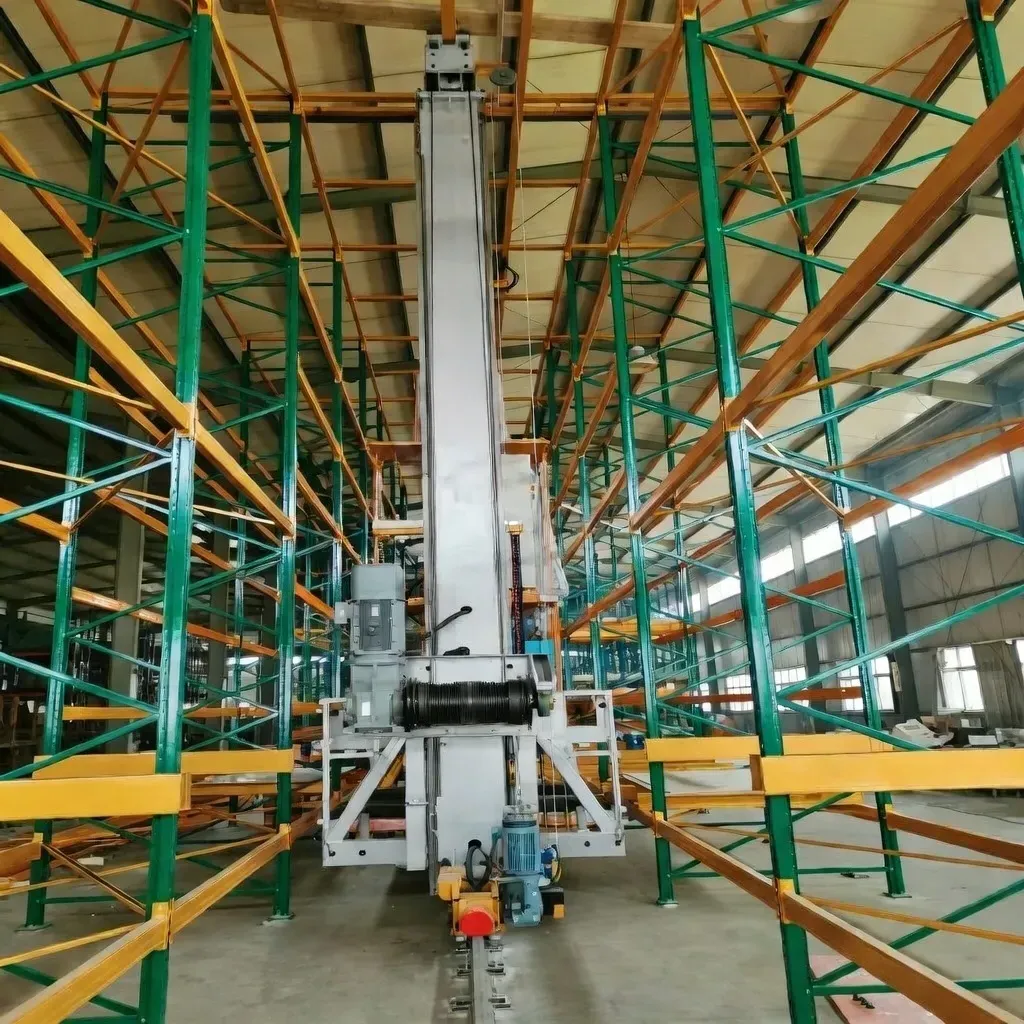 The performance ceiling of any industrial drive shaft is determined by material selection and manufacturing process control long before a single weld, assembly, or coating operation takes place. At Ever Power, all shaft tube material and yoke forgings are sourced from certified steel mills with documented heat number traceability, and every incoming steel consignment is subject to optical emission spectrometric analysis in our metallurgical laboratory before it is released to the production floor. This approach catches material substitution errors before they enter the manufacturing process — an elementary but disproportionately effective quality gate that many commodity suppliers do not maintain.
Shaft tubes are machined from seamless drawn steel tube or from solid bar stock, depending on the torque-to-weight requirement of the specific application. For the heaviest stacker crane hoist drive applications — where peak torque demands and structural rigidity both point toward a solid section — we use precision-turned bar with external spline profiles ground to DIN 5480 standards, achieving tooth profile and lead tolerances that ensure uniform load sharing across the full spline length rather than the end-concentration loading that causes premature spline fretting in poorly manufactured components. Ground splines also respond better to the molybdenum disulphide-based grease typically used in the slip element, maintaining a consistent low-friction axial movement characteristic throughout the shaft’s service life.
Heat treatment is performed in computer-controlled batch furnaces with independently calibrated thermocouple monitoring and continuous atmosphere control. Our target hardness profile for stacker crane drive shafts combines an induction-hardened case depth of 1.0–1.5 mm on spline teeth and journal bearing surfaces with a quench-and-tempered core achieving 28–34 HRC. This combination is the mechanical basis for shock-load resistance: the hard surface resists wear and contact fatigue, while the tough core absorbs the peak torque impulses from motor start-up and emergency stop events without initiating a brittle fracture from the shaft root. It is a balance that cannot be achieved by surface hardening alone or by through-hardening without a toughening temper.
For stacker crane applications operating in environments with humidity, intermittent wash-down, aggressive cleaning chemicals, or severe temperature cycling, we apply a zinc-phosphate conversion coating to all machined surfaces, followed by a two-coat epoxy primer and polyurethane topcoat system. This corrosion protection has been validated to 500 hours neutral salt spray per ISO 9227. Optional stainless steel external hardware — bolts, washers, snap rings — is available for pharmaceutical and food-grade cold-store facilities where corrosion products from standard carbon steel fasteners represent an inadmissible contamination risk.
How an Industrial Drive Shaft Transmits Power Within a Stacker Crane Drivetrain
In a standard floor-travel stacker crane, the drive sequence runs from an AC servo motor through a helical or bevel-helical reduction gearbox, whose output shaft is connected — via the drive shaft — to a bevel gearbox or directly to the drive wheel axle. The drive shaft’s function is to transmit this rotational power across the mechanical gap between gearbox output and the driven component, whilst continuously compensating for the angular misalignment and axial displacement that result from structural deflection and thermal movement. This is not a passive conduit; it is a kinematically active component whose joint geometry and dimensional tolerances directly affect the quality of the torque transmission.
The angular compensation is provided by one or two universal Hooke’s joints, each consisting of a precision-bored yoke cross-drilled to accept a four-pointed journal — the cross or spider — whose trunnion pins carry full-complement needle roller bearings. The joint allows the shafts on either side to operate at an angle whilst transmitting torque, but introduces a characteristic velocity fluctuation equal to twice the rotational frequency — the so-called second-order kinematic error of a single Hooke’s joint. For stacker crane drive shafts using two joints, this error is cancelled by ensuring that both joints operate at equal angles and that the yoke phasing at each end of the shaft is correctly set — a matter of precision assembly rather than any exotic technology, but one that demands attention and process discipline to get right consistently.
Axial displacement compensation is provided by the slip element — a splined male shaft sliding within a corresponding female splined tube or yoke. As the crane structure deflects under load, or as shaft-to-shaft distances change due to thermal expansion of the rail or crane chassis, the slip element absorbs these dimensional variations without transmitting axial thrust loads to the adjacent bearings. The quality of the spline fit — the profile tolerance, the surface finish, and the choice of lubricant — determines how smoothly and consistently this slip function operates. A tight or contaminated spline will momentarily stick and then slip under load, producing impulse forces that degrade gearbox output shaft bearings at a rate disproportionate to the nominal loading.
On the hoist drive side of the stacker crane, the drive shaft operates under a qualitatively different loading regime: the acceleration phase of a hoist lift engages a hanging payload at rest, creating an impact torque whose magnitude depends on the payload mass, the hoist rope elasticity, and the speed at which the rope tension builds up from the motor torque ramp. Properly specifying the drive shaft for this dynamic application requires calculating the peak torque including the dynamic load factor — typically 2.0–3.0 for electric hoist drives — and validating the selected shaft at that peak load against the material’s fatigue limit using a recognised calculation standard such as DIN 743 or AGMA 6014. This is the level of engineering rigour that our application team applies as standard to every hoist drive shaft quotation.
Application Scenarios Across UK Industry Sectors
The UK’s automated warehousing and manufacturing sectors generate a broad and technically diverse range of stacker crane drive shaft requirements. The scenarios below represent the four principal application types our engineering team regularly encounters, and illustrate how differently the specification must be approached in each case. A drive shaft that performs flawlessly in one of these environments may fail rapidly in another — which is why application-specific engineering review remains the basis of every quotation we issue.
🏭
Ambient High-Bay Retail & E-Commerce
Distribution centres serving major UK retailers and online fulfilment operations run continuous multi-shift AS/RS cycles with an emphasis on high throughput and minimal planned maintenance access. Drive shaft specification here focuses on cycle durability at nominal torque, extended grease intervals, and compatibility with the high-acceleration servo drive profiles characteristic of modern crane controllers. Sites across the Midlands, the South East, and Yorkshire represent the core of this market segment in the UK.
❄️
Cold-Store & Frozen Food Distribution
Frozen food distribution facilities operating at -18°C to -25°C represent the most demanding thermal environment for stacker crane drive shafts. Standard lubricants congeal, standard seals harden, and standard carbon steel grades can exhibit elevated brittleness at these temperatures. Our cold-store range addresses all three failure mechanisms with validated material and lubricant specifications tested for the temperature and cycling conditions of UK food supply chain operations.
🚗
Automotive Just-in-Time Parts Storage
Just-in-time manufacturing plants in the UK automotive supply chain — including Tier 1 and Tier 2 suppliers serving assembly plants across the country — demand sub-minute retrieval cycle times and very high positional accuracy. The heavy loads typical of metal stampings, castings, and sub-assemblies produce severe hoist-side drive shaft loading. These applications require the most rigorous dynamic load factor calculations and the highest-specification hoist drive shafts in our range.
💊
Pharmaceutical & GMP-Regulated AS/RS
GMP-regulated pharmaceutical warehousing in the UK demands not only mechanical performance but contamination control, full material traceability, and documentation packages compatible with MHRA regulatory audit requirements. Our pharmaceutical-grade drive shaft variants feature food-safe grease, stainless steel external hardware, and smooth external profiles that resist particle retention — all supplied with the comprehensive quality documentation that GMP facilities require for incoming component qualification.
Customer Success Case Study
Major UK Food Retailer — East Midlands Cold-Store Distribution Centre
12
Stacker Cranes
-22°C
Operating Temperature
29mo
Zero Failures Since
£38k
Annual Saving
Background and the Problem: A major UK supermarket chain operating one of the country’s largest automated cold-store distribution centres in the East Midlands contacted our technical team following a sustained pattern of drive shaft failures on their twelve-crane AS/RS fleet. The facility ran continuously in a -22°C environment, processing in excess of 2,400 pallet movements per day. Original drive shafts supplied by the crane OEM were failing at the cross-journal assemblies with a mean time between failures of approximately 14 months — far below the 36-month planned maintenance interval stipulated in the crane manufacturer’s service documentation. Two unplanned crane stoppages in the preceding 12 months had each resulted in emergency engineering call-outs, cold-chain product exposure risk, and throughput loss penalties under the retailer’s logistics contractor SLAs.
Root Cause Analysis: Our application engineers conducted a site survey, collecting 48-hour vibration logs from two representative cranes, operational cycle data from the warehouse management system, and failed component samples for laboratory analysis. Examination of the failed cross-journal assemblies under SEM microscopy revealed a characteristic pattern of cold-start fretting damage on the needle roller contact tracks — the signature of lubricant starvation at the point of initial rotation following an overnight shutdown. Base oil viscosity measurement of the removed grease confirmed that the OEM’s specified general-purpose lithium grease had a pour point of approximately -15°C, inadequate for the -22°C shutdown temperature. The grease was solidifying during the shutdown period, preventing adequate film formation during the first 30–45 seconds of each day’s operating cycle — precisely the point where start-up acceleration torques were highest. A secondary finding was that the angular misalignment at two of the crane drive positions exceeded the 5° capacity of the OEM shaft by up to 1.8°, accelerating fatigue damage at the joint cup-to-bore interface.
Solution and Measurable Outcomes: Working with the facility’s maintenance engineering team, we developed a replacement drive shaft series addressing both failure mechanisms: cold-stable synthetic grease rated to -45°C, uprated cross-journal assemblies with a 22% higher dynamic load rating than the OEM specification, and a modified yoke geometry providing 8° of angular misalignment capacity at the drive positions identified in the survey. All twelve cranes were refitted during a single planned maintenance window. In the 29 months since installation, the facility has recorded zero drive shaft failures across the entire fleet. The maintenance engineering manager reports an estimated annual cost saving of £38,000 from eliminated replacement parts and labour, and the absence of the two unplanned downtime events per year that had each cost approximately £12,000 in emergency call-out fees and lost throughput penalties.
What UK Engineers and Integrators Say
★★★★★
“We’ve standardised on Ever Power industrial drive shafts across our Dematic AS/RS fleet at our Birmingham site, including the cold-store section. Three years in, no failures, no unplanned downtime, and the quality documentation made our annual engineering audit straightforward. The pricing is also substantially better than going back to the crane OEM for replacements. The combination of technical support and competitive supply cost is why they’re now our default specification for new projects too.”
David Thornton — Engineering Manager
Retail Logistics Ltd, Birmingham, UK
★★★★★
“Our pharmaceutical AS/RS near Cambridge operates under MHRA audit conditions, and any component supplier needs to meet a very high bar for documentation, traceability, and contamination control. Ever Power understood those requirements immediately. The stainless hardware, food-safe grease specification, and the 3.1 certification package were handled without any additional lead time or premium pricing. The shafts have been installed for 18 months with no issues. We’ll be specifying them for our second facility now under construction in Stevenage.”
Sarah Mitchell — Head of Facilities Engineering
BioPharma Distribution Ltd, Cambridge, UK
★★★★★
“As an AS/RS system integrator working across the UK and mainland Europe, we need a drive shaft supplier who responds fast, delivers engineering calculations with the quotation, and manufactures to a quality level we can stand behind with our end customers. Ever Power ticks all three. Detailed quotations with torque analysis arrive within 24 hours, custom shaft assemblies have the shortest lead times we’ve found, and in three years of working together we’ve had zero field issues. That track record is what matters in this business.”
Marcus Weber — Project Engineering Director
AutoStorage Systems GmbH (UK & EU projects)
Manufacturing Capability and Our Drive Shaft Customisation Service
Ever Power operates a dedicated industrial drive shaft production facility equipped with multi-axis CNC turning and milling centres, gear-tooth form grinding machines, computer-controlled balancing equipment, and in-house batch heat treatment furnaces. This degree of vertical manufacturing integration — from raw material inspection through to finished component shipment — gives us direct control over dimensional quality, material integrity, and production scheduling that purely assembly-based suppliers cannot match. When an urgent replacement order comes in from a UK customer whose crane is stopped, we are not waiting on a sub-supplier; we are cutting metal ourselves.
Our product customisation capability is one of the deepest available to the UK stacker crane market. The range of custom requirements our team regularly handles is broad: non-standard overall lengths accommodating as-built crane chassis dimensions that differ from the original design; proprietary flange bolt patterns matching specific gearbox output housings; spline profiles in DIN 5480, ISO 4156, or customer-defined forms; shafts incorporating integral disc brake mounting hubs or encoder wheel locations; assemblies that combine standard cardan joint ends with custom intermediate tube sections; and shafts for twin-motor tandem drive arrangements where phase matching and torsional compatibility between two drive shafts must be considered. For every non-standard configuration, our engineers produce a validated design using SolidWorks 3D CAD, supported by FEA-based stress analysis and fatigue life calculations to DIN 743 where the application warrants it.
For UK-based logistics operators, warehouse integrators, and OEM crane builders who want to explore how Ever Power can support their next project or resolve a current maintenance challenge, we offer a no-cost technical consultation: submit your crane specification, operating data, or failed component details, and one of our application engineers will provide a written drive shaft selection recommendation with supporting calculations — typically within one business day. It costs nothing to ask, and the outcome is always a better-specified, longer-lasting drive shaft solution.
Frequently Asked Questions
Ready to Specify the Right Drive Shaft for Your Stacker Crane?
Contact our application engineering team with your crane model, operating data, or failed component details. We serve the UK warehousing, logistics, automotive, pharmaceutical, and food and beverage sectors with industrial drive shaft solutions engineered to your exact specification — and we respond within one business day.
edytuj przez gzl