PTO Shaft Length Adjustment: Telescoping Method Explained
A practical guide for farm engineers and operators on how to correctly measure, adjust and verify PTO shaft telescoping length for any implement, avoiding the most common length-related failures.
เลือกดูเพลาขับ PTO รุ่นต่างๆ →
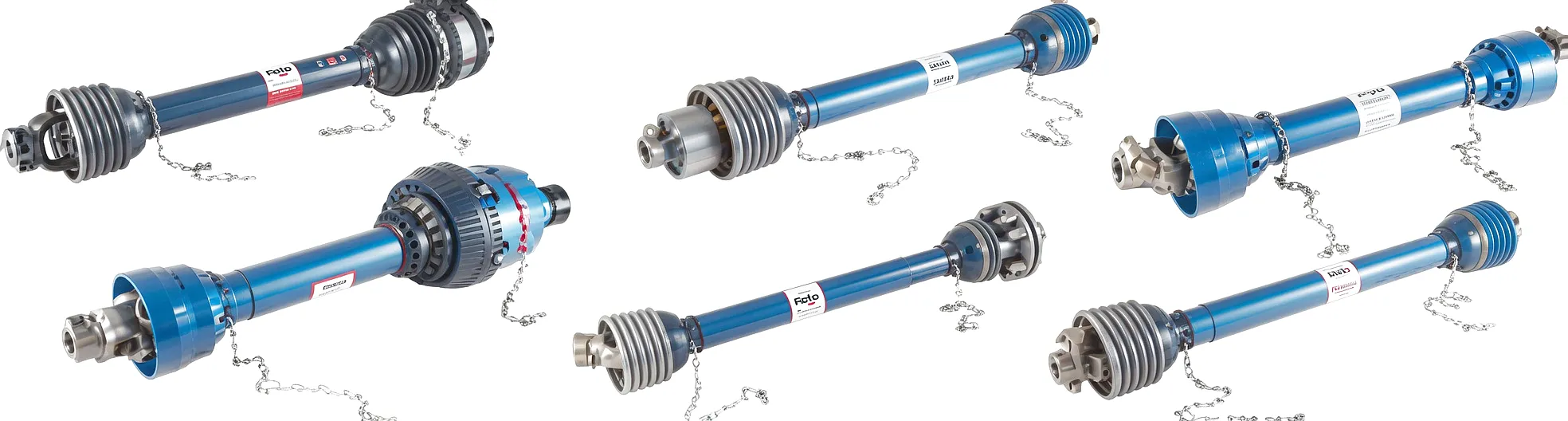
Getting the length of a PTO drive shaft right is one of the most important and most frequently misunderstood aspects of agricultural machinery setup. A shaft that is too short will pull apart at full extension when the implement pitches on uneven ground or when the three-point linkage is raised. A shaft that is too long will bottom out in the telescoping section during tight turns or when the linkage is lowered, buckling the inner tube and forcing destructive bending loads through the universal joints.
Both failure modes are preventable with a straightforward measurement and verification procedure that takes less than 15 minutes and requires no specialist tools beyond a tape measure. Yet shaft length errors remain among the leading causes of avoidable PTO shaft damage on working farms, typically because operators assume a shaft that physically connects the tractor to the implement must therefore be the correct length.
This guide explains how telescoping PTO shafts work, how to measure and verify length for any implement, how to shorten a shaft that is too long, and how to recognise the specific failure signatures that indicate a length problem is developing before it causes a breakdown in the field.
1. How the Telescoping Section Works
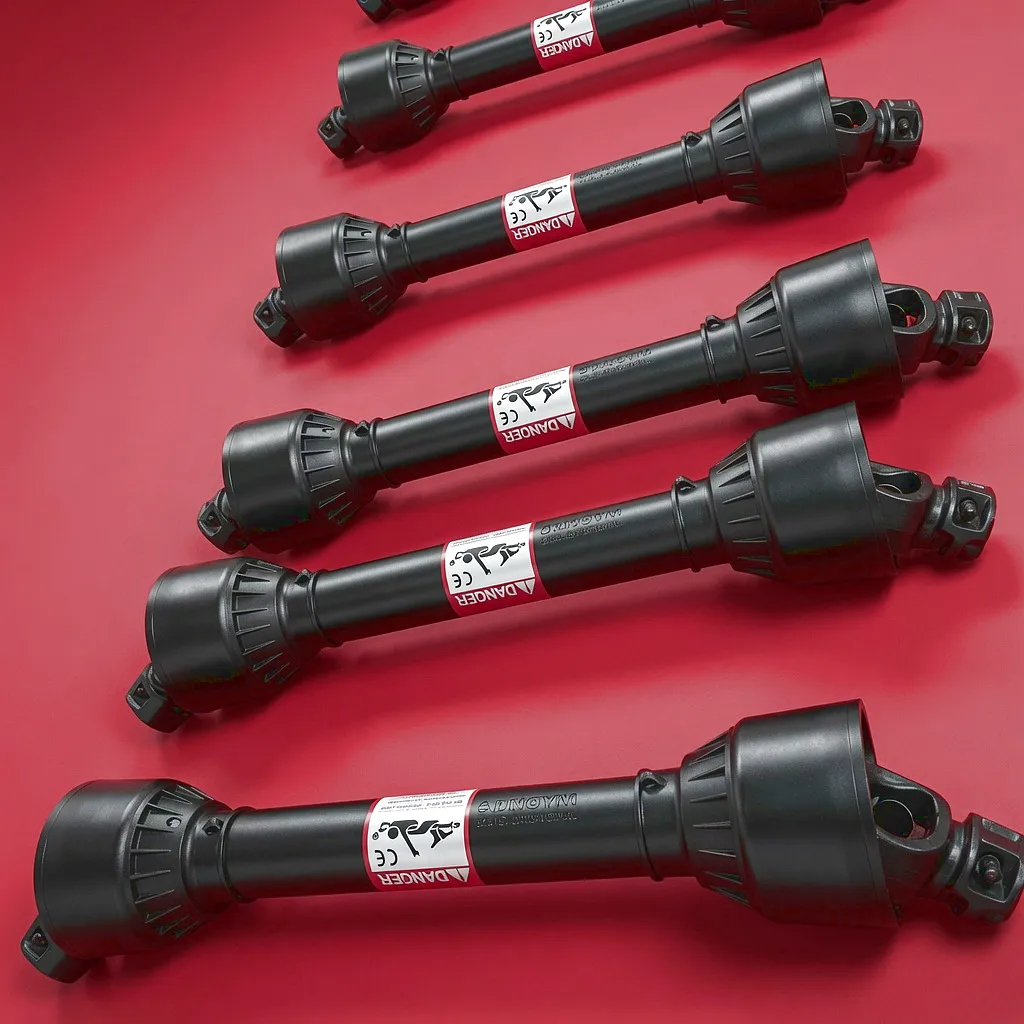
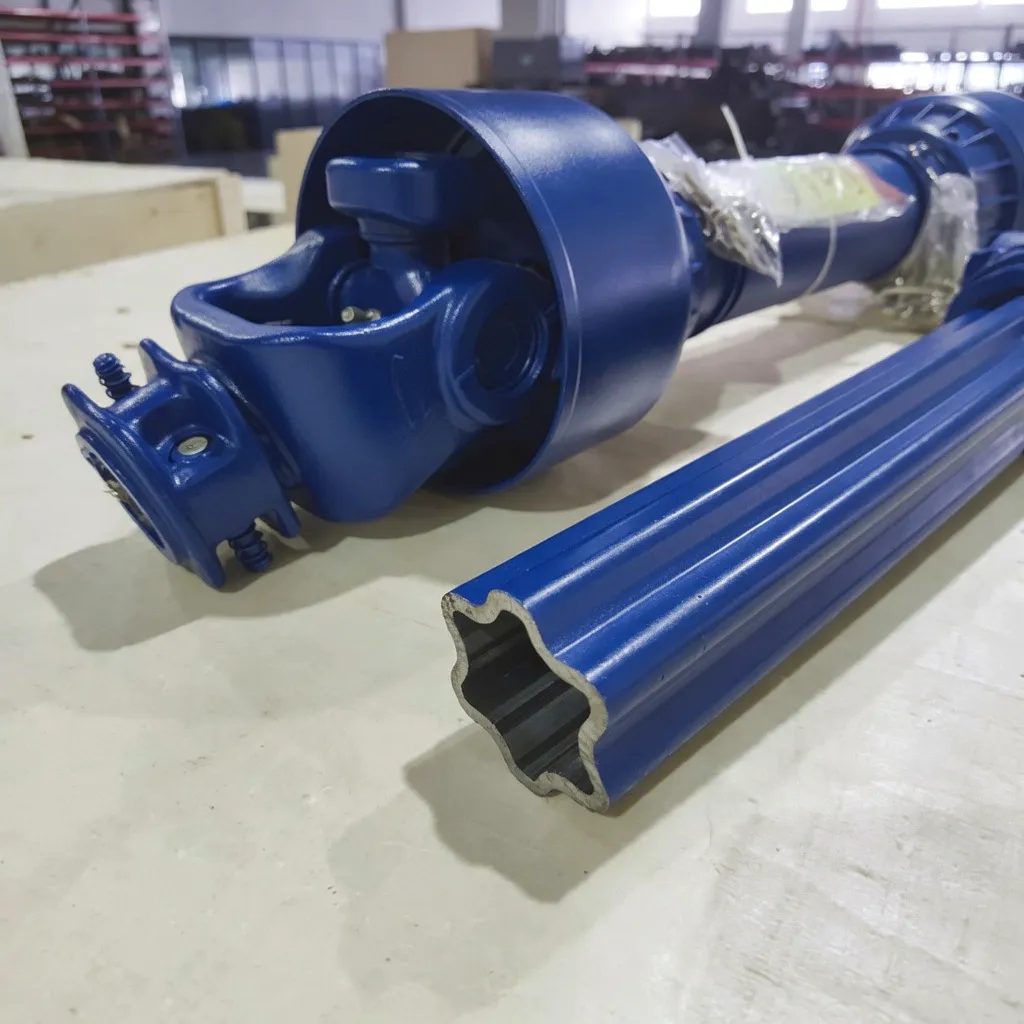
A telescoping PTO shaft consists of an inner tube that slides inside an outer tube through a profiled interface. Common profile shapes include square, star (six-point) and splined. The profile prevents the tubes from rotating relative to each other while allowing them to slide axially, accommodating the length changes that occur as the implement moves in pitch and the tractor turns.
The total length change available between the fully collapsed and fully extended positions is the telescoping travel range. This range must comfortably accommodate all length changes experienced during normal operation, including the longest extension that occurs when the implement is fully raised on the linkage, and the shortest collapsed length that occurs during tight headland turns with the implement lowered.
The critical constraint is the minimum safe overlap between the inner and outer tubes. At no point during operation should the inner tube pull so far out of the outer that the contact length between the two falls below 150 mm for standard shafts or 180 mm for wide-angle and heavy-duty shafts. Below these figures the profiled interface loses its concentricity and the shaft can separate under load or vibrate severely due to the inner tube running eccentrically within the outer.
Equally, the shaft must never bottom out, meaning the inner tube must never reach the end of its travel within the outer tube and physically contact the tube end or yoke. Bottoming out transmits the full axial compression load through the yoke bearings and U-joint crosses rather than the shaft tubes, causing rapid yoke failure.
2. The Four-Position Length Check
A single length measurement in one linkage position is not sufficient. PTO shaft length must be verified in all four operating positions that produce extreme shaft lengths:
↑
Position A
Linkage at maximum height, implement directly behind tractor. This gives the longest shaft extension. Verify minimum overlap is maintained.
↓
Position B
Linkage at working depth, implement directly behind tractor. This is the primary working position and sets the baseline shaft length.
↶
Position C
Linkage at working depth, tractor turned to maximum steering angle. This gives the shortest collapsed length and is the bottoming-out risk position.
↗
Position D
Linkage at transport height, tractor turned to maximum steering angle. Combines raised linkage with turned position for articulated transport verification.
Key Rule: 150 mm Minimum Overlap in All Positions
In Position A, the inner tube must remain engaged with the outer tube by at least 150 mm. In Position C, there must be at least 10 mm of free space remaining between the end of the inner tube travel and the physical stop inside the outer tube. If either of these conditions is not met, the shaft is the wrong length for this tractor-implement combination.
3. Step-by-Step Length Measurement Procedure
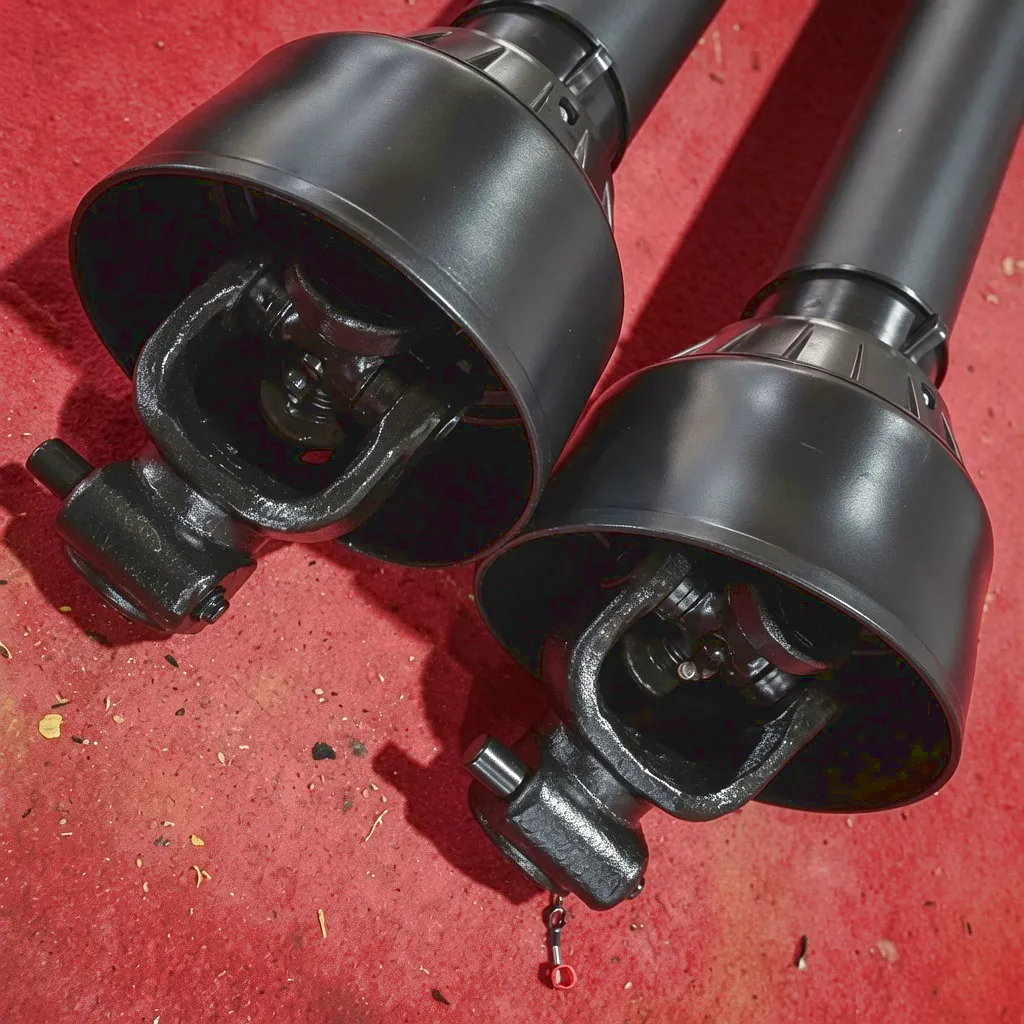
STEP 1 — Set Up for Working Position Measurement
Attach the implement to the tractor on the three-point linkage. Lower the linkage to the normal working depth for that implement. Position the tractor on flat ground with the implement directly behind, not at an angle.
STEP 2 — Measure the Required Shaft Length
With the PTO shaft removed, measure the distance from the face of the tractor PTO stub to the face of the implement input shaft or input flange. This is the required installed shaft length at working position. Note this measurement as Dimension W.
STEP 3 — Measure the Shaft Collapsed and Extended
Collapse the shaft fully and measure the total length from yoke face to yoke face. Note as Dimension C. Now extend the shaft until the inner tube is about to pull clear and measure again. Note as Dimension E. The difference between E and C is the telescoping travel range available.
STEP 4 — Verify the Working Position Overlap
Extend the shaft to exactly Dimension W. The inner tube should now be inside the outer tube by at least 150 mm. Measure this overlap directly by marking the inner tube at the outer tube mouth and measuring from that mark to the inner tube yoke end. If overlap is below 150 mm, the shaft is too short for this application.
STEP 5 — Check the Raised Linkage Position
With the shaft installed, raise the linkage to maximum transport height. Observe the shaft extension. If the inner tube is about to pull free of the outer tube, the shaft length is marginal or insufficient for this tractor-linkage combination and a longer shaft is required. Mark the inner tube with a paint pen at the outer tube mouth so this check can be repeated quickly in future without full measurement.
4. How to Shorten a PTO Shaft That Is Too Long
When a shaft is significantly longer than required for a specific implement, the telescoping section spends most of its working range in a compressed state. If the shaft is so long that it bottoms out during tight turns, it must be shortened. This is done by trimming both tubes by equal amounts so that the working position overlap and the minimum collapsed clearance are both within specification.
Important: Cut Both Tubes Equally
If only one tube is shortened, the balance of the telescoping overlap changes and either the minimum overlap or the minimum compressed clearance will be compromised. Both tubes must be trimmed by the same amount to maintain the original design relationship between the two sections. Calculate the amount to remove carefully before cutting.
Shortening Procedure
- Calculate the amount to remove: the shaft at working position should extend to give 150–200 mm overlap and at least 10 mm of clearance before bottoming out at maximum compression.
- Separate the inner and outer tubes completely.
- Mark the cut line on each tube with a square and marker, ensuring the cut is exactly perpendicular to the tube axis.
- Use an angle grinder with a cutting disc or a metal-cutting bandsaw to make clean, square cuts. A ragged or angled cut reduces the bearing surface for the profiled interface.
- Deburr all cut edges thoroughly with a file or flap disc. Any burr on the tube end will score the mating tube during sliding and cause binding.
- Reassemble and verify all four positions as described in Section 3.
5. Length Reference Table by Implement Type
| Implement type | Typical working length | Key length risk | Primary check position |
|---|
| Round baler | 900–1,100 mm | Too short: linkage raised for road travel | Position A (linkage fully raised) |
| Disc mower | 600–900 mm | Too long: bottoms out on headland turns | Position C (working depth, full turn) |
| Rotary tedder | 700–950 mm | Too short: transport height extension | Position A and D |
| Rotary cultivator | 550–750 mm | Too long: bottoms out at working depth | Position B and C |
| Wood chipper | 800–1,200 mm | Fixed position: length must be exact | Position B only (static machine) |
| Slurry tanker | 900–1,300 mm | Too long: fifth-wheel turn compression | Position C (drawbar at full turn) |
| Post-hole digger | 500–700 mm | Too short at offset working positions | All four positions |
6. Warning Signs That a Length Problem Is Developing
Telescope binding under load
If the shaft feels stiff to slide when cold but loosens after running, the tubes are being forced into slight misalignment by a length that is close to the bottoming limit. The tube ends are taking bending stress they are not intended to carry.
Rapid profile wear on the tube interface
If the profiled interface shows wear concentrated at one end of the contact zone rather than evenly along the profile length, the shaft is spending most of its range at an extreme of travel, indicating incorrect overall length for the application.
Yoke brinelling at the stub
Pitting or indentation marks in the PTO stub splines or in the yoke bore where it contacts the stub collar indicate axial impact loading, often caused by a shaft that is bottoming out on headland turns and then springing back when the turn is completed.
Guard contact marks on the outer tube
Scuff marks on the outer tube surface at the guard mouth indicate the guard is contacting the tube during operation. This occurs when the shaft is operating near its maximum extension and the tube end is moving relative to the guard position.
Custom Length Available
Ever-Power Supplies PTO Shafts to Specified Working Length
Where a standard telescoping range does not suit the tractor-implement geometry, Ever-Power manufactures shafts to a specified working length range. Provide the four position measurements from Section 3 and our engineering team will specify the correct shaft series, tube diameter and collapsed length to ensure safe overlap across the full operating range.
All shafts are manufactured in a 60,000 m² facility with full ISO certification, dynamic balancing and dimensional verification before despatch.
Customer Case Study: Dairy Farm, Dumfries and Galloway
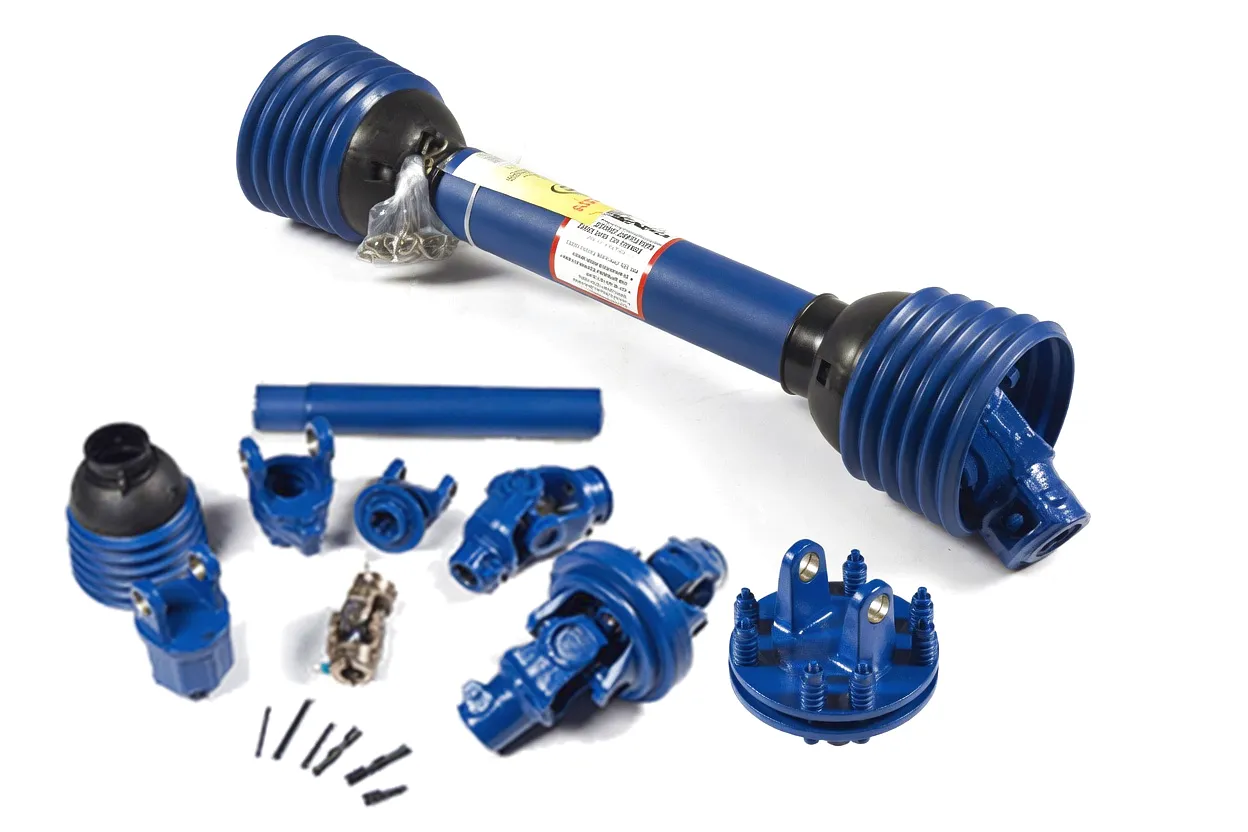
กรณีศึกษา
600-Head Dairy Enterprise, Dumfries and Galloway
Operation: Large-scale dairy farm with year-round slurry management, silage production and a contractor-assisted maize harvest. Slurry tanker with a PTO-driven pump operates on narrow field roads with tight gateways requiring frequent sharp turns at low speed.
ความท้าทาย: The farm had experienced three separate incidents over two seasons where the slurry tanker เพลา PTO had bottomed out on tight gateway turns, on one occasion shearing the inner tube end cap and on two occasions forcing the outer tube to split longitudinally along a weld seam. Each incident required tractor and tanker to be separated in the field, the shaft removed and a replacement sourced before slurry spreading could resume. The combined downtime and parts cost across three incidents was estimated at £7,600.
วิธีแก้ปัญหา: Post-incident inspection by the technical team at เพลาขับ PTO ของ Ever-Power established that the installed shaft was 140 mm longer than the application required, measured at working depth. At the farm gateway turning radius, the shaft was compressing by 185 mm beyond its designed travel range on every turn. The farm was supplied with a correctly specified shaft 140 mm shorter in collapsed length, with the same yoke specifications to match the tractor stub and tanker input.
ผลลัพธ์: The replacement shaft has been in service for 18 months across two full slurry seasons with zero incidents. The four-position length check has been integrated into the farm pre-season equipment audit. The farm manager reports that the correct-length shaft also eliminated a persistent vibration at low spreading speed that had previously been attributed to the tanker pump, but which was in fact caused by the compressed shaft running near its critical speed limit.
What Farm Operators and Equipment Managers Say
“
I always assumed that if the shaft connected the tractor to the implement it was the right length. After reading the four-position check procedure and measuring our baler shaft properly for the first time, we found the overlap at transport height was only 80 mm. We replaced the shaft before the season and have had no problems since.
Colin Waterman
Arable Farmer — Waterman Grain, Suffolk
“
The technical team advised us on the correct shaft length for a non-standard tractor-implement combination where the PTO stub height differed from the implement input by 180 mm. The custom-length shaft arrived correctly specified and has been working without any vibration or binding through a full grass season.
Fiona Mackintosh
Farm Manager — Mackintosh Farms Ltd, Perthshire
“
We shortened two shafts in the workshop following the procedure in this guide and both came out within specification on the four-position check. The key point about cutting both tubes equally is something we had not appreciated before and it made the difference between a shaft that works correctly and one that would have had insufficient overlap at full extension.
Neil Forsyth
Workshop Engineer — Forsyth Agricultural Machinery, Angus
คำถามที่พบบ่อย
How much telescoping travel do I need for a typical mounted implement?
Most mounted implements on a standard tractor three-point linkage require between 80 mm and 150 mm of telescoping travel between the working depth position and the fully raised transport position. Side-discharge or offset implements require additional travel to accommodate lateral movement during operation. Wide-travel telescoping shafts with up to 400 mm of available movement are available for applications with large geometry changes between working and transport positions.
Can the same PTO shaft be used on different tractors with different PTO stub heights?
Yes, provided the telescoping range of the shaft covers the resulting difference in required working length. When the same implement is transferred between tractors of different makes, always repeat the four-position length check for each new tractor combination before operating. PTO stub heights can vary by 50 mm or more between different tractor models, which directly affects the required shaft length at any given linkage position.
What is the difference between inner tube travel and total shaft length adjustment?
The inner tube travel is the physical sliding range of the telescoping section, which is a fixed characteristic of the shaft model. Total shaft length adjustment refers to the range of installed lengths at which the shaft can safely operate, accounting for the 150 mm minimum overlap at maximum extension and the 10 mm minimum clearance before bottoming out at minimum extension. The usable length adjustment range is always less than the inner tube travel by the sum of these two safety margins.
Is it safe to extend the shaft beyond the marked maximum extension line?
No. The maximum extension mark on the inner tube indicates the point at which minimum safe overlap is reached. Operating beyond this mark risks the inner tube pulling free of the outer tube under load, causing sudden implement disconnection. The shaft should never be used in a configuration where the working position places the extension near the maximum mark, as normal operating variation will then regularly breach the minimum overlap limit.
Can I add a telescoping extension to increase the range of a short shaft?
Telescoping extension adaptors exist but should only be used as a temporary measure within their rated torque capacity. Adding an extension introduces an additional sliding interface that must be kept greased and increases the total shaft inertia, which can affect the critical speed of the assembly. For a permanent solution, a shaft of the correct length range for the specific tractor-implement combination is always the recommended option and will be more reliable and safer in long-term use.
Get the Length Right First Time
Heavy Duty PTO Shaft Manufacturer — Standard and Custom Length
Ever-Power supplies PTO drive shafts across the full 540 rpm and 1000 rpm range in standard and custom telescoping lengths. Engineering support is available to match shaft specification to your specific tractor-implement geometry. Factory direct, triple ISO certified, 68 patents registered.
View Ever-Power PTO Drive Shafts →
Factory Direct — Technical Support Available — 3,000+ Projects Delivered
แก้ไขโดย gzl