
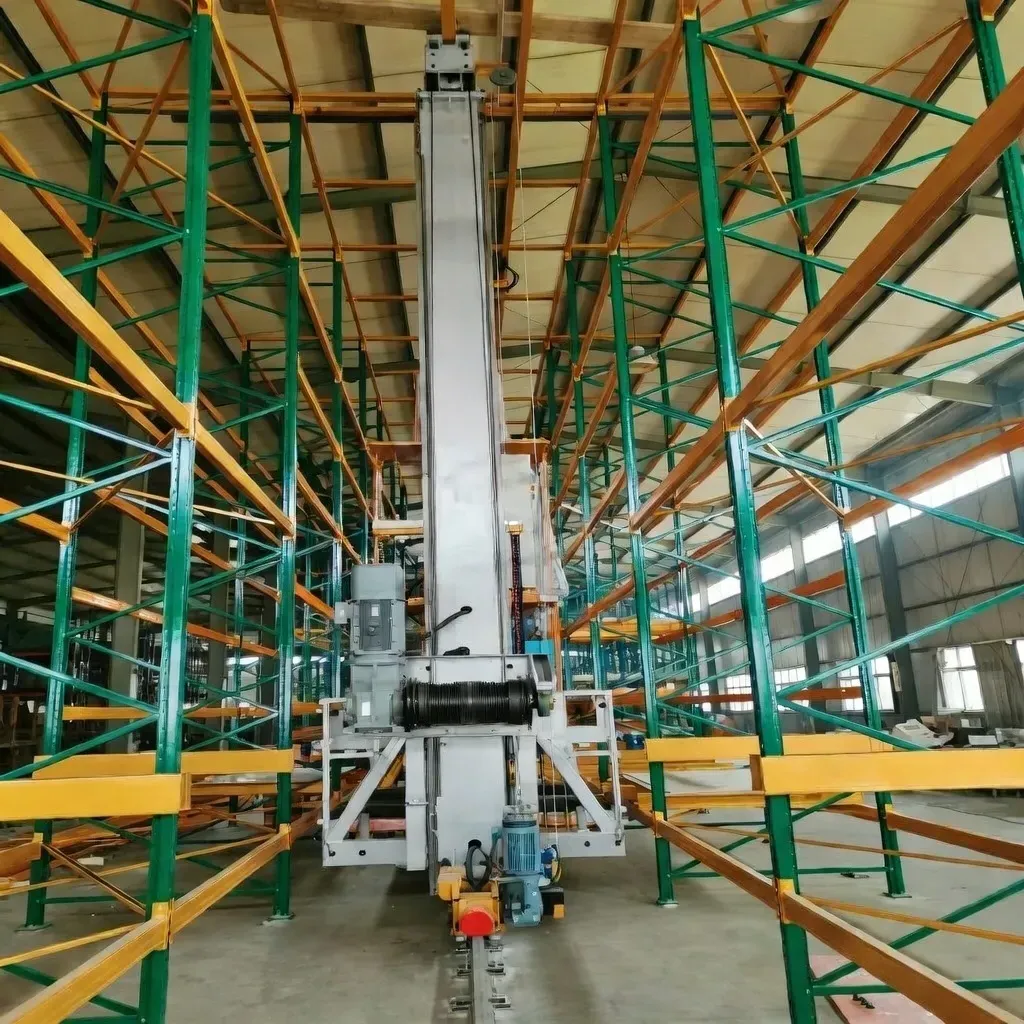
 High-bay automated storage and retrieval systems (AS/RS) have redefined the economics of warehousing across the United Kingdom, compressing the footprint required for half a million pallet positions into racking towers that touch 40 metres and beyond. At the heart of every automated stacker crane that traverses those aisles — accelerating, lifting, depositing, returning — is a portfolio of mechanical transmission components that must perform with unwavering precision across millions of duty cycles. Among those components, the industrial drive shaft is simultaneously one of the most demanding and the most frequently underspecified. This article draws on real-world application knowledge to explain how drive shaft engineering choices shape crane reliability, throughput, and total cost of ownership in UK warehouse automation projects.
Engineered for UK AS/RS integrators and warehouse operators requiring custom drive shaft solutions
The Underestimated Role of Drive Shafts in Automated Stacker Crane Systems
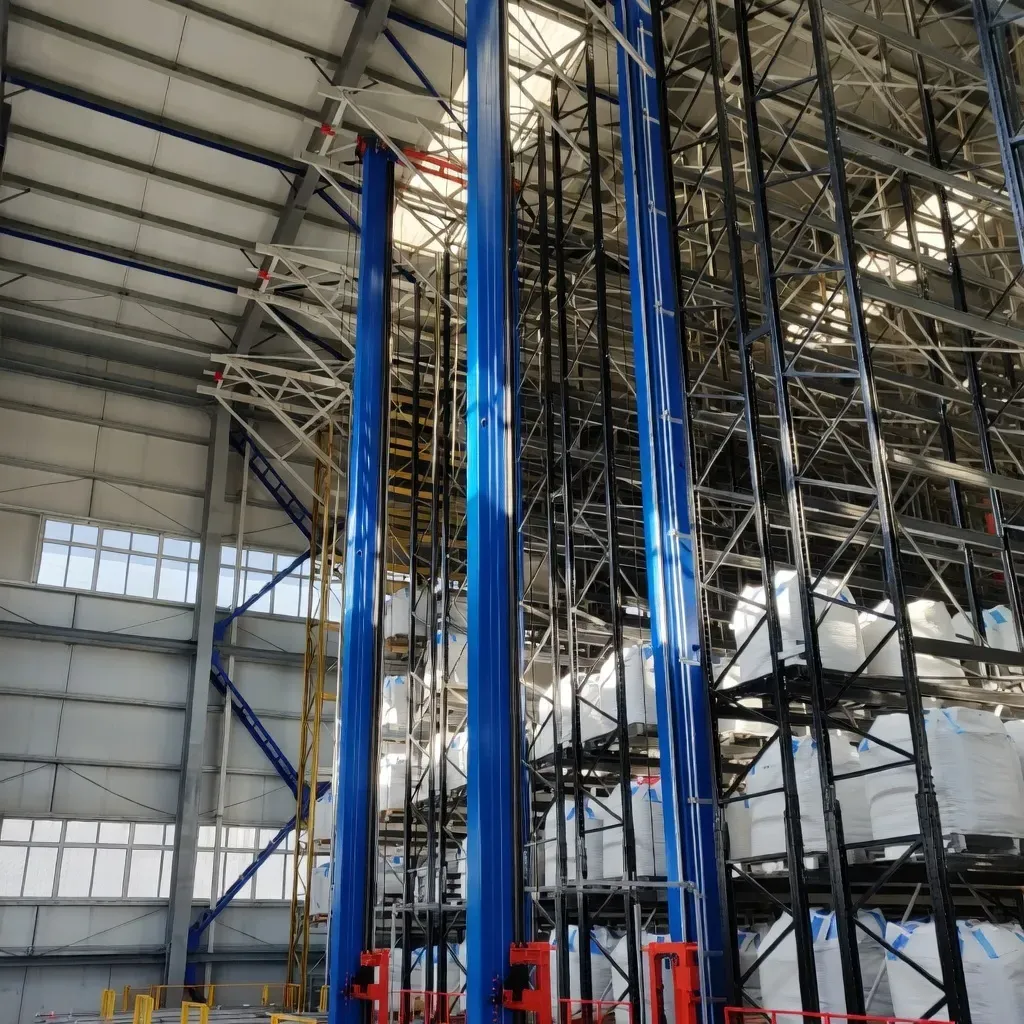 Ask any maintenance engineer who has managed a high-bay warehouse in the Midlands, along the M6 corridor, or in the London Gateway logistics cluster, and they will point to the same uncomfortable truth: unplanned crane stoppages are among the costliest failures in the entire facility. When a stacker crane stops inside a narrow aisle, it does not merely lose its own throughput — it blocks the aisle for every subsequent pick and deposit cycle, backs up order processing, and in a worst-case scenario forces the warehouse management system to re-route pallets through manual alternative channels that quickly become overwhelmed. Post-incident root cause analyses repeatedly identify worn, incorrectly specified, or environmentally degraded drive shafts as a primary mechanical contributor to these events, yet the drive shaft rarely receives the same engineering scrutiny as the motor, inverter, or control system.
The mechanical demands placed on a drive shaft in a stacker crane differ fundamentally from those encountered in most other rotating machine applications. The shaft exists as part of a dynamic, moving platform that accelerates and decelerates multiple times per minute under varying load conditions. The steel mast structure within which it operates experiences thermal expansion gradients between floor level and the 30- or 40-metre mast head that can displace mounting points by several millimetres through the course of a working day. Rail straightness tolerances, accumulated over hundreds of metres of track, introduce further geometric misalignment that the joint assembly must accommodate without generating additional vibration or bearing loads. And all of this happens continuously, across tens of thousands of cycles per week, for years at a time.
The consequence of poor drive shaft specification in this environment is not a gradual, telegraphed decline — it is a progressive degradation that remains invisible until a spline strips, a cross-bearing fractures, or a shaft body fails in torsional fatigue, at which point the crane stops abruptly and the engineering team faces both an emergency repair and the uncomfortable question of whether the other cranes in the facility are running on equally marginal components. The goal of precise drive shaft specification is to ensure this question is never asked under crisis conditions.
Technical Performance Parameters
Ever Power stacker crane drive shaft programme — standard and extended-custom specification range (all values subject to application-specific engineering review)
| Parameter | Standard Range | Extended Custom | Application Note |
|---|---|---|---|
| Nominal Torque | 500 – 8,000 N·m | Up to 25,000 N·m | Class 8 heavy-lift stacker cranes |
| Angular Misalignment | ± 3° | ± 8° (double Cardan) | Mast thermal deflection |
| Axial Compensation (Plunge) | ± 25 mm | ± 80 mm | Rail expansion & mast sway |
| Operating Speed | 100 – 1,500 RPM | Up to 3,000 RPM | Dynamically balanced per ISO 1940-1 |
| Shaft Material | 42CrMo4 alloy steel | 34CrNiMo6 / AISI 4340 | Quenched & tempered |
| Surface Hardness (spline zone) | 58 – 62 HRC | 62 HRC (induction hardened) | Hard case over tough core |
| Dynamic Balance Grade | G6.3 | G2.5 | ISO 1940-1 certified |
| Operating Temperature | -20°C to +80°C | -50°C to +120°C | Cold-store & high-temp variants |
| Corrosion Protection | Zinc phosphate + EP grease | Epoxy coat + stainless steel yokes | Food-grade & pharma options |
| Design Service Life | 30,000 operating hours | 50,000 hours (verified) | Based on duty cycle analysis |
| Backlash (spline zone) | Below 0.05° | Below 0.02° | DIN 5480 ground spline profiles |
Six Engineering Advantages That Set Our Stacker Crane Drive Shafts Apart
Designed from the ground up for the kinematic, thermal, and fatigue demands of UK automated warehouse environments
Zero-Backlash Ground Spline Profiles
Involute spline profiles ground to DIN 5480 tolerances maintain angular play below 0.02° even after millions of load reversals. In position-controlled stacker cranes relying on encoder feedback to place pallets within ±5 mm, this directly reduces correction cycles, lowers bearing loads on mast rail bogies, and extends overall system positioning accuracy over the crane’s operational life.
42CrMo4 Fatigue-Rated Alloy Steel Body
Every shaft body is produced from 42CrMo4 quenched-and-tempered alloy steel, minimum yield strength 900 MPa. Fillet radii at critical cross-section transitions are CNC-profiled to minimise stress concentration factors, and subsequent shot-peening introduces compressive residual surface stress of -400 to -600 MPa — passively extending crack initiation life by a factor of two to three compared with unpeened equivalents under the cyclic loading profile of a 24/7 warehouse crane.
Double Cardan Constant-Velocity Joints
A conventional single-joint Cardan shaft introduces cyclic velocity fluctuation at operating angles — up to 3% at 3° angle — which shows up as micro-vibration in the drivetrain and harmonic current variation at the inverter. Our double Cardan configuration eliminates this fluctuation entirely. For cranes with mast heights above 20 metres where structural deflection regularly pushes joint angles beyond 3°, this translates to smoother inverter operation, longer cross-bearing life, and reduced maintenance intervention frequency.
Cold-Store Rated Down to -50°C
UK cold-chain logistics operators at sites from Grimsby to Bristol run stacker cranes inside vaults at -25°C to -30°C. Standard lubricants congeal, standard seals embrittle, and standard steels lose toughness at these temperatures. Our cold-store drive shaft variant uses NLGI 00 synthetic grease rated to -60°C, fluoroelastomer lip seals, and AISI 4340 steel with enhanced sub-zero Charpy impact values — specifically engineered for continuous frozen-environment duty without compromising torque capacity.
Full CE Documentation Package
Every drive shaft supplied to UK OEM integrators includes a technical documentation package supporting CE Marking under the UK Machinery Regulations 2008: EN 10204 3.1 material certificates, dimensional inspection reports, dynamic balance certificates, induction hardness records, and FEA analysis summaries. For OEM teams managing their own Declaration of Conformity, this documentation package substantially reduces the internal engineering burden and audit preparation time for each crane build.
3–5 Day Rapid Replacement Cross-Reference
OEM replacement lead times of 8–12 weeks are operationally unacceptable for a facility running 24/7. Our cross-reference service — activated by submitting an original part number, dimensional sketch, or photograph of the existing shaft — produces a drop-in equivalent in 3–5 working days for standard variants. Same interface dimensions, same or improved load ratings, often at a significantly lower unit cost than OEM list pricing. This service alone has saved UK maintenance teams from extended unplanned outages on multiple occasions.
Material Science and Engineering Principles Behind Long-Life Stacker Crane Drive Shafts
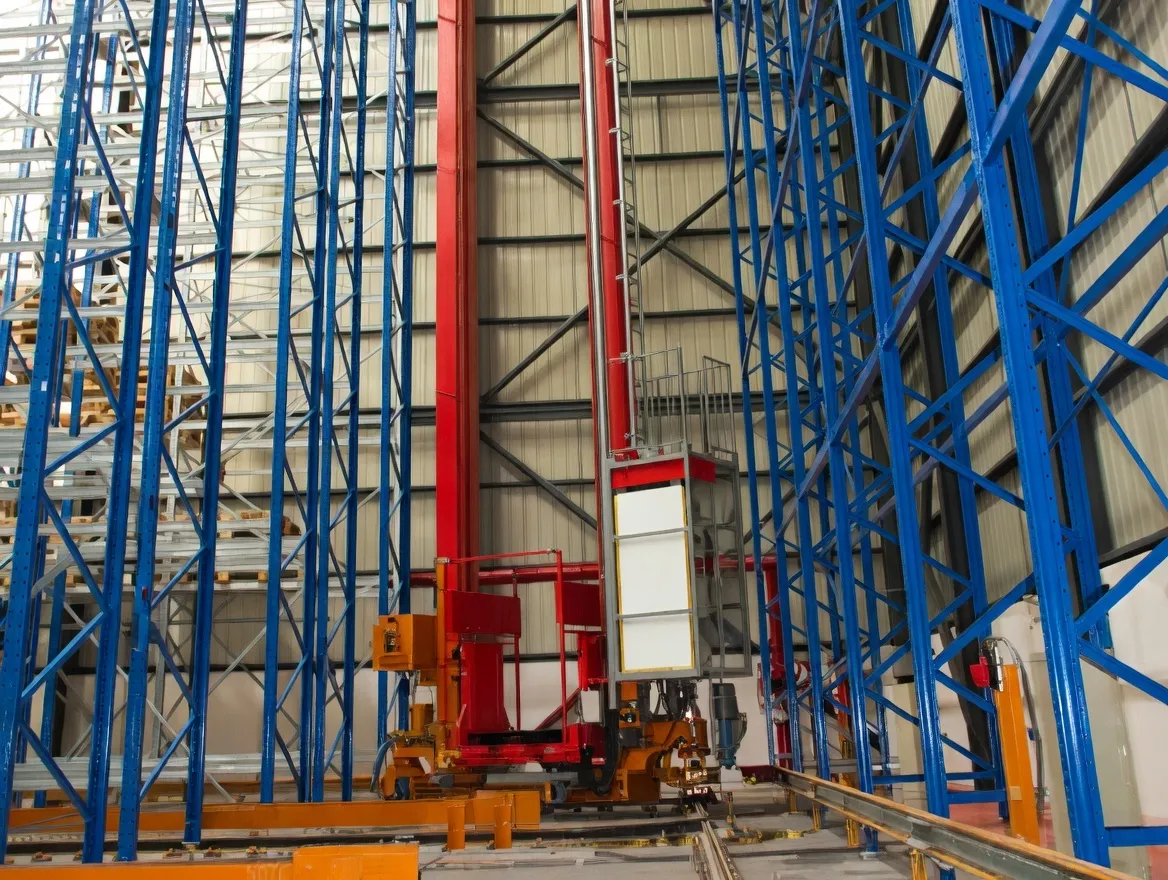 The choice of shaft material cannot be reduced to a tensile strength figure selected from a materials database. For a stacker crane drive shaft, the governing failure mode is not static overload — it is high-cycle rotational fatigue, initiated at stress concentrators such as keyway run-outs, snap ring grooves, or spline tooth root fillets. The fatigue limit of the shaft material under rotating bending loads, and the fatigue strength reduction factors associated with each geometric discontinuity, determine the practical service life far more reliably than any static yield or ultimate strength comparison.
42CrMo4 quenched and tempered to 900–1,100 MPa yield strength provides a rotating bending fatigue limit of approximately 450 MPa — roughly double that of S355 structural steel and triple that of mild steel. Where shaft diameter is constrained by the crane gearbox output envelope and the designer cannot freely increase section size to reduce stress, 34CrNiMo6 provides a fatigue limit exceeding 520 MPa in the hardened condition. At the extreme end of the programme, for Class 8 crane hoist mechanisms where both torque density and material toughness matter simultaneously, AISI 4340 is specified for its combination of high fatigue strength and the superior Charpy impact values critical in cold-store environments below -20°C.
Surface engineering adds another layer of protection that bulk material selection alone cannot provide. Induction hardening of the spline and journal bearing zones produces a martensitic case 1.5 mm to 2.5 mm deep at 58–62 HRC, offering wear resistance at the sliding spline surfaces while preserving the tough, slightly softer core necessary to resist fracture under shock loading. Shot-peening of the surface following hardening introduces compressive residual stress of -400 to -600 MPa at the subsurface — a passive measure that effectively delays the initiation phase of fatigue crack development, extending the period during which the shaft operates without any detectable crack growth. Together, these surface treatments extend the practical service life of a well-specified drive shaft under stacker crane duty to 30,000–50,000 hours, compared with a bare machined shaft of equivalent material which might reach only 12,000–18,000 hours before requiring inspection-driven replacement.
Drive Shaft Applications Across UK Automated Warehouse Sectors
From ambient e-commerce fulfilment to sub-zero cold-chain logistics, our shafts are engineered to each sector’s specific torque, speed, and environmental profile
📦
E-Commerce Fulfilment Centres
Peak throughput of 400–600 crane cycles per hour at fulfilment hubs across the East Midlands, Yorkshire, and the Thames Estuary demands drive shafts with exceptional fatigue margins and maintenance-free lubrication intervals exceeding 8,000 hours. We design specifically for the high duty-cycle density of e-commerce AS/RS, where cranes rarely complete a full stop before the next pick command is issued.
🚗
Automotive Parts AS/RS
JIT supply lines at car assembly plants in the West Midlands and Sunderland use stacker cranes to sequence sub-assemblies direct to line. Emergency stop shock loads in these environments can reach 3× nominal torque, and encoder positioning accuracy determines sub-assembly sequencing correctness. Drive shafts here require both high fatigue strength and near-zero backlash — our automotive variant addresses both.
❄️
Frozen Food & Cold-Chain
Frozen storage facilities in Grimsby, Bristol, and central Scotland operate stacker cranes continuously at -25°C to -30°C, with defrost cycles that repeatedly take the shaft through a wide thermal range. Our cold-store drive shaft variant handles all of these conditions with validated material, lubricant, and seal specifications — with zero failures recorded across multiple UK sites over 30 months of operation.
💊
Pharmaceutical & Life Sciences
GMP-compliant automated storage in UK pharmaceutical distribution requires fully traceable materials, non-contaminating surface treatments, and documentation supporting MHRA and FDA audit trails. Our pharmaceutical-grade drive shaft package includes full EN 10204 3.1 material certification, non-mineral lubricant options, and an auditable inspection dossier for every shipped unit.
🏗️
Steel & Heavy Industrial Storage
Plate and coil stacker cranes at steel service centres in Sheffield, Scunthorpe, and Newport carry unit loads exceeding 5,000 kg. Drive shafts for these Class 6–8 applications are sized to our heavy-duty specification, incorporating larger trunnion cross-sections, higher-rated bearing assemblies, and extended plunge travel to handle the structural deflections common in large-span crane structures under full load.
Customer Success Story: Frozen Food Distribution Group, East Midlands, UK
A documented case from our ongoing partnership with a major UK cold-chain logistics operation
The Client
Major UK Frozen Food Group
East Midlands, England
Facility
High-Bay Frozen AS/RS, 40 m height
Operating at -25°C, 24/7, 365 days
Crane Fleet
12 × automated stacker cranes
Single-mast, Class 4, 1,000 kg UL
The Challenge
Original OEM drive shafts were failing at cross-bearing assemblies within 14–18 months of installation — far short of the projected 60-month replacement interval. Each failure required an emergency maintenance entry into the frozen vault, with crane operation suspended for an average of 11 hours per incident. Personnel entering the vault to conduct repairs faced significant cold-stress exposure. Over a 24-month review period the facility recorded seven such incidents, producing an estimated £340,000 in combined direct repair costs, unplanned agency staffing, and lost throughput. The root cause analysis identified lubricant congealing at -25°C and standard neoprene seal embrittlement allowing moisture ingress during daily defrost cycles as the primary failure drivers. The OEM was unwilling to modify the standard shaft design for this application.
Our Solution & Outcome
Our applications engineering team conducted a duty cycle analysis using the client’s WMS transaction logs to establish actual torque demand profiles, peak shock loads during emergency stops, and the thermal cycling pattern between the ambient receiving dock and the -25°C vault. On this basis we designed a custom cold-store drive shaft: AISI 4340 shaft body, fluoroelastomer lip seals, NLGI 00 synthetic grease validated to -60°C, and a modified trunnion geometry that increased bearing projected area by 22% to reduce contact stress under the low-temperature load. The replacement programme was carried out across all twelve cranes in a scheduled two-week maintenance window. In the thirty months since installation, there have been zero drive shaft failures across the entire fleet.
“After years of managing recurring shaft failures in our frozen AS/RS, the Ever Power cold-store shafts have simply been invisible — and that is exactly what you want from a drive component. Zero failures in thirty months of continuous operation across twelve cranes.”
— Head of Engineering & Maintenance, East Midlands Frozen Distribution Facility
★★★★★
“We integrated Ever Power drive shafts into six new stacker crane units at our Coventry automotive parts facility. The dimensional accuracy was outstanding — no rework, straight fit on first installation. Eighteen months in and performance remains completely problem-free.”
Maintenance Director — Automotive Parts Distributor, Coventry, West Midlands
★★★★★
“The cross-reference service saved us enormously during our last planned outage. We submitted drawings on a Tuesday morning and had the replacement drive shafts on-site by Thursday afternoon. Quality matched — and in two cases measurably exceeded — our original OEM specification.”
Engineering Manager — 3PL Operator, Trafford Park, Greater Manchester
★★★★★
“As a pharmaceutical distributor under regular MHRA audit, the material traceability documentation that comes with each Ever Power shaft has made a genuine difference to our quality management process. Our auditors reviewed the dossier and commented positively on the level of documentation provided.”
Quality & Compliance Manager — Pharmaceutical Distributor, Hertfordshire
Custom Drive Shaft Engineering — From Application Brief to Finished Component
Our manufacturing facility operates a fully integrated production capability that takes a stacker crane drive shaft from raw bar to finished, inspected, and documented component without any outsourced operations. This vertical integration is not simply a commercial positioning — it is the practical foundation of our ability to respond to urgent replacement needs in days rather than weeks, and to maintain the consistent quality required by customers operating under MHRA, ISO 9001, or automotive IATF 16949 quality frameworks. Every customisation we carry out — whether a non-standard shaft length, a bespoke flange PCD, a modified yoke interface, or a completely new design from engineering brief — is executed in-house, with full traceability from material receipt to despatch inspection.
Our In-House Manufacturing Capabilities
✓Multi-axis CNC turning centres — complete shaft machining in single setup
✓In-house induction hardening — case depth 1.0–3.0 mm, 55–63 HRC
✓CNC gear hobbing — DIN 5480 spline profiles, module 1 to module 10
✓Dynamic balancing line — ISO 1940-1 G2.5 for shafts above 1,200 RPM
✓Weld fabrication — large-diameter hollow tubes in S355 and P460
✓CMM dimensional inspection — full report with every custom order
✓FEA-assisted design — weight optimisation without fatigue compromise
✓Prototype delivery typically 10–15 working days from drawing sign-off
What We Can Customise for Your Crane
We handle the full spectrum of customisation requirements: non-standard shaft lengths (we have produced shafts from 180 mm to 3,600 mm), custom flange PCDs and bolt patterns for specific gearbox interfaces, modified yoke profiles for existing coupling partners, custom plunge stroke lengths for thermal expansion requirements, cold-store lubricant and seal upgrades, corrosion-protection upgrades for aggressive environments, and complete new designs from an engineering brief. Our team is equally comfortable working from a detailed 2D drawing, a 3D model, an OEM part number, or a dimensional survey of the fitted shaft — whatever format your engineering team works in, we work with it.
Have a stacker crane drive shaft requirement? Send us your drawing, OEM part number, or specification — our applications engineer will respond with a validated proposal within one business day.
Supplying Drive Shafts to UK Warehouse Automation Integrators and Operators Nationwide
The United Kingdom’s warehouse automation sector has expanded at a pace that has consistently outrun the supply chain readiness of component manufacturers. The combination of structural growth in e-commerce fulfilment, rising labour costs driving capital investment in mechanisation, the post-pandemic acceleration of robotics and AS/RS adoption, and the UK’s relatively high building land costs — which make vertical storage economically compelling — has created an environment in which stacker crane installations are being commissioned at a rate that few OEM component supply chains were designed to support. The consequence for UK maintenance teams and OEM integrators is that standard parts often carry unacceptably long lead times precisely when they are needed most urgently.
We supply custom and standard drive shafts for automated stacker crane systems to clients throughout England, Scotland, Wales, and Northern Ireland. Active supply relationships exist with customers across the UK’s principal logistics clusters: the East Midlands Golden Triangle (Lutterworth, Corby, Northampton), Trafford Park and the Greater Manchester logistics belt, the Thames Estuary and Tilbury port logistics corridor, the Bristol-Cardiff M4 belt, the West Yorkshire logistics zone around Wakefield and Normanton, and the central Scotland distribution cluster around Motherwell and Livingston. Our applications engineering team is accessible by email and video call, responds to technical enquiries within four business hours, and is available for on-site application review visits by appointment.
For UK OEM integrators building stacker crane systems for domestic or export supply, our OEM partnership programme includes preferred pricing on volume orders, advance production capacity reservation aligned with your project pipeline, co-engineering support during prototype crane build phases, and joint technical documentation formatted to support CE Marking under the UK Machinery Regulations 2008. We understand the pressure of crane commissioning schedules and the cost of delays — our commitment is to be a supply partner that removes component procurement as a project risk rather than adding to it.
Frequently Asked Questions
Questions from UK warehouse operators, OEM integrators, and procurement managers
How do I know which drive shaft specification is correct for my specific stacker crane application in a UK high-bay warehouse?
Shaft selection starts from four parameters: nominal torque at the shaft coupling under maximum load acceleration (calculated from motor rated torque, gearbox ratio, and duty service factor), operating speed range, the angular and axial misalignment budget defined by your crane geometry and mast deflection tolerance, and the operating environment including temperature, moisture, and contamination exposure. If you can supply the gearbox output specification and crane class, our applications team can generate a validated shaft proposal within 24 hours. Where precise torque data is unavailable, we can back-calculate from the crane’s rated load, travel and lift speeds, and acceleration ramp profile.
What is the typical price range and lead time for a custom stacker crane drive shaft order placed from a UK logistics facility?
Unit cost varies considerably depending on shaft diameter, length, joint type, material grade, and documentation requirements. As a broad reference, standard single-joint Cardan shafts for smaller crane classes typically fall in the range of £380–£950 per unit; double Cardan configurations for Class 6–8 heavy-lift cranes generally range from £1,200 to £3,500. Prototype first-off lead time is typically 10–15 working days from drawing sign-off. Repeat orders for standard variants are usually available within 3–5 working days. Send your specification to [email protected] for a precise quote.
Where can I find a reliable UK supplier of replacement drive shafts for Jungheinrich, SSI Schäfer, or Dematic stacker cranes?
Ever Power supplies aftermarket-equivalent and technically improved drive shafts for stacker cranes from all major OEMs including Jungheinrich, SSI Schäfer, Dematic, Swisslog, TGW, Knapp, and Mecalux. Our cross-reference service works from OEM part numbers, original drawings, or dimensional surveys of the shaft currently installed on your crane. We consistently meet or exceed the original manufacturer’s specification at a lower unit cost and with UK-competitive lead times, without requiring customers to deal with lengthy OEM procurement processes.
How long should a correctly specified drive shaft last inside a 24/7 automated stacker crane operating in a UK frozen food warehouse at -25°C?
In a continuous 24/7 frozen environment at -25°C, a drive shaft correctly specified for cold-store duty — with appropriate lubricant, seal material, and alloy steel — should deliver a minimum service life of 30,000 operating hours, equivalent to approximately 3.4 years of non-stop operation. Our cold-store optimised shafts are designed and validated to 50,000 hours under representative duty cycles. Premature failures in frozen environments are almost invariably caused by lubricant congealing, standard-rubber seal embrittlement, or condensation-driven bearing corrosion during defrost cycles — all three failure modes that our cold-store design specifically addresses from the outset.
Which joint type — single Cardan, double Cardan, or flexible disc coupling — is best suited for the hoist mechanism drive shaft on a Class 4 automated stacker crane?
For Class 4 hoist mechanisms where the angular offset between gearbox and hoist drum is typically 2°–4° and operating speed is below 400 RPM, a single Cardan shaft provides the best balance of cost, simplicity, and performance. A double Cardan joint becomes the right choice when the offset angle exceeds 4°, or when velocity uniformity at low speed is critical — for example, in cranes serving robotic end-effectors where any velocity ripple affects positioning accuracy. Flexible disc couplings suit zero-offset, axially aligned applications and should not be used where angular misalignment is present, as their misalignment absorption relies on elastic deformation with a finite fatigue life that is poorly suited to millions of stacker crane duty cycles.
What CE Marking documentation does Ever Power provide with drive shafts supplied to UK OEM crane integrators who are assembling machinery for the British market?
Every OEM supply order includes a comprehensive technical documentation package: EN 10204 3.1 material test certificates for all steel components, a full dimensional inspection report to drawing tolerances, a dynamic balance certificate to ISO 1940-1, surface hardness test records, an FEA analysis summary with safety factor calculations at critical cross-sections, and a Declaration of Incorporation confirming suitability for integration into CE-marked machinery. This package is supplied in English, formatted to align with standard technical file structure requirements under the UK Machinery Regulations 2008 as retained in UK law post-Brexit.
Note for site administrators: Add FAQPage + Speakable JSON-LD structured data via your SEO plugin (Rank Math / Yoast SEO) to enable rich result eligibility and voice search targeting for these FAQ entries.
Ready to Specify Drive Shafts for Your Stacker Crane Project?
Send us your specification, drawing, or OEM part number. Our applications engineers respond within one business day with a validated technical proposal and competitive price.
✉ Contact Our Engineering Team
redigerad av gzl