PTO Drive Shaft Vibration: Causes and Solutions
A diagnostic guide for farm engineers and machinery operators covering the seven most common vibration faults, how to identify each one, and what to do about it before the shaft fails completely.
Browse PTO Drive Shaft Range →
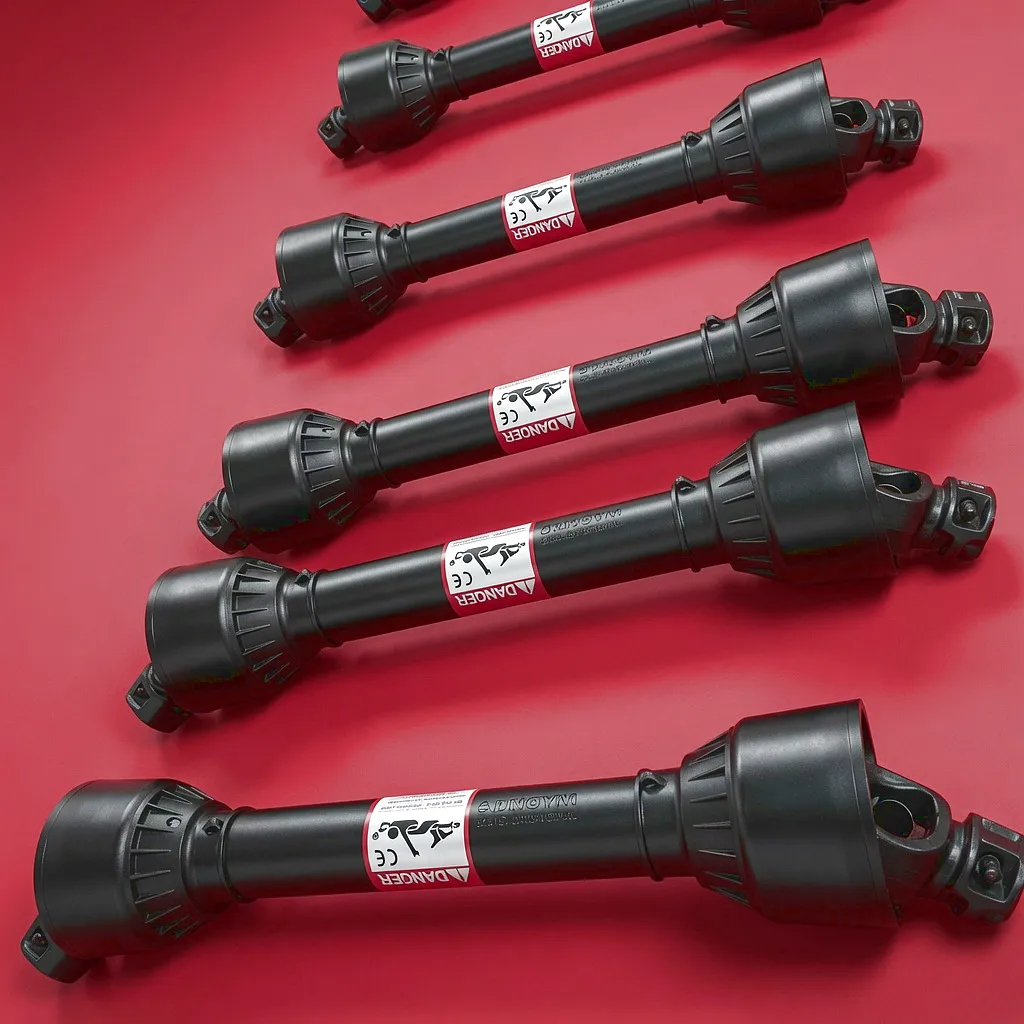 Excessive vibration in a PTO drive shaft is never simply an irritation. Left unresolved, it accelerates bearing wear at every U-joint cross, fatigues the telescoping tube welds, loosens yoke locking collars and transmits damaging oscillating loads into the implement gearbox and tractor rear transmission. On high-output machinery such as large square balers and maize choppers running at 1000 rpm, the energy contained in an unbalanced or misaligned shaft is substantial enough to fracture components within a single working day.
The difficulty with PTO shaft vibration is that different faults produce subtly different vibration signatures. A shaft that vibrates at a specific engine speed is responding very differently from one that vibrates continuously regardless of rpm, and both are different again from a shaft that vibrates only under load. Identifying which type of vibration is present is the first step toward an effective and lasting repair.
This guide covers the seven primary causes of PTO shaft vibration encountered on working farms, explains how to diagnose each one without specialist equipment, and sets out the correct remedial action. A reference table at the end summarises symptoms, causes and solutions in a format suitable for use as a workshop diagnostic aid.
1. Operating Angle Too Large
What happens: A standard U-joint PTO shaft produces a non-uniform output velocity even when turning at a steady input speed. This velocity variation is a natural property of the Hooke joint geometry and increases with operating angle. At angles below 8 degrees the variation is small enough to be imperceptible. At 12 degrees it becomes a measurable once-per-revolution torque pulse. Above 15 degrees in continuous operation the torque pulse is strong enough to cause audible vibration, accelerated cross-bearing wear and cyclic stress in the shaft tubes.
How to identify it: Vibration appears when the implement linkage is raised or lowered and changes intensity as the linkage height varies. The vibration is present at all engine speeds above idle and is more pronounced under load. Visual inspection will show the shaft running at a visibly steep angle when the implement is at working depth.
The solution: Adjust the three-point linkage top link length to bring the implement input shaft closer to parallel with the tractor PTO stub. If geometry cannot achieve this, fit a wide-angle shaft rated for the operating angle in use. Wide-angle shafts use a constant velocity joint at one or both ends to eliminate the velocity variation inherent in standard U-joints.
2. Worn or Damaged Universal Joint Crosses
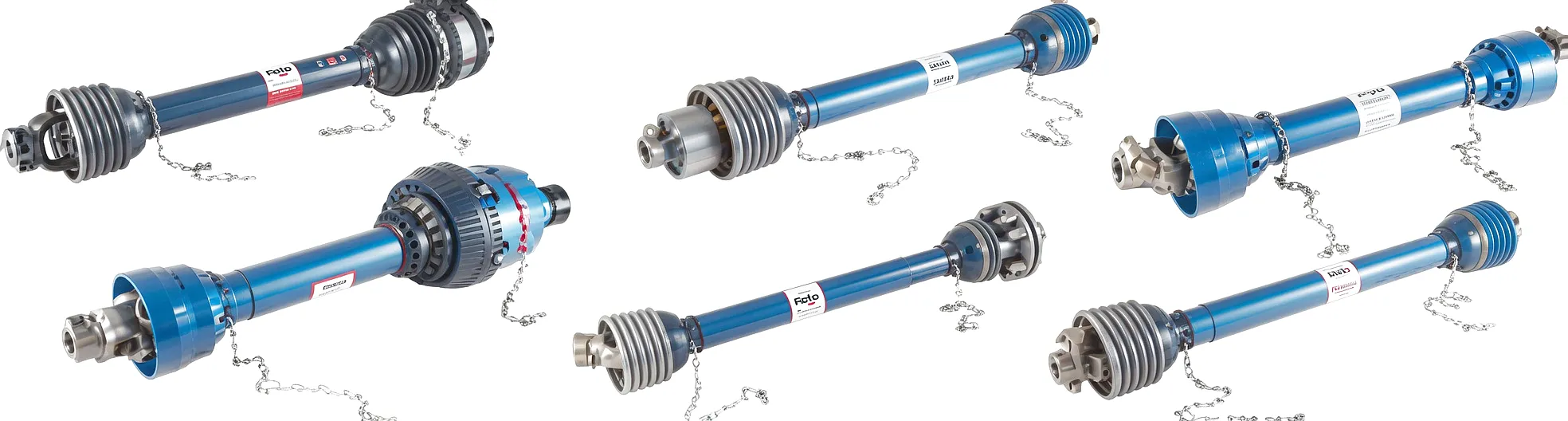
Universal joint crosses carry needle roller bearings inside four bearing caps. These bearings run continuously at PTO speed and must be lubricated every 6 to 8 operating hours. When lubrication is neglected or a seal is damaged, the needle rollers run dry, generate heat, and begin to pit and spall. Once bearing damage reaches a threshold, the journal surfaces develop uneven wear that introduces radial play into the joint.
Worn Cross Bearing Diagnosis Checklist
Static check (engine off)
Grip the shaft either side of each U-joint and attempt to move the joint radially in all four directions. Any perceptible play greater than 0.2 mm indicates worn bearings. A new joint has zero measurable play.
Running check
Vibration from worn crosses tends to be felt as a rough pulse rather than a smooth oscillation. It is present at all speeds and does not vary with operating angle changes. A fine metallic grinding sound at low rpm is characteristic of advanced cross wear.
The solution: Replace the cross and bearing kit at all affected joints. On a shaft with three or more seasons of use it is economical to replace all crosses at once even if only one shows measurable wear, as the remaining joints will reach the same condition within the same season. Crosses are available as service kits and require only a bench vice, circlip pliers and a suitable press or socket to fit.
3. Dynamic Imbalance in the Shaft Assembly
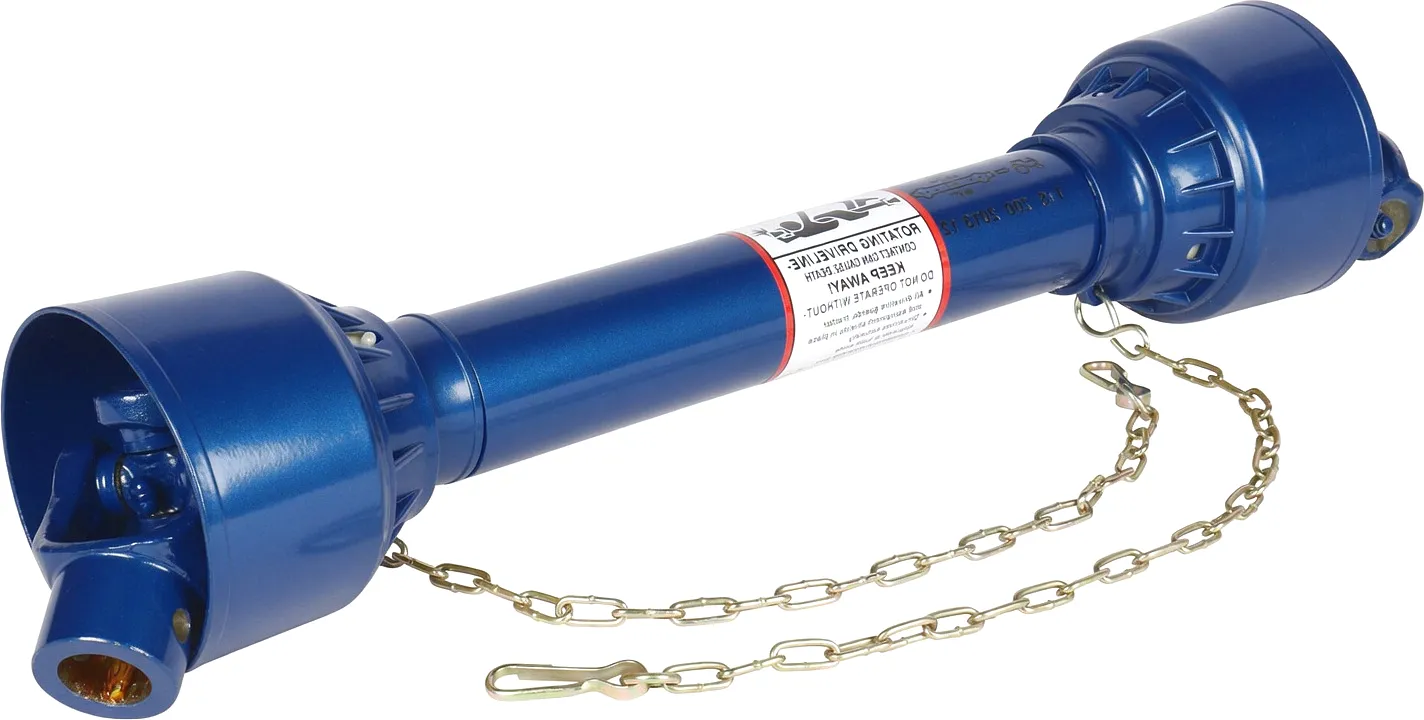
A PTO shaft is a rotating assembly and, like any rotating component, must be balanced to within defined tolerances. New shafts from reputable manufacturers are dynamically balanced to ISO 1940 Grade G6.3 or better before leaving the factory. Imbalance arises in service when:
Accumulation of crop debris
Grass, straw or soil packing into the guard or around the telescoping section adds asymmetric mass. Clean the guard and tube exterior at every refuelling stop during harvest.
Tube denting or bending
Impact damage from stones or field obstructions bends or dents the outer tube. Any visible deformation of more than 3 mm at the tube surface indicates the shaft is beyond repair and must be replaced.
Replacement of individual components
Fitting a yoke or tube from a different batch changes the mass distribution of the assembly. A shaft assembled from mixed components may need professional balancing before use at 1000 rpm.
How to identify imbalance: Vibration from imbalance increases with the square of rotational speed. A shaft with minor imbalance may feel smooth at 540 rpm but vibrate severely at 1000 rpm. If vibration appears or intensifies sharply as engine speed increases through a specific threshold, imbalance is the likely cause rather than angle or bearing wear.
The solution: Clean all debris, inspect for physical damage and replace any deformed tube or yoke. If the shaft has been rebuilt from parts, have it balanced on a dynamic balancing machine before returning it to service at high speed.
4. Telescoping Section Seizure or Binding
The inner and outer tubes of a telescoping PTO shaft slide against each other through a profiled interface, typically square, star or splined profile, which must be kept clean and lightly greased. When this interface runs dry or is contaminated with abrasive field dirt, the tubes begin to bind. A shaft that cannot slide freely during implement pitch and roll is forced to transmit the length-change forces as bending loads on the U-joints and yoke bearings, causing vibration that varies in intensity with ground undulation.
Field Diagnosis: Binding Telescope
With the PTO disengaged and the engine off, grip the shaft at mid-length and attempt to slide the two halves together and apart by hand. A correctly lubricated telescope moves with moderate hand pressure throughout its full travel range. Any point of stiffness, roughness or resistance that requires significant force to pass indicates binding that will cause vibration and premature wear under power.
The solution: Separate the shaft halves, clean both profile surfaces with a rag and degreaser, inspect for rust or burrs and address any found with fine emery cloth, then apply a generous coat of high-melting-point EP2 grease to the full length of the inner profile tube. Reassemble and verify free movement before returning to service. Repeat this process at least once per season on shafts that operate in muddy or wet conditions.
5. Misaligned Yoke Phasing
On a two-joint PTO shaft, the velocity variation introduced by the front U-joint is cancelled by the rear U-joint only when two conditions are met: the operating angles at both ends are equal, and the two yoke forks at the same end of the inner tube are in the same plane, a condition known as correct phasing. If the telescoping tubes are reassembled after cleaning with the inner tube rotated by 90 degrees from its original orientation, the phasing is wrong and the velocity variations at the two joints add rather than cancel, producing a severe twice-per-revolution vibration.
How to Check Phasing
Hold the shaft horizontally and look along its length from the tractor end. The two fork ears of the front yoke should be in exactly the same vertical plane as the two fork ears of the rear yoke. If they are at 90 degrees to each other, the phasing is incorrect. Separate the telescoping tubes and reassemble with the inner tube rotated 90 degrees. Recheck before refitting.
Note: Phasing errors are most common after maintenance. Before separating a shaft for cleaning or cross replacement, mark both tubes with a paint pen at the same clock position so they can be reassembled in the original orientation.
6. Critical Speed Resonance
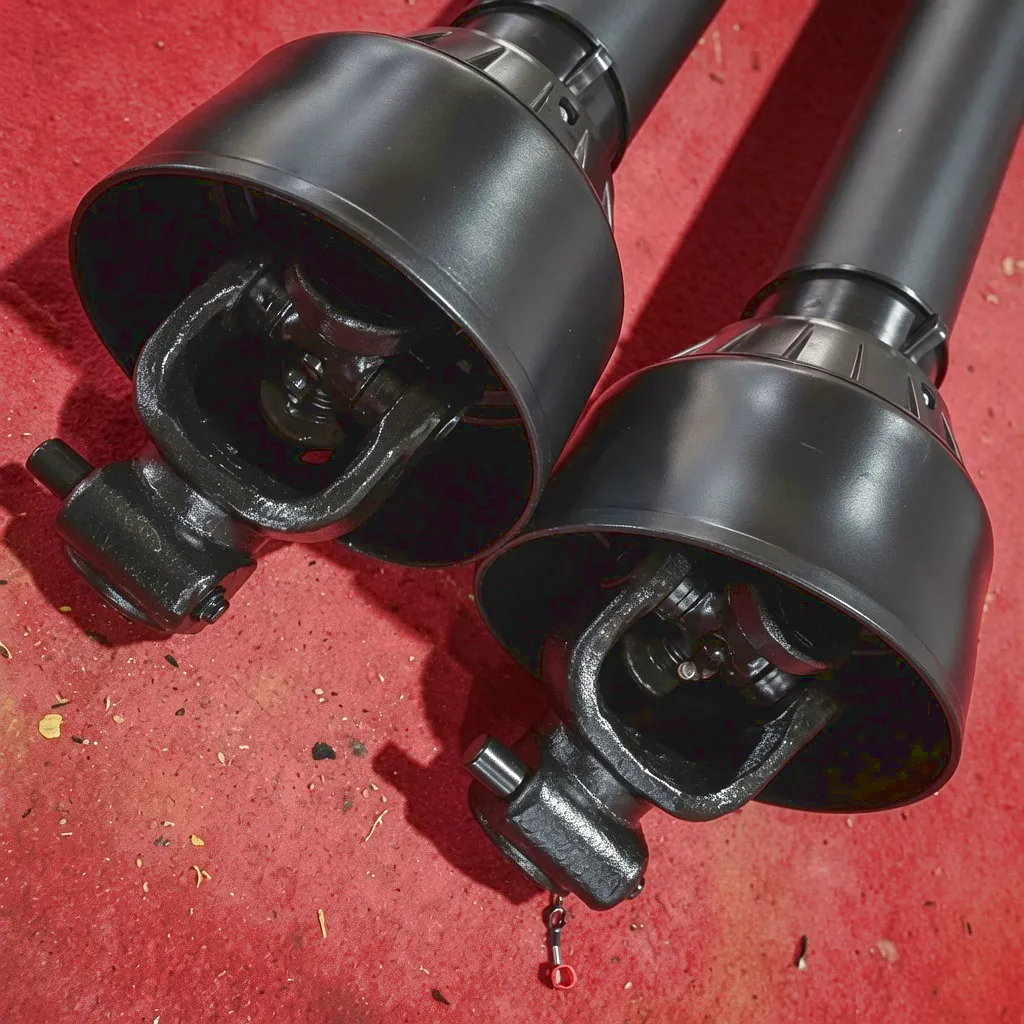 Every PTO shaft has a critical speed, a rotational frequency at which the shaft naturally resonates. Below and above this speed the shaft runs smoothly; at or near the critical speed it vibrates severely, often with a characteristic buzzing or howling tone. Critical speed is determined primarily by shaft length and tube diameter. A long, slender shaft has a lower critical speed than a short, stiff one.
Problems arise when a shaft intended for 540 rpm operation is used at 1000 rpm, when a shaft is extended to the limits of its telescoping range, or when a replacement shaft has a slightly smaller tube diameter than the original and therefore a lower critical speed for the same length.
The solution: If vibration appears only at a specific engine speed band and disappears both above and below that band, critical speed resonance is the likely cause. The immediate remedy is to operate at a speed above the critical speed. A permanent solution requires fitting a shaft with a larger tube diameter or shorter collapsed length appropriate for the operating speed.
7. Loose or Worn Yoke Locking Collar
The spring-loaded locking pin or collar that retains the yoke on the PTO stub is a precision component. Over time the spring weakens, the pin or ball bearing wears, or the groove in the PTO stub that receives the locking element becomes rounded. When the locking interface is worn, the yoke can develop a small axial movement on the stub, typically 0.5 mm to 2 mm, which at 1000 rpm becomes a once-per-revolution impact that transmits through the entire driveline as an audible clunk and low-frequency vibration.
Safety Warning
A yoke that is moving axially on the stub is also at risk of full disengagement under the right combination of load and angle. Never continue operating a shaft where the yoke locking mechanism feels loose or where a tugging sensation is felt through the tractor during PTO engagement. Stop, disengage the PTO, and inspect before resuming work.
The solution: Replace the locking pin assembly and spring as a kit. Also inspect the PTO stub groove for wear. A worn groove requires stub replacement by a qualified mechanic. Attempting to build up a worn stub groove with weld and re-machine it is not recommended as this changes the hardness of the engagement surface.
Quick Diagnostic Reference Table
| Symptom | Most likely cause | Verification test | Remedy |
|---|
| Vibration varies with linkage height | Operating angle too large | Measure shaft angle at working height | Adjust top link or fit wide-angle shaft |
| Rough pulse at all speeds, grinding noise | Worn U-joint crosses | Check radial play in each cross by hand | Replace cross and bearing kits |
| Vibration increases sharply above threshold speed | Dynamic imbalance | Inspect for debris, dents, mixed parts | Clean, repair or rebalance shaft |
| Vibration varies with ground roughness | Telescope binding | Slide tubes by hand, check for stiff points | Clean and regrease profile tube |
| Twice-per-revolution vibration after reassembly | Yoke phasing error | Check yoke fork alignment end to end | Separate and reassemble tubes correctly phased |
| Vibration only at specific rpm band | Critical speed resonance | Check if vibration is absent above and below the band | Fit shaft with larger tube diameter |
| Low-frequency clunk at PTO engagement | Worn yoke locking collar | Check axial yoke play on stub by hand | Replace locking pin kit; inspect stub groove |
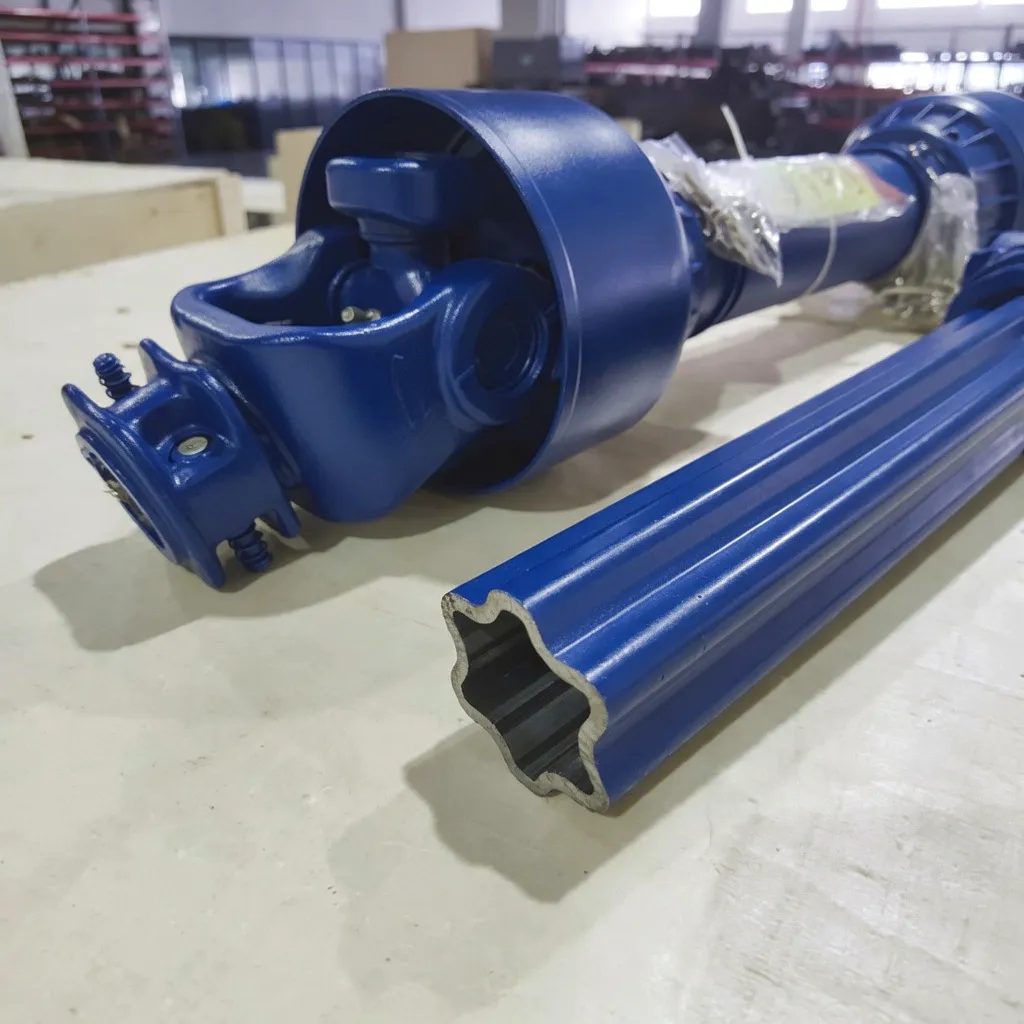
Built to Run Smooth
Every Ever-Power Shaft Leaves the Factory Dynamically Balanced
Dynamic balancing to ISO 1940 Grade G6.3 is carried out as a standard production step on every shaft we manufacture. Our 60,000 m² facility houses dedicated balancing rigs for both 540 rpm and 1000 rpm shaft series, ensuring that vibration from imbalance is eliminated before despatch.
Cross bearings are grease-charged at assembly and sealed with a triple-lip seal rated for field contamination. Full dimensional traceability is maintained under our Triple ISO certification covering quality, environment and occupational health.
Customer Case Study: Agricultural Contractor, Staffordshire
Fallstudie
Midlands Forage Contracting Operation, Staffordshire
Operation: A twelve-tractor contracting fleet covering grass silage, whole-crop and maize harvesting across Staffordshire, Shropshire and the Welsh borders. PTO-driven equipment includes self-propelled forage wagons, disc mowers, twin-rotor rakes and a heavy-duty round baler.
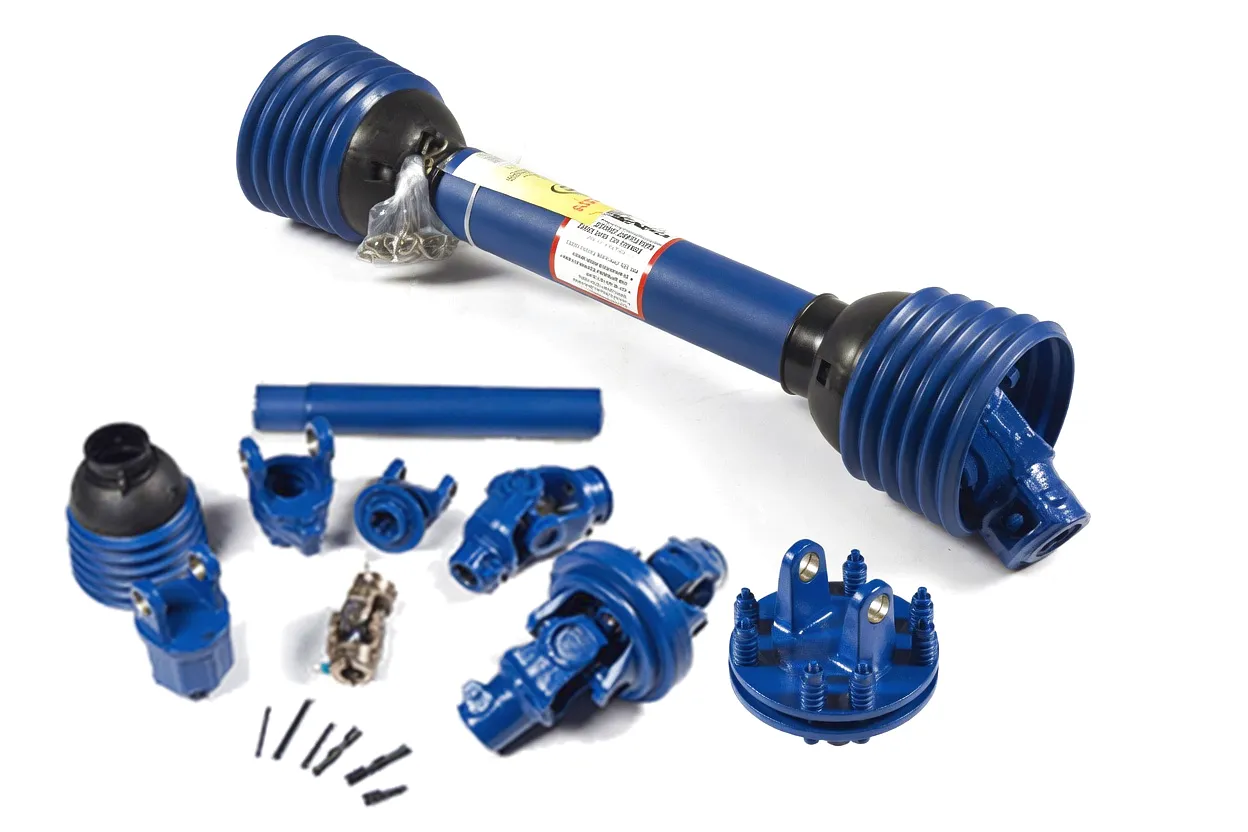 The challenge: During the previous silage season, the operation experienced three separate PTO shaft failures attributed to vibration damage. Two failures involved fractured U-joint crosses and one involved a tube weld failure at a yoke. Post-failure inspection revealed that the failed shafts had all been operating at excessive angles due to variation in implement three-point linkage geometry across different tractor makes in the fleet. The operator estimated total losses from downtime, contractor cover and replacement parts at £11,400 across the season.
The solution: The fleet manager consulted the technical team at Ever-Power PTO Drive Shafts and commissioned a full fleet audit. The audit identified that six shafts were operating above 15 degrees at working depth on one tractor and disc mower combination due to a difference in PTO stub height between tractor makes. These six shafts were replaced with wide-angle models rated to 80 degrees, and the remaining fleet shafts were replaced with dynamically balanced standard-angle units. Cross bearing kits were standardised to a single part number across all shafts to simplify servicing.
The outcome: The following silage season ran with zero PTO shaft failures across all 12 tractors. Pre-season inspection time decreased by 55% as technicians were working with a single shaft specification. The standardised cross bearing kit reduced spare-parts holding from seven different cross sizes to two. The fleet manager reports a net saving of approximately £13,800 in the first full season attributable to eliminated downtime and reduced maintenance overhead.
What Operators and Engineers Say
"
We had a persistent vibration on the baler shaft that three different local engineers had not been able to trace. It turned out to be a phasing error from a previous repair. The replacement shaft from Ever-Power has been smooth ever since.
Graham Fielding
Farm Machinery Technician — Fielding Agricultural Services, Herefordshire
"
The wide-angle shafts made a genuine difference on our front-mounted mower combination. The previous standard shafts were clearly running at the limit of their angle tolerance judging by the cross wear we were seeing at every service. Six months on and the new joints still feel tight.
Andrew Peel
Arable Farmer — Peel Farms Partnership, Cheshire
"
Ordered three replacement shafts mid-season and they arrived correctly labelled and packaged with grease nipples already fitted. The shafts ran without any vibration from first engagement. Good manufacturing quality that you can feel in the smoothness of the assembly.
Mark Sutherland
Agricultural Contractor — Sutherland Contracting, Aberdeenshire
Vanliga frågor
Is some vibration in a PTO shaft normal?
A correctly installed, balanced and lubricated
Kraftöverföringsaxel at normal operating angle should be essentially vibration-free. A light buzz transmitted through the tractor floor mat at high engine speed is at the limit of acceptable; anything felt as a distinct pulse, knock or oscillation in the seat or steering wheel is outside normal parameters and requires investigation.
Can I repair a bent PTO shaft tube?
No. A bent or dented shaft tube must be replaced, not straightened. Cold-drawn steel tube used in PTO shafts is manufactured to tight dimensional and hardness tolerances, and any attempt to straighten it introduces residual stress that weakens the tube at the bend. The out-of-round cross-section that results from denting also prevents the telescoping section from sliding freely. Replacement is the only safe course of action.
How do I know if the vibration is from the PTO shaft or from the implement itself?
Disconnect the PTO shaft and run the tractor alone at the speed where vibration was present. If the vibration disappears, the source is in the driveline. If it remains, the source is in the tractor. Reconnect the shaft and engage PTO without lowering the implement into work. If vibration is present with the implement lifted clear of the ground and not under load, the shaft itself is the likely source. If vibration only appears under working load, the implement internals are more suspect.
What grease should I use on PTO shaft U-joints?
Lithium-complex EP2 grease is the standard specification for agricultural PTO U-joint crosses. Avoid mixing grease types between service intervals as incompatible thickener systems can cause grease separation and loss of film strength. For the telescoping profile tube, the same EP2 specification is appropriate. Avoid using chainsaw bar oil or engine oil as a substitute as these lack the film strength to protect the needle bearing surfaces under the cyclic loading of PTO operation.
How long should a quality PTO shaft last before needing major work?
With correct installation, regular greasing at 8-hour intervals and annual inspection, a quality PTO shaft should give five to eight seasons of farm use before requiring cross replacement, and ten or more seasons before the tube assembly itself reaches the end of its service life. Shafts that receive no maintenance and operate at high angles consistently will often fail within two to three seasons. The maintenance investment is small relative to the replacement cost and the downtime cost of an in-season failure.
Solve It at the Source
Replace a Vibrating Shaft with a Balanced, Precision-Built Unit
When diagnosis points to the shaft itself, Ever-Power supplies dynamically balanced replacements across the full 540 rpm and 1000 rpm range, including wide-angle models for demanding front-mount and high-angle applications. Factory direct, triple ISO certified, 68 patents.
View Ever-Power PTO Drive Shafts →
Factory Direct Supply — Technical Support Available — 3,000+ Projects Delivered
redigerad av gzl