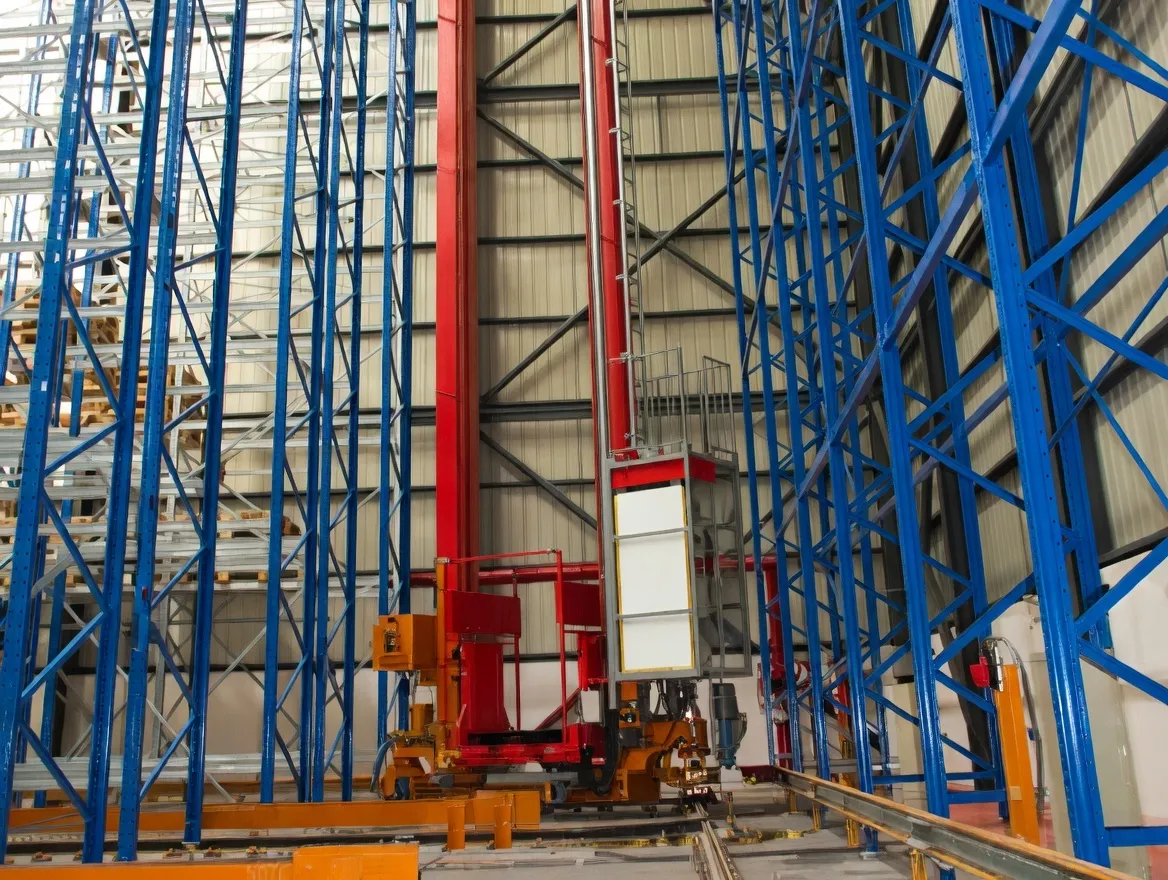
 Automated stacker cranes are the workhorses of modern high-bay warehouses, cold storage facilities, and e-commerce fulfilment centres spread across the United Kingdom. These towering machines — capable of reaching heights of 40 metres or more — rely on a precisely engineered chain of mechanical components to deliver consistent, repeatable performance around the clock, every day of the year. Among those components, the industrial drive shaft occupies a uniquely critical position. It serves as the mechanical bridge between each servo motor and the crane’s travel, lift, and telescopic fork mechanisms, transmitting torque under dynamic loads, misalignment stresses, and the relentless duty cycles that characterise automated storage and retrieval systems.
When a drive shaft underperforms or fails before its expected service interval, the entire warehouse aisle grinds to a halt — a scenario that costs UK logistics operators thousands of pounds per hour in unplanned downtime. With automated storage and retrieval systems becoming standard infrastructure in distribution centres from the Midlands to Central Scotland, the engineering performance of every industrial drive shaft installed inside a stacker crane aisle directly shapes warehouse throughput, operational safety, and total cost of ownership. This guide draws on more than 18 years of hands-on field experience across European and British automated logistics projects to explain why shaft selection is among the most consequential mechanical decisions an AS/RS designer can make, and how purpose-engineered shafts from Ever Power are designed to meet every one of those demands over a service life measured in decades.
Ever Power industrial drive shaft assembly — engineered for automated stacker crane applications · ISO 9001:2015 Certified
✉ Get a Free Quote — Stacker Crane Drive Shafts
[email protected] · Response within 24 business hours
How Stacker Cranes Actually Operate — and Where Drive Shafts Fit In
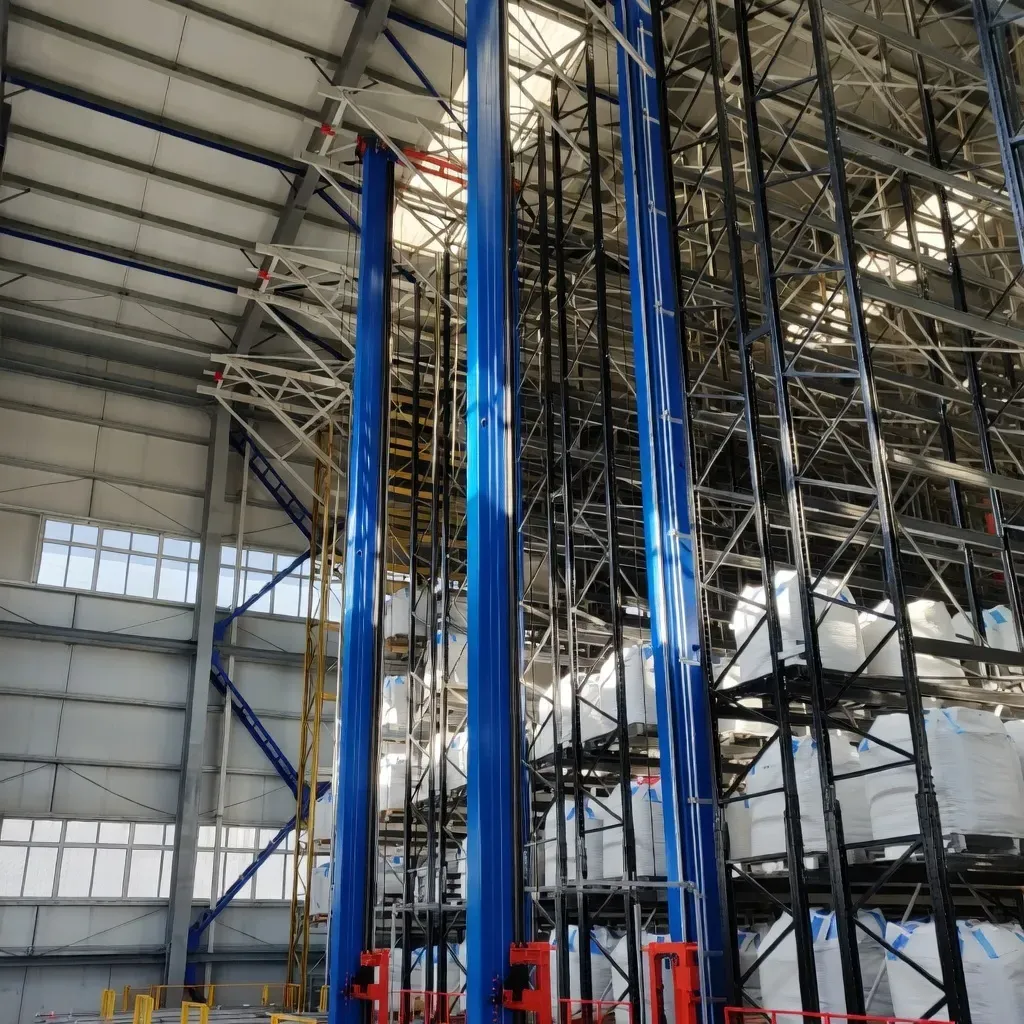 A unit-load or mini-load stacker crane moves along a pair of floor and overhead guide rails inside a narrow aisle. Three primary axes of motion govern every storage and retrieval cycle: horizontal travel along the aisle (the X-axis), vertical lift of the load carriage (the Z-axis), and load-handling via telescopic forks or a shuttle plate (the Y-axis). Each axis is driven by an electric servo or frequency-inverter-controlled motor, and the torque that motor generates must be transferred — cleanly, efficiently, and without angular loss — to the drive wheels, lifting chains, or fork drives. That mechanical transfer is precisely the job of the industrial drive shaft.
Stacker crane drive shafts must cope with a highly demanding combination of engineering challenges simultaneously: spanning the gap between drive unit and driven load, accommodating minor positional misalignment caused by structural deflection under heavy unit loads, absorbing shock inputs when pallets are deposited at rapid deceleration, and doing all of this at operating temperatures that range from -30 °C inside frozen food stores to above +55 °C in sites adjacent to manufacturing heat sources. Standard off-the-shelf catalogue shafts rarely satisfy every one of these criteria — purpose-engineered shafts designed specifically for stacker crane service do, and the difference in service life is typically measured in years rather than months.
The drive shaft must also accommodate misalignment in two planes simultaneously — angular misalignment arising from structural flex of the crane mast under load, and parallel offset misalignment resulting from installation tolerances in the drive bracket assembly. Double-Cardan, or constant-velocity joint, configurations address angular misalignment while delivering a smooth, uniform output velocity. This constant-velocity characteristic is particularly valuable on the X-axis travel drive, where velocity fluctuation generates vibration, accelerates bearing wear, and triggers nuisance fault codes in servo drive controllers — a leading cause of unnecessary maintenance callouts at busy UK automated warehouse sites. Single U-joint designs remain appropriate for shorter, lower-angle applications such as mini-load fork drives, but the joint geometry must be carefully verified against the installation drawing before specifying.
Material Composition, Heat Treatment, and Surface Engineering
The choice of base material is the single most influential decision in the entire drive shaft design sequence. Ever Power engineers stacker crane industrial drive shafts from high-grade alloy steels — principally 42CrMo4 (EN 1.7225) and 40Cr — as the core substrate material. Following forging from solid billet stock, each shaft undergoes quench-and-temper heat treatment, achieving tensile strengths in the 900 MPa to 1,150 MPa range with a balanced toughness profile that resists fatigue crack initiation. This combination of strength and toughness is essential for surviving the millions of torque-reversal cycles that a stacker crane accumulates across a service life measured in decades of continuous warehouse operation.
Yoke and flange components are forged or machined from solid billet — never fabricated from weldments, which introduce heat-affected zones that are inherently more susceptible to fatigue crack propagation. Universal joint cross-kits are assembled with needle-roller bearing sets, factory pre-lubricated and sealed against the fine particle dust that circulates inside even the cleanest warehouse aisles. Journal surfaces are induction hardened to a controlled case depth of 1.0–2.5 mm to resist fretting and wear at the sliding spline interface, which must accommodate the cyclic axial length changes that occur as the crane mast deflects under its rated load.
Surface Treatment Options
Phosphate + Oil
Standard industrial protection — suitable for ambient dry warehouses
Zinc-Nickel Electroplate
High-humidity & washdown environments including chilled stores
Thermal Spray Coating
Port and dockside environments — marine-grade corrosion protection
Cold-Storage Grease Pack
Verified viscosity performance at -40 °C — frozen food AS/RS
Technical Specifications at a Glance
The table below summarises the standard parameter range for Ever Power stacker crane industrial drive shafts. Custom specifications are available across all parameters — see the customisation section below for further detail.
Six Reasons Engineers Specify Ever Power Drive Shafts for Stacker Crane Projects
Built on the collective learning of hundreds of AS/RS installations across the UK and Europe.
High Torque Density in a Compact Envelope
Our quench-and-tempered 42CrMo4 shafts deliver torque ratings up to 12,000 N·m inside diameters that respect the aisle width constraints imposed by UK fire egress regulations and racking system certifications. The result is a shaft that handles the heaviest unit loads — pallet weights up to 1,500 kg are common in UK automotive and beverage operations — without increasing the crane’s structural envelope or requiring gearbox oversizing to compensate for shaft losses.
Verified Cold Storage Performance to -40 °C
With low-temperature synthetic grease formulations and cold-rated seals specified for operation down to -40 °C, our stacker crane industrial drive shafts are built for the UK’s growing frozen food logistics sector. Grease viscosity remains within its operating window throughout the blast-freeze and sub-zero storage temperature cycles encountered in Lincolnshire, Yorkshire, and Scottish cold chain operations — eliminating the current spikes on servo drives that signal joint stiffness at morning start-up.
Constant-Velocity Output on Travel Drives
Double-Cardan joint configurations eliminate the second-order velocity fluctuation that is an inherent characteristic of single U-joint designs operating at angles above 6°. On X-axis crane travel drives, this velocity smoothness is not a luxury — it is the engineering requirement that protects servo drive electronics from harmonic interference, prevents premature wear of crane rail and wheel flanges, and maintains the ±5 mm positioning accuracy that warehouse management systems depend on for reliable load targeting at the rack face.
Precision Dynamic Balancing on Every Shaft
Every production drive shaft is dynamically balanced on a calibrated Schenck balancing machine to ISO 1940 G6.3 as a standard inclusion — not an optional extra. G2.5 balancing is available for the most demanding high-cycle applications. Reducing residual unbalance to these levels directly extends the service life of the crane’s servo motor bearings, gearbox output shaft seals, and wheel tread surfaces. These are three of the most time-consuming and expensive components to replace in a running AS/RS, and their service life is measurably influenced by shaft balance quality.
Bespoke Engineering Capability for Non-Standard Applications
Standard series designs cover the majority of stacker crane drive shaft requirements, but retrofit projects — where an OEM has discontinued a specific part number — non-standard flange bolt circle diameters, and unusual aisle configurations all benefit from Ever Power’s custom engineering service. Customers supply DXF, DWG, STEP files, or a physical sample for reverse engineering. Our engineering team produces a general arrangement drawing for customer approval within five working days of receiving a complete technical enquiry — without obligation.
Full Traceability Documentation as Standard
Every drive shaft supply is accompanied by a documentation package comprising EN 10204 3.1 material test certificates, dimensional inspection reports with CMM data, dynamic balance certificates, and CE or UKCA declarations of conformity as appropriate to the destination market. This documentation package is not an optional upgrade — it is included as standard, because UK machinery directive compliance and AS/RS technical file preparation demand it. ATEX-rated documentation is available for bonded warehouse and chemical storage applications.
Application Scenarios Across UK Industries
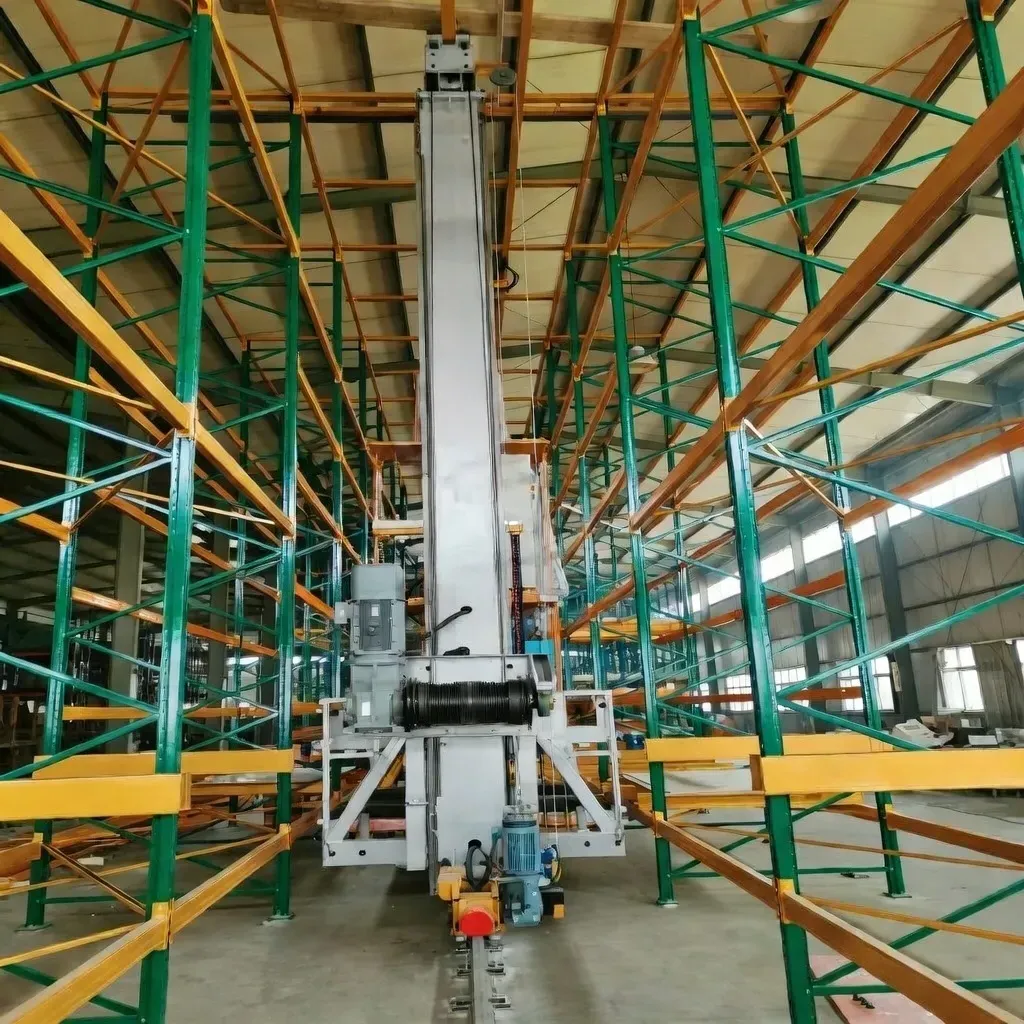 The versatility of a correctly engineered industrial drive shaft becomes apparent when you examine the breadth of UK sectors now operating automated stacker crane systems. In automotive parts distribution — a sector dominated by major operations in the West Midlands, Sunderland, and Derby — stacker cranes handle everything from small fastener trays stored in mini-load totes to engine block pallets weighing up to 1,500 kg. Drive shafts on these crane travel axes endure rapid direction reversals as the machine shuttles between pick positions at high cycle rates, and they are required to maintain positioning accuracy at the drive wheel to ensure alignment with rack targets stays within ±5 mm — a tolerance that directly governs throughput speed and prevents costly aisle buffer collisions.
The UK food and grocery sector presents a distinctly different set of engineering demands. Major retailers and food service distributors operate high-bay frozen stores from Lincolnshire to Ayrshire, where stacker crane drive shafts must maintain their mechanical properties through years of continuous operation at temperatures that challenge conventional lubricants and cause steel components to contract by measurable tenths of a millimetre — tolerances that matter at the sliding spline interface of any industrial drive shaft. Ever Power’s cold storage rated series addresses this through tighter spline manufacturing tolerances, verified low-temperature grease performance confirmed by cold-room test data, and sealed joint assemblies that resist moisture ingress from defrost cycles.
E-commerce fulfilment has reshaped the UK warehouse automation landscape faster than any other force in recent history. The M1 and M6 motorway corridors now host some of the largest automated fulfilment centres in Europe, operated by major online retailers and specialist third-party logistics providers. These facilities run stacker cranes continuously, seven days a week, with annualised cycle counts reaching into the millions on the most active aisles. At these duty levels, fatigue life — rather than peak torque capacity — becomes the dominant design variable, and Ever Power engineers shafts with extended fatigue calculations provided as part of the standard application engineering service on all high-cycle project enquiries.
Customer Success Story: Automotive Parts Distributor, West Midlands, UK
A leading automotive parts distributor operating a seven-aisle unit-load AS/RS warehouse in the West Midlands approached our engineering team in early 2022 with a recurring and costly maintenance problem. The OEM-supplied drive shafts on their stacker crane X-axis travel drives were failing at the U-joint needle bearings after an average of just 14 months in service. With six cranes running per aisle across all operating shifts, each failure caused an aisle shutdown lasting four to six hours — generating an estimated £3,800 in direct downtime cost per incident. Over any rolling 12-month period, the site was recording between 18 and 22 individual U-joint failures.
Our application engineers conducted a structured site visit and reviewed the crane’s dynamic loading history extracted directly from the warehouse management system’s error logs. Two root causes were identified: the OEM shaft’s operating angle exceeded the U-joint’s continuous-duty rated angle by 2.5°, generating higher-than-designed bearing contact stresses at every reversal cycle; and the grease specification was inadequate for the site’s seasonal ambient temperature swing between summer peak and winter trough. The combination of elevated stress and poor lubrication was consuming bearing life at approximately double the designed rate.
The redesigned industrial drive shafts incorporated a double-Cardan joint configuration to eliminate velocity fluctuation and reduce bearing contact stress within the rated continuous-duty envelope, an increased needle roller bearing capacity to provide a wider safety margin, and a synthetic grease with a verified operating window from -15 °C to +110 °C. The replacement shafts were fitted across all active stacker crane axes during a planned maintenance weekend. Twenty-seven months into service, the site has recorded zero U-joint failures. The maintenance engineering team calculated an annual saving of approximately £83,000 in downtime costs and spare parts, with the full capital investment in the shaft replacement programme recovered inside five months. The same specification has since been adopted at two further UK sites operated by the same distribution group.
What Our Customers Say
“We have been running Ever Power drive shafts on our cold storage stacker cranes in Yorkshire for nearly three years. The difference in low-temperature joint behaviour compared to our previous supplier is immediately obvious — no morning stiffness on start-up, no current spikes on the servo drives during the overnight freeze cycle. The documentation package made our compliance audit very straightforward. Would specify them again without any hesitation.”
Engineering Manager
Frozen Food Logistics · Yorkshire, UK
“Our e-commerce fulfilment site in Northamptonshire cycles its mini-load cranes at an exceptionally high rate during seasonal peak periods. We trialled Ever Power’s high-cycle drive shafts on two aisles 18 months ago and have seen no measurable degradation in performance. The material traceability certs, balance reports, and full dimensional data they supply as standard makes our annual system audit a much smoother process than it used to be.”
Head of Automation Engineering
3PL Fulfilment Centre · Northamptonshire, UK
„Arborele de transmisie industrial personalizat pe care Ever Power l-a proiectat pentru proiectul nostru de modernizare — înlocuind o piesă OEM scoasă din producție la o instalație Jungheinrich mai veche din Glasgow — ne-a scutit de o decizie extrem de costisitoare de modificare a macaralei. De la solicitarea inițială până la livrare au trecut nouă zile lucrătoare. Arborele a fost montat exact de prima dată, iar macaraua a funcționat fiabil de atunci. Cunoștințele lor despre dimensiunile arborelui de macara tradițional sunt impresionante.”
Supraveghetor de întreținere
Distribuție de băuturi · Glasgow, Scoția
Facilități de producție de precizie și servicii de personalizare la comandă
Ever Power operează o unitate dedicată producției de arbori de transmisie, unde strunjirea CNC, frezarea, prelucrarea angrenajelor, călirea prin inducție și rectificarea de precizie au loc sub același acoperiș. Această integrare verticală este fundamentul capacității noastre de a controla calitatea în fiecare etapă de fabricație și de a răspunde rapid cerințelor non-standard, fără a depinde de termenele de livrare ale subcontractelor. Sistemul de management al calității funcționează conform standardului ISO 9001:2015, toate operațiunile critice de prelucrare fiind supuse inspecției primului articol, măsurătorilor în timpul procesului și verificării finale CMM pentru toate dimensiunile cheie înainte ca orice arbore să părăsească secția de producție.
Proiectele personalizate de arbori de transmisie industriali pentru aplicații de macarale de stivuire reprezintă o parte majoră și în creștere a afacerii noastre. Piața AS/RS generează cerințe de personalizare deosebit de diverse: diametre ale cercurilor șuruburilor de flanșă și dimensiuni ale alezajului pilot non-standard specificate de producătorii de echipamente originale de macarale, inclusiv Dematic, Mecalux, SSI Schäfer, Jungheinrich și Hänel; lungimi personalizate, pliate și extinse, pentru configurații neobișnuite de culoare înalte; capacități alternative de cuplu încrucișate, adaptate la curbele specifice de cuplu ale servomotoarelor; și modele certificate ATEX pentru aplicații de depozitare a substanțelor chimice și de depozitare în depozite vamale din Marea Britanie. Echipa noastră de ingineri lucrează pe baza desenelor DXF/DWG furnizate de client, a modelelor 3D STEP sau a mostrelor proiectate invers de la arbori uzați, cu un desen de ansamblu general trimis spre aprobarea clientului în termen de cinci zile lucrătoare de la primirea unei solicitări tehnice complete pentru majoritatea proiectelor.
Prototipuri dintr-o singură piesă și capacitatea de fabricație în loturi mici fac din Ever Power o alegere practică și rentabilă pentru proiectele de înlocuire a utilajelor, în care un producător de echipamente originale pentru macarale de stivuire a scos din producție un anumit număr de piesă pentru arborele de transmisie și nu există un înlocuitor echivalent în catalog. Echipa noastră de inginerie de vânzări a sprijinit proiecte de modernizare la locații din Marea Britanie care operează macarale cu o vechime cuprinsă între trei și peste douăzeci de ani, iar echipa menține o bibliotecă de referințe în continuă creștere cu dimensiuni istorice ale kitului încrucișat și profile de caneluri din modelele de macarale vechi - o resursă care ne permite frecvent să propunem o înlocuire directă fără timpul și costul ingineriei inverse formale, accelerând dramatic procesul de execuție pentru situațiile de avarie urgente.
Capacitățile noastre de producție
Solicitați inginerie personalizată
Trimiteți desene, mostre sau specificații — inginerii noștri vor răspunde în termen de o zi lucrătoare.
Furnizarea de arbori de transmisie industriali pentru depozite automate în tot Regatul Unit
Sectorul de automatizare a depozitelor din Regatul Unit a crescut substanțial în ultimul deceniu, instalațiile AS/RS pentru rafturi înalte funcționând acum pe toată lungimea și latul țării. Centrele logistice din East Midlands, South Yorkshire și Nord-Vest - concentrate de-a lungul coridoarelor M1, M6 și A1 - găzduiesc cea mai mare densitate de activitate a centrelor de distribuție automatizate, dar investiții semnificative în AS/RS sunt active și în Sud-Est, Sud-Vest, Țara Galilor, Irlanda de Nord și în centrul Scoției, de la Edinburgh la Glasgow. Ever Power furnizează în mod regulat arbori de transmisie industriali operatorilor de macarale de stivuit, integratorilor de sisteme și contractorilor independenți de întreținere care lucrează la locații din Birmingham, Coventry, Leicester, Northampton, Sheffield, Leeds, Manchester, Bristol, Swindon, Wellingborough, Lutterworth și în întreaga Centură Centrală a Scoției.
Reglementările privind utilajele din Regatul Unit — inclusiv Regulamentul privind siguranța utilajelor din 2008 (SI 2008/1597) și Regulamentul privind siguranța produselor și metrologia etc. (modificare etc.) (ieșire din UE) din 2019 care reglementează marcajul UKCA — impun obligații clare integratorilor de sisteme AS/RS în ceea ce privește integritatea mecanică a tuturor componentelor de acționare dintr-un ansamblu de utilaje. Pachetul complet de documentație furnizat împreună cu fiecare arbore de acționare al macaralei de stivuire Ever Power — care cuprinde certificatele de materiale EN 10204 3.1, datele de inspecție dimensională, certificatele de echilibru dinamic și declarațiile de conformitate CE sau UKCA — este conceput pentru a se integra direct în dosarul tehnic care formează coloana vertebrală a evaluării conformității utilajelor din Regatul Unit.
Livrare macara stivuitoare standard arbori de transmisie Livrarea către adrese din Marea Britanie continentală se realizează de obicei în termen de 10-15 zile lucrătoare de la confirmarea comenzii. Proiectele de inginerie personalizate au un termen de livrare specific proiectului, convenit în etapa de revizuire tehnică - de obicei 18 până la 35 de zile lucrătoare, în funcție de complexitatea personalizării necesare. Sunt disponibile intervale orare expres de producție pentru înlocuiri de urgență în caz de defecțiune: contactați direct echipa noastră de vânzări la [email protected] pentru a discuta opțiunile prioritare de sprijin.
Întrebări frecvente
Răspunsuri practice la întrebările pe care inginerii de depozite și echipele de achiziții din Marea Britanie le pun cel mai des despre arborii de acționare ai macaralelor de stivuire.