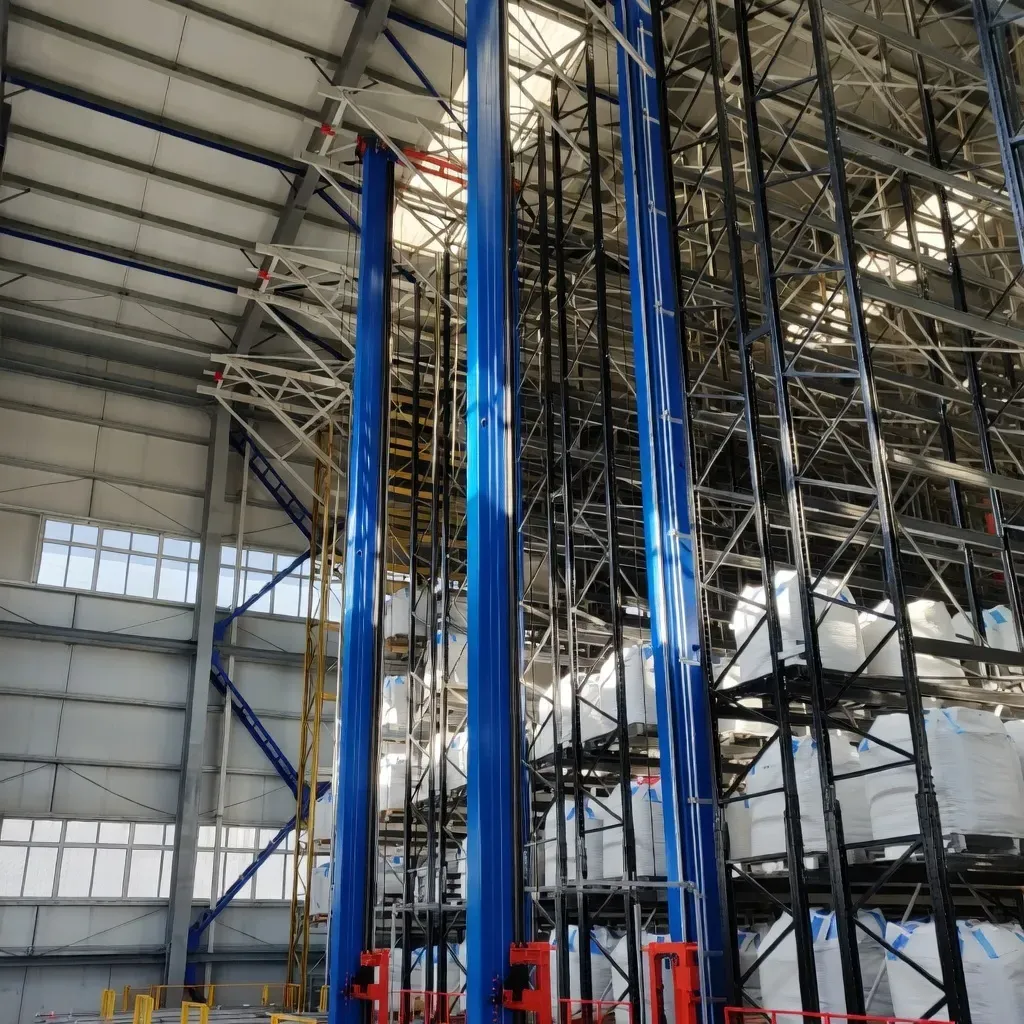
 Automated stacker cranes — the backbone of modern AS/RS (Automated Storage and Retrieval Systems) installations — operate under mechanical conditions that few standard transmission components are genuinely designed to handle. Rapid vertical travel, precision horizontal positioning, high-frequency start-stop cycles, and payload weights reaching three tonnes or more create a compounding stress environment that will expose any weakness in the kinematic chain. The industrial drive shaft is the critical link between motor output and load movement in this chain, and it deserves far more rigorous engineering scrutiny than it typically receives during specification.
The content here draws on more than eighteen years of hands-on application engineering experience in industrial power transmission, covering crane systems in food distribution, pharmaceutical logistics, automotive parts warehousing, and e-commerce fulfilment. The UK’s automated warehousing sector has undergone unprecedented capital investment since 2020, driven by post-pandemic e-commerce growth, cold-chain expansion, and labour cost pressures. Procurement engineers and maintenance managers across England, Scotland, and Wales are specifying and maintaining more AS/RS equipment than ever — and the shaft failures we see in the field are, almost without exception, the result of under-specification rather than manufacturing defects.
Ever Power manufactures industrial drive shafts engineered specifically for heavy-duty automated handling systems. Our products serve stacker cranes, AGV drive trains, vertical lift modules, pallet conveyor systems, and high-bay storage retrieval machines at facilities across the United Kingdom, continental Europe, and beyond. The pages that follow lay out the engineering fundamentals, performance parameters, and application details that should inform any serious purchasing decision in this sector.
Why Stacker Cranes Place Exceptional Demands on Industrial Drive Shafts
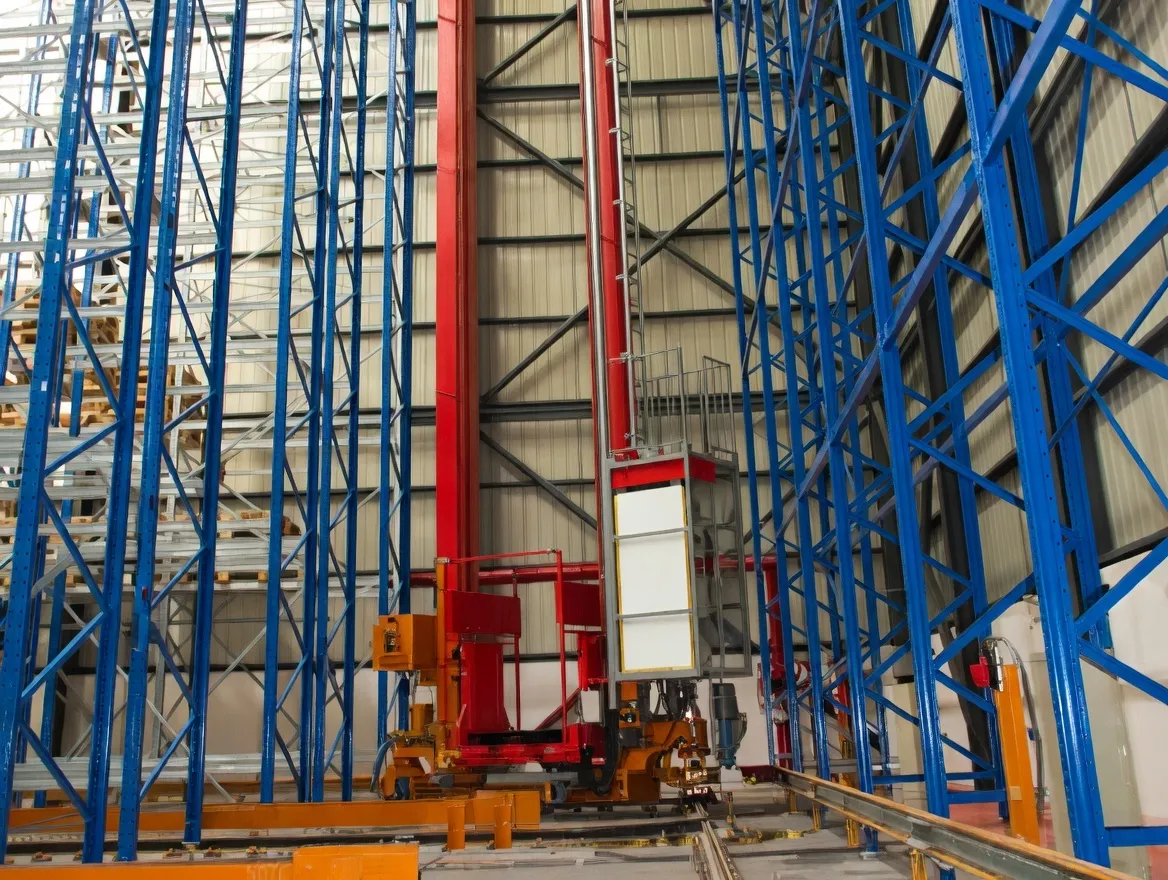
A stacker crane is not a simple hoist. Modern single-mast and twin-mast AS/RS stacker cranes — particularly those found in UK retail distribution, pharmaceutical storage, and automotive parts facilities — complete hundreds of storage and retrieval cycles per hour around the clock. Each cycle involves co-ordinated horizontal travel along the aisle rail, precision vertical mast positioning, and load handling at the shuttle or fork level. The industrial drive shaft sits within this kinematic chain, transmitting rotational torque from the drive motor to the travelling and lifting mechanisms at each stage.
The operating environment presents distinct and compounding challenges. Thermal cycling is a constant in cold-store and ambient warehouses alike: as temperatures in frozen distribution centres drop to -25°C or lower, differential thermal expansion develops between shaft components and their housings. Dynamic torsional loads spike every time a loaded crane accelerates from rest — a phenomenon repeated tens of thousands of times each year that creates a fatigue loading profile very different from the smooth, steady torque assumed in many catalogue selection processes. Misalignment is virtually unavoidable at scale: foundation settling, thermal rack expansion, manufacturing tolerances in the crane structure, and wear in travelling wheel and rail systems all contribute to angular and parallel shaft offset that accumulates over the system’s operating life.
A standard catalogue drive shaft will cope for a while under these conditions. A precision-engineered industrial drive shaft — designed and manufactured with the stacker crane duty cycle at the centre of the selection process — will cope for the design life of the machine, provided the specification correctly accounts for peak torque values, misalignment envelope, operating temperature range, and expected cycle count over the maintenance interval.
The distinction between these two outcomes matters enormously in a UK warehouse context. Skilled maintenance crews are stretched across multi-site operations, downtime contracts carry meaningful penalty clauses, and replacement lead times for poorly-specified components sourced through generic channels can stretch to eight weeks or longer. An under-specified shaft is not a minor inconvenience; in a high-throughput 35-metre-high bay installation, it is a category-A operational risk.
Technical Specification Overview — Ever Power Stacker Crane Drive Shafts
The table below summarises key performance parameters across Ever Power’s standard and custom product range for stacker crane applications. All figures represent verified design values supported by material test certificates and dimensional inspection documentation. Custom specifications — including extended-length telescopic variants, non-standard bore configurations, and high-torque designs for crane systems handling loads above 3,000 kg — are available on request following a technical consultation with our engineering team.
| Parâmetro | Gama padrão | Custom / Extended |
|---|---|---|
| Nominal Torque Capacity | 200 – 2,500 N·m | Up to 6,000 N·m |
| Operating Speed | 100 – 1,500 rpm | Up to 3,000 rpm |
| Comprimento do eixo | 300 mm – 2,500 mm | Up to 6,000 mm |
| Angular Misalignment | Up to 3° | Up to 8° (flexible coupling) |
| Operating Temperature | -25°C to +80°C | -40°C to +120°C |
| Primary Material | 42CrMo4 alloy steel (EN 1.7225) | 316 stainless / titanium alloy |
| Tensile Strength | 900 – 1,100 MPa (Q+T) | Up to 1,300 MPa |
| Tratamento de superfície | Induction hardened, zinc-phosphate | Hard chrome / nickel / food-safe |
| Design Life (Cycles) | 5 x 10^6 cycles | 10 x 10^6+ cycles |
| Balancing Grade | G6.3 (ISO 1940) | G2.5 (precision variants) |
| Coupling Type | Welded flange / splined bore | Cardan joint / disc pack / elastomeric |
| Documentation Supplied | MTC (EN 10204 3.1), dimensional report | MTC 3.2, NDE, proof torque test |
Engineering Principles and Material Science: What Goes Into a Stacker Crane Drive Shaft
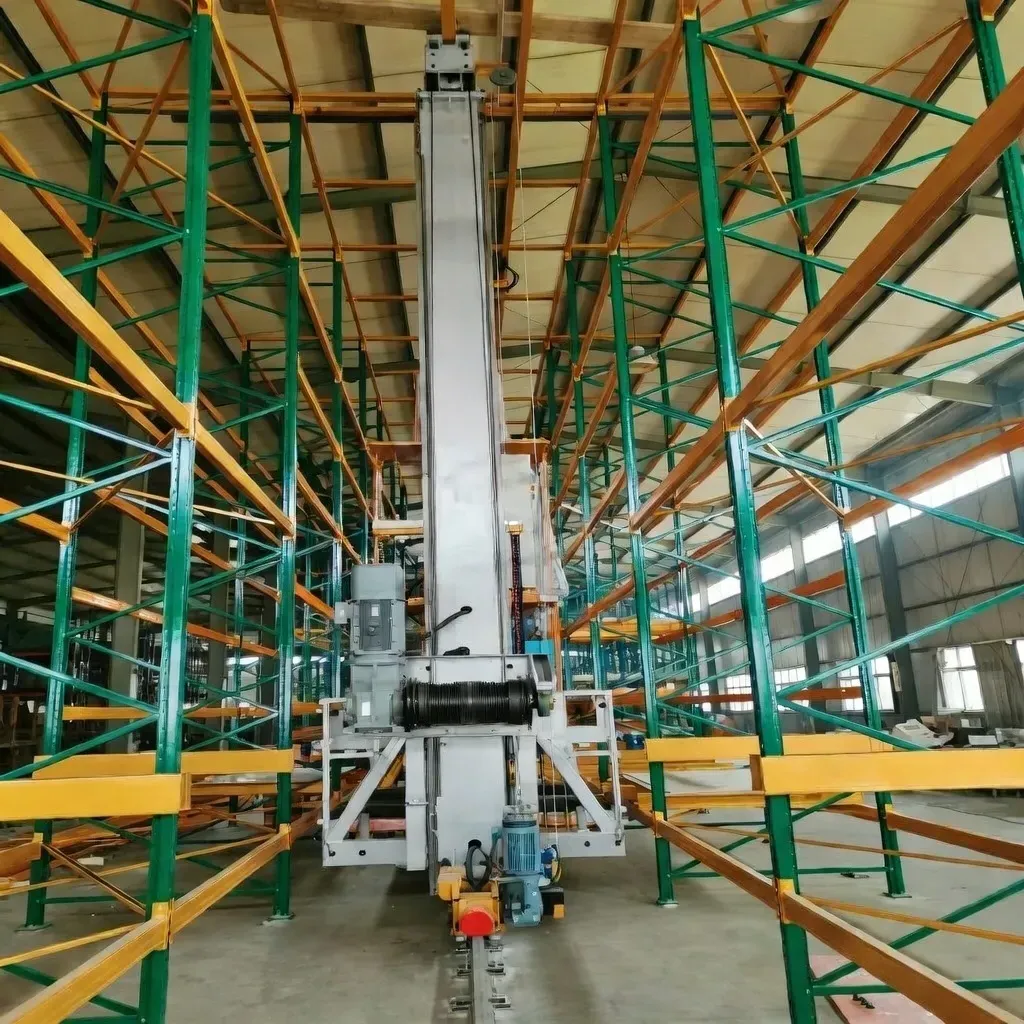 The working principle of an industrial drive shaft is deceptively straightforward: transmit rotational torque from a prime mover to a driven load while accommodating the geometric imperfections that exist between the two connection points. In a stacker crane, those connection points are subject to constant micro-movements caused by structural flex in the mast and carriage frame, bearing clearances, and thermal expansion of the crane’s steel structure. The drive shaft must handle all of this silently, reliably, and without maintenance attention between planned service intervals.
Ever Power specifies 42CrMo4 (EN 1.7225) chromium-molybdenum alloy steel as the standard shaft material for stacker crane applications. After quench-and-temper heat treatment, this grade delivers tensile strength in the 900–1,100 MPa range, excellent high-cycle fatigue resistance, and sufficient machinability for precision spline cutting and surface grinding. For cold-store and frozen warehouse applications, the same material is re-qualified with Charpy impact tests at -40°C, confirming adequate toughness at the operating temperature extremes common to UK chilled distribution facilities — without the cost premium associated with stainless steel construction.
Spline connection geometry is a critical engineering parameter that seldom appears clearly in standard supplier datasheets. Every spline profile we produce is calculated against the real peak torque of the application — not the nominal motor power rating — accounting for the shock factor associated with crane emergency stops and load impact events. This approach catches the most common hidden failure mechanism in the field: spline fretting fatigue, which develops when a shaft is dimensioned for average torque but exposed repeatedly to torque spikes two to three times that value.
The universal joint (Cardan joint) or flexible disc coupling at each shaft end is engineered for the specific working angle of the installation. This is a detail that separates genuine application engineering from parts supply: running a Cardan joint even slightly above its rated working angle accelerates wear at an exponential rate, while mismatched phasing between the two joint yokes introduces a second-order velocity ripple that can excite structural resonance in crane frames operating near natural frequency. Eliminating these issues requires measuring the actual installation geometry, not assuming that the original equipment drawing dimensions have been maintained in the field.
Six Engineering Advantages That Distinguish Ever Power Industrial Drive Shafts
Duty-Cycle Engineering
Every shaft is sized against the actual stacker crane duty cycle — measuring peak torque, shock factor, and cycle frequency in real operational data rather than relying on simplified catalogue selection tables. This eliminates the hidden under-specification that drives premature failures in the field across UK warehousing operations.
Cold-Store Certified
Material properties are verified at -40°C operating temperature. Grease selection, seal lip material compounds, and surface coatings are all specified for cold-chain environments, ensuring consistent performance across frozen warehouse operations — a growing sector in the UK’s expanding grocery distribution network.
Precision Dynamic Balancing
All shafts are dynamically balanced to ISO 1940 G6.3 as standard, with G2.5 available for high-speed crane drive applications. Properly balanced shafts eliminate vibration-induced bearing wear and protect gearbox output seals from the cyclic radial loads that cause early oil leaks and contamination problems.
Built-In Misalignment Tolerance
Angular misalignment tolerance up to 3° as standard, with flexible coupling variants rated to 8°. This provides a meaningful operational margin against structural misalignment inevitable in large-scale AS/RS installations where foundation movement, thermal rack expansion, and rail wear accumulate over years of continuous operation.
Full Custom Manufacturing
Non-standard bore sizes, special flange bolt patterns, extended shaft lengths, DIN or ANSI spline profiles, and custom surface treatments are all produced in-house. Technical drawings and 3D CAD models are supplied with every custom order, supporting integration into your crane OEM documentation package.
Complete Compliance Documentation
Material test certificates to EN 10204 3.1 or 3.2, dimensional inspection reports, and dynamic balancing records are included as standard with every shipment. These documents satisfy audit requirements under UK LOLER, PSSR, and CE marking compliance processes — a recurring practical requirement for UK facilities teams managing scheduled LOLER examinations.
Where Industrial Drive Shafts Fit in the Stacker Crane System
Drive shafts appear at multiple points in the stacker crane kinematic chain. Understanding which sub-system each shaft serves allows the specification engineer to select the correct performance class and coupling type for each specific location — a step that many procurement processes skip entirely, resulting in a single-grade selection applied inappropriately across diverse duty conditions.
Travelling Drive Unit
Connects the aisle-level traction motor to the driven road wheels. Subject to frequent start-stop cycles and must withstand shock loads when the crane reaches end-of-aisle buffers at speed. Typically rated in the 800–2,500 N·m range for standard pallet-load crane configurations operating in UK distribution centres.
Hoist Drive Shaft
Links the hoisting motor to the lift drum or chain sprocket assembly on the crane carriage. Operates at continuously varying speeds under full payload load. Reliability here is a safety-critical matter — a hoist shaft failure with a loaded pallet suspended at height triggers immediate LOLER incident reporting obligations for the UK facility operator.
Shuttle and Fork Extension
In double-deep or multi-deep storage systems, a compact drive shaft or flexible coupling shaft transmits motion to the telescopic fork or satellite shuttle mechanism. Compact geometry, very high cycle count, and millimetre-level positioning accuracy requirements make this location the most demanding on the entire crane — and the most frequently under-specified.
Mast Synchronisation Cross-Shaft
Twin-mast designs use a cross-shaft to synchronise both mast drive systems and eliminate sway. Running at relatively low torque but requiring exceptional torsional stiffness and precise length control, this shaft must maintain synchronisation accuracy within the control system’s feedback loop — typically within 1 mm across the full mast travel range.
Beyond stacker cranes, Ever Power industrial drive shafts serve automated warehousing equipment including horizontal carousels, vertical lift modules, pallet conveyors, pallet wrapping machines, and AGV drive trains at facilities across England, Scotland, and Wales. The engineering approach is consistent across all these applications: define the genuine load case from measured operational data, select material and geometry to match that load case with an appropriate safety margin, and validate against the actual cycle count the system will accumulate over its planned service life.
Customer Case Study: Eliminating Recurring Drive Shaft Failures at a Yorkshire Ambient Distribution Centre
INDUSTRY
FMCG Distribution
LOCATION
Leeds, Yorkshire
CRANE SYSTEM
8-Aisle Single-Mast AS/RS
OUTCOME
Zero Failures — 26 Months
The Problem
Hallfield Logistics, a third-party logistics provider operating a 35-metre-high ambient goods warehouse on the outskirts of Leeds, had experienced four travelling drive shaft failures across their stacker crane fleet in the eighteen months following the facility’s commissioning. The OEM shafts — sourced through the crane manufacturer’s standard parts programme — were failing at the yoke-to-tube weld junction under fatigue loading. The fracture pattern was consistent: surface crack initiation at the heat-affected zone adjacent to the weld, propagating over approximately six to eight weeks of continued operation until complete fracture. Each failure required crane isolation, professional riggers for safe load lowering, and an average of 62 hours of total downtime before the system returned to normal service. The combined financial impact of the four incidents exceeded £340,000 when downtime penalties, emergency labour rates, and air-freight parts costs were totalled.
The Ever Power Solution
Our application engineering team visited the Leeds site, measured the actual installed misalignment in three representative cranes using a laser shaft alignment tool, and performed a duty-cycle analysis working from the facility’s WMS cycle data for the preceding twelve months. The analysis revealed two critical issues the OEM specification had not captured: actual peak torque during emergency deceleration events was 2.3 times the nominal value used in the original shaft selection, and a consistent 1.4° angular misalignment existed in the travelling drive installation that the welded-flange shaft design could not accommodate without generating additional bending stress at the weld toe. The combination of cyclic over-loading and geometric constraint at the most stress-sensitive point on the shaft explained the failure pattern precisely.
Ever Power supplied replacement shafts machined from 42CrMo4 bar stock with forged — not welded — yoke construction, sized for the measured peak torque with a 2.5x service factor, and fitted with flexible disc couplings rated for up to 2° angular misalignment. The forged yoke construction eliminated the heat-affected zone entirely. Dimensional drawings were submitted to the client’s engineering team for approval, and delivery of all eight crane replacement shafts was achieved in 14 working days from drawing approval.
The Outcome
Twenty-six months after installation, all eight cranes continue to operate without a single drive shaft incident. Routine vibration monitoring conducted by the facility’s maintenance team shows stable frequency signatures with no deterioration trend. Hallfield Logistics has since nominated Ever Power as the approved drive shaft supplier for their second Leeds facility, scheduled to commission in Q3 of next year.
What UK Clients Say About Ever Power Drive Shafts
“
We had battled drive shaft issues on our cold-store stacker cranes for the best part of two years. The root-cause analysis Ever Power carried out before they even quoted was genuinely thorough — they identified a resonance issue our own engineering team had not caught. Fourteen months into service now, and nothing to report. That is exactly what we needed.
James Hartley
Engineering Director — Chilled Fulfilment Centre, East Midlands, UK
★★★★★
“
The documentation pack that comes with every Ever Power shaft makes our CE re-qualification process straightforward. We operate under UK PSSR and LOLER simultaneously across multiple sites, and proper material traceability from day one is simply non-negotiable. Their team understands that, and it shows in how the paperwork is structured and delivered.
Sarah Whitfield
Senior Procurement Engineer — Pharmaceutical Logistics, Cheshire, UK
★★★★★
“
Lead time was our critical issue — a breakdown in a live operation, shafts needed urgently. Ever Power delivered bespoke, application-specific shafts in eleven working days. Every other supplier quoted eight to twelve weeks. Quality on arrival was exactly as specified, they fitted without modification, and the crane was back in service the same day as installation. Exactly what a maintenance manager needs.
Marcus Cole
Maintenance Manager — Automotive Parts Distribution Centre, West Midlands, UK
★★★★★
Ever Power Manufacturing and Custom Engineering Services
Ever Power operates a dedicated industrial drive shaft production facility equipped with CNC turning centres, spline rolling machines, induction hardening equipment, dynamic balancing machines rated for shafts up to 6,000 mm, and co-ordinate measuring (CMM) inspection stations. This integrated in-house capability means that custom shaft orders are produced, inspected, and documented entirely under our own quality management system — without dependence on sub-contractors whose processes cannot be directly monitored. Every custom shaft is traceable from raw material heat number through to final dimensional sign-off.
The custom engineering service offered to UK clients begins with a straightforward technical consultation. Provide the crane model details, motor and gearbox mounting specifications, installed shaft length, cycle frequency, and payload data, and our engineers will produce a formal application calculation document confirming shaft diameter, material grade, coupling type, and expected service life. This document is structured to be incorporated directly into your CE technical file or used to support LOLER examination and risk assessment documentation — practical outputs that simplify the compliance burden on your internal engineering team.
Customisation options produced from Ever Power’s facility include: non-standard flange bolt circle diameters, pilot bore sizes from 20 mm to 200 mm, keyway and spline profiles to DIN, ANSI, or customer-defined standards, telescopic sliding-spline shaft designs for variable-geometry installations, special coatings including food-grade lubricant-compatible finishes for ambient food distribution warehouses, high-visibility shaft marking for maintenance identification in complex crane frames, and rapid-delivery breakdown replacements for UK-based crane operations. Prototype validation services — including proof torque testing to 1.5x design limit and magnetic particle inspection (MPI) of critical welds — are available on request to support new installation commissioning programmes.
Ready to Discuss Your Stacker Crane Drive Shaft Requirement?
Send your crane model details, shaft dimensions, and duty cycle information to our engineering team. We respond with a technical recommendation and price indication within one business day for standard enquiries.
Frequently Asked Questions — Industrial Drive Shafts for Stacker Cranes in the UK
What does an industrial drive shaft for a stacker crane typically cost to buy from a UK supplier, and what affects the price?
Pricing for stacker crane drive shafts supplied to UK customers varies considerably based on torque capacity, shaft length, coupling type, and material specification. Standard-range travelling drive shafts typically fall between £380 and £1,200 per unit at current market pricing. Custom-engineered hoist or shuttle drive shafts for specialised AS/RS applications can range from £900 to £4,500 depending on complexity, bore configuration, and surface treatment requirements. The factors with the greatest impact on unit price are material grade (42CrMo4 versus stainless steel), the coupling type selected (welded flange versus Cardan joint or disc pack), the level of documentation required (EN 10204 3.1 versus 3.2 with NDE), and whether a custom spline or bore profile is specified. Contact our team at [email protected] with your crane model reference and shaft dimensions for a specific quotation, typically returned within 24 business hours.
How do I choose the right type of drive shaft for an automated stacker crane operating in a UK cold-store warehouse at minus 25 degrees?
Selecting a drive shaft for a cold-store stacker crane in the UK requires attention to three factors that sit entirely outside standard torque and speed selection tables. Operating temperature: the shaft material and any elastomeric components in the coupling must be validated for your minimum process temperature — typically -25°C for chilled and -40°C for frozen operations. Misalignment allowance: cold-store warehouses experience significant rack thermal contraction during initial cool-down and daily defrost cycles; a shaft rated for angular misalignment of at least 2° to 3° is recommended to absorb this movement without generating bearing side loads. Corrosion protection: frequent defrost cycles in cold-store environments introduce condensation moisture that attacks standard zinc-phosphate coatings over time — specifying an upgraded surface treatment or stainless construction for the coupling components extends service intervals considerably. Our engineering team reviews cold-store installation data as part of the standard quotation process.
Where in the United Kingdom can I get bespoke industrial drive shafts for stacker cranes manufactured and delivered within two weeks?
Ever Power supplies custom industrial drive shafts directly to clients throughout England, Scotland, Wales, and Northern Ireland, with typical lead times of 10 to 15 working days for fully bespoke engineered shafts from drawing approval. Standard-range products in common configurations are generally available in 5 to 7 working days. We supply directly to end-user warehouse operators, third-party logistics businesses, crane OEM service divisions, and mechanical engineering contractors. Raw material stock of 42CrMo4 bar and tube is maintained in common diameters to support rapid turnaround on urgent breakdown replacement orders. For emergency breakdown enquiries, send your shaft dimensions to [email protected] marked urgent — these are prioritised within our customer service workflow and assessed against current production capacity on the same day.
How long should a correctly specified drive shaft last on a two-shift high-bay stacker crane doing 400 cycles per hour in a UK distribution centre?
A correctly specified industrial drive shaft on a two-shift, 400-cycle-per-hour stacker crane accumulates approximately 4 million torque cycles per year. Against an Ever Power standard design life of 5 x 10^6 cycles, this equates to a planned replacement interval of approximately 12 to 15 months under pure cycle count — however, in practice, well-maintained shafts running at appropriate misalignment levels regularly exceed 20 million cycles before showing any detectable fatigue initiation. Shafts that fail significantly before their design life are almost invariably under-specified for peak torque, running at excessive misalignment, or maintained with incorrect grease. If your facility is seeing drive shaft failures within 18 to 24 months of installation, that pattern indicates a specification problem rather than a manufacturing defect, and a root-cause analysis from our application engineering team is the appropriate next step.
What documentation do I need to request from a drive shaft supplier in order to comply with UK LOLER regulations for an automated warehouse stacker crane?
Under the Lifting Operations and Lifting Equipment Regulations 1998 (LOLER), UK operators of stacker crane systems must maintain technical documentation that supports the safe operation and periodic thorough examination of the equipment. For drive shafts used in lifting applications — including hoist drives — the minimum documentation set should include: a material test certificate to EN 10204 3.1 confirming chemical composition and mechanical properties of the shaft material; a dimensional inspection report showing that the shaft was produced within drawing tolerances; a dynamic balancing certificate to ISO 1940 for rotating shafts; and a design calculation note confirming the torque rating and safety factor applied. Ever Power supplies all of these documents as a standard part of every order. Digital copies are provided for inclusion in your facility’s LOLER thorough examination records or CE technical file, and physical copies are shipped with each consignment.
Can Ever Power supply a direct drop-in replacement industrial drive shaft for my existing stacker crane without any structural modifications to the machine?
In the large majority of cases, yes. To confirm dimensional compatibility, we need the following information: overall shaft length measured flange-face to flange-face, the flange bolt circle diameter and bolt size at each end, the pilot bore or spline specification at each connection point, and the original OEM part number if available. If the existing shaft uses a non-standard flange configuration, our in-house machining capability allows us to replicate this precisely without tooling lead time in most cases. Some clients take the opportunity of a planned replacement to upgrade the coupling type — for instance, moving from a welded rigid flange to a flexible disc-pack coupling to gain misalignment tolerance without changing any other connection geometry. Our engineers can assess whether this upgrade is practical and beneficial for your specific crane installation, based on the measured alignment data, at no additional charge as part of the quotation process.
EVER POWER — FORNECIMENTO NO REINO UNIDO E INTERNACIONAL
Pronto para especificar o eixo de transmissão industrial correto para seu guindaste empilhador?
Envie os detalhes do modelo do seu guindaste, as dimensões do eixo e as informações sobre o ciclo de trabalho para nossa equipe de engenharia. Responderemos com uma recomendação técnica específica e uma estimativa de preço em até um dia útil. Para emergências de avaria, marque sua solicitação como urgente — priorizamos o atendimento no mesmo dia.