How to Install a PTO Drive Shaft on a Tractor
A step-by-step technical guide for agricultural engineers and farm maintenance teams — covering preparation, fitting, safety checks and torque verification.
Request A Quote →
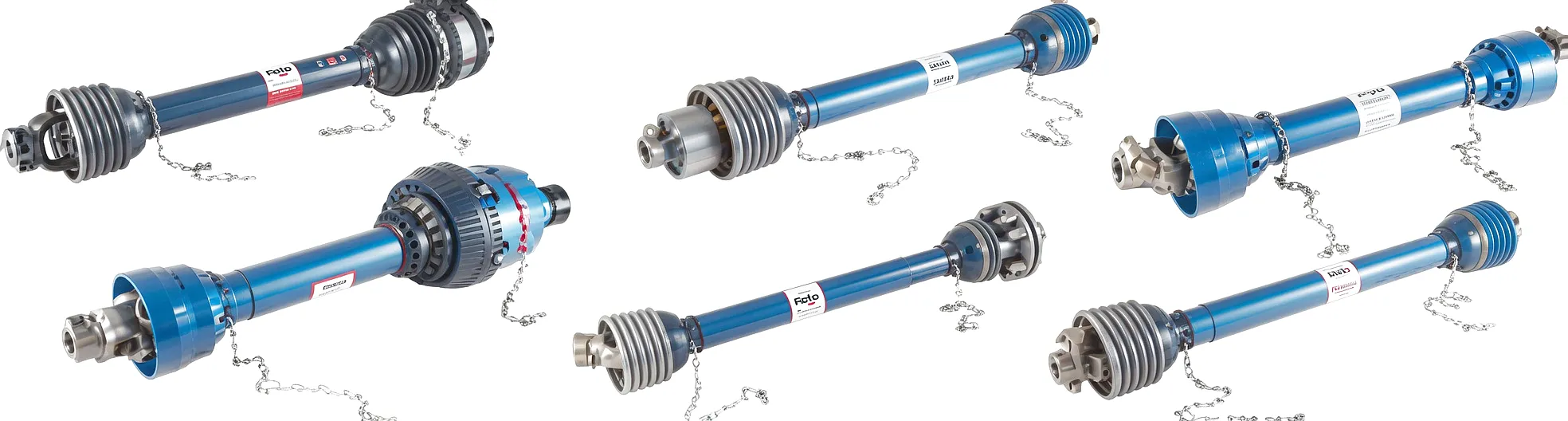
Fitting a power take-off (PTO) drive shaft correctly is one of the most safety-critical tasks on a farm or construction site. A shaft that is incorrectly installed can disengage under load, vibrate excessively, or fail at the universal joint — all of which cause costly downtime and potential injury to operators nearby. This guide walks through the complete installation process in plain, practical terms, whether you are fitting a new shaft for the first time or replacing a worn unit on a tractor that has been in service for several seasons.
PTO shafts transmit rotational power from a tractor to an implement such as a mower, baler, slurry pump or wood chipper. They typically run at either 540 rpm or 1000 rpm depending on the implement specification, and they must be matched to the spline profile of both the tractor output stub and the implement gearbox input. Getting these fundamentals right before you even pick up a spanner saves time and avoids damage.
This guide applies to standard 1-3/8 inch and 1-3/4 inch spline shafts used across European and North American tractor makes, including the most common 6-spline and 21-spline configurations.
1. Tools and Safety Equipment Required
Before starting work, gather everything you need. Interrupting the job halfway to search for a missing tool introduces the risk of leaving the shaft in a partially fitted state.
🔧 Hand Tools
- Torque wrench (0–200 Nm range)
- Open-ended spanners (22mm, 24mm, 30mm)
- Rubber mallet
- Wire brush for spline cleaning
- Grease gun with multipurpose EP2 grease
- Retaining pin or locking collar tool
🛡 Safety Equipment
- PTO shaft guard (CE marked, intact)
- Protective gloves
- Steel-toe footwear
- Eye protection for cleaning stages
- Wheel chocks for the tractor
- Warning sign: PTO maintenance in progress
📋 Check Before You Start
- Tractor engine off, key removed
- PTO lever in neutral position
- Implement lowered to ground
- Shaft length pre-checked (see Section 3)
- New shaft matches spline count
- Guard chains and brackets present
2. Understanding PTO Shaft Components
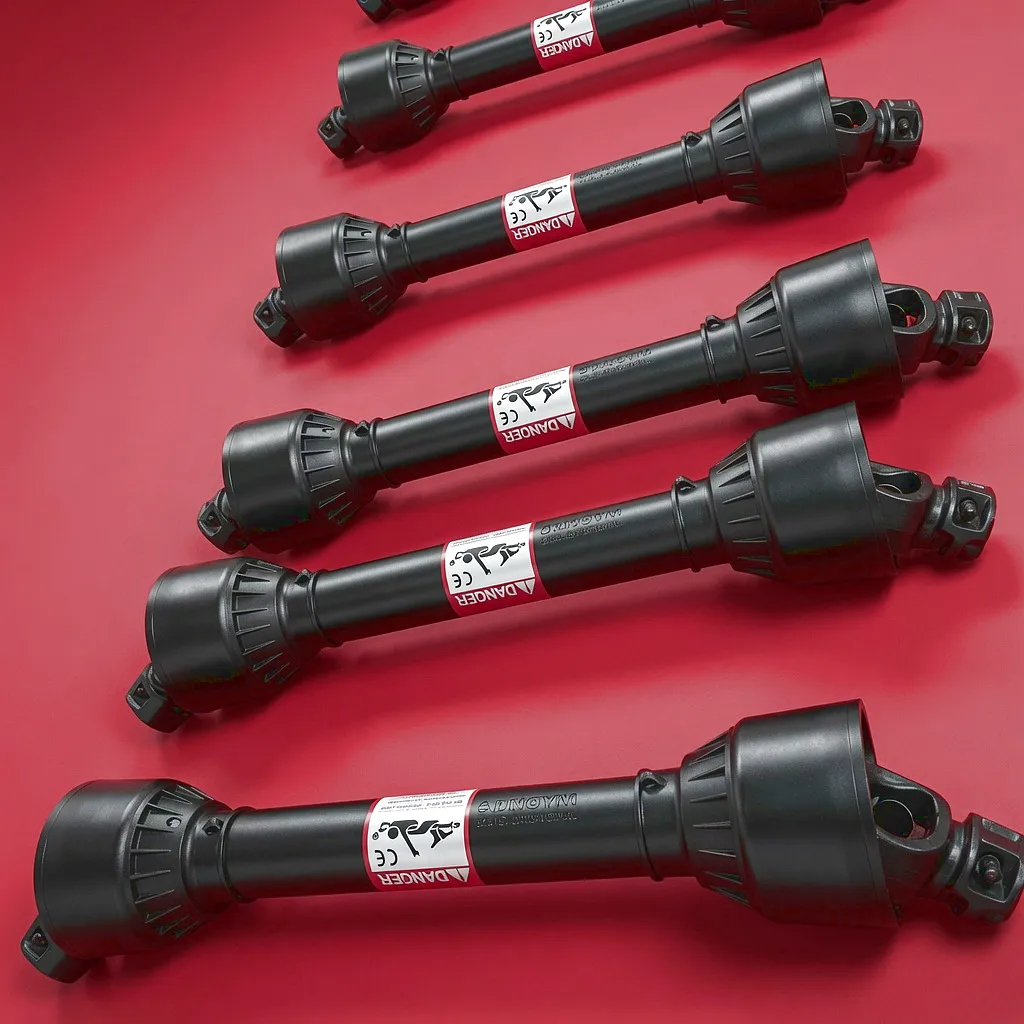
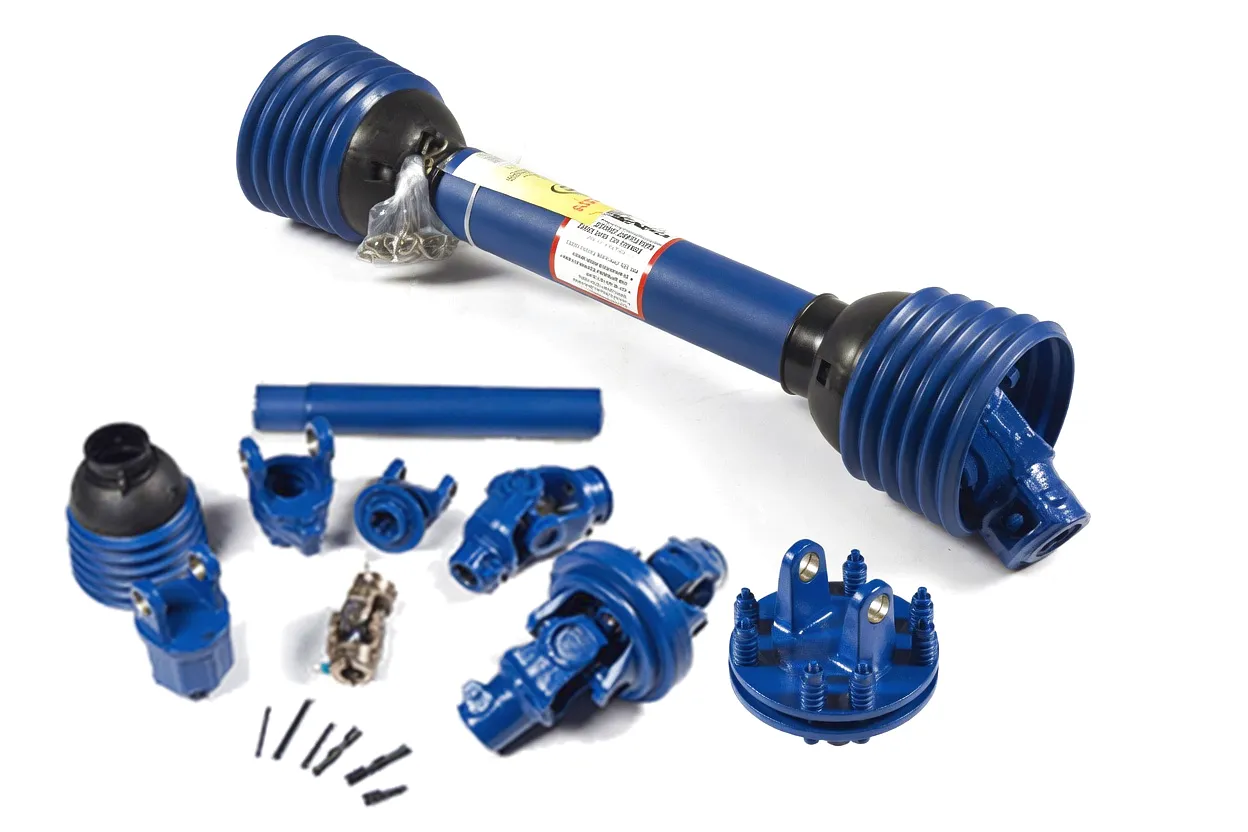
A typical agricultural PTO drive shaft consists of four main sub-assemblies that you need to be familiar with before fitting:
Inner and outer telescoping tubes — These allow the shaft to change length as the implement pitches and the tractor turns. The tubes must overlap by at least one-third of their combined collapsed length at maximum extension to prevent separation under load.
Universal joints (U-joints) — Located at each end and sometimes at the mid-point on wide-angle shafts. They accommodate angular misalignment between the tractor PTO stub and the implement input. Standard U-joints tolerate up to 15 degrees of operating angle; wide-angle versions handle up to 80 degrees for front-mounted implements.
Yokes and splined couplings — The yokes connect the shaft to the tractor stub and implement input shaft. They are held in place by a spring-loaded locking pin or a collar latch mechanism. Always verify that the locking device clicks fully home before applying power.
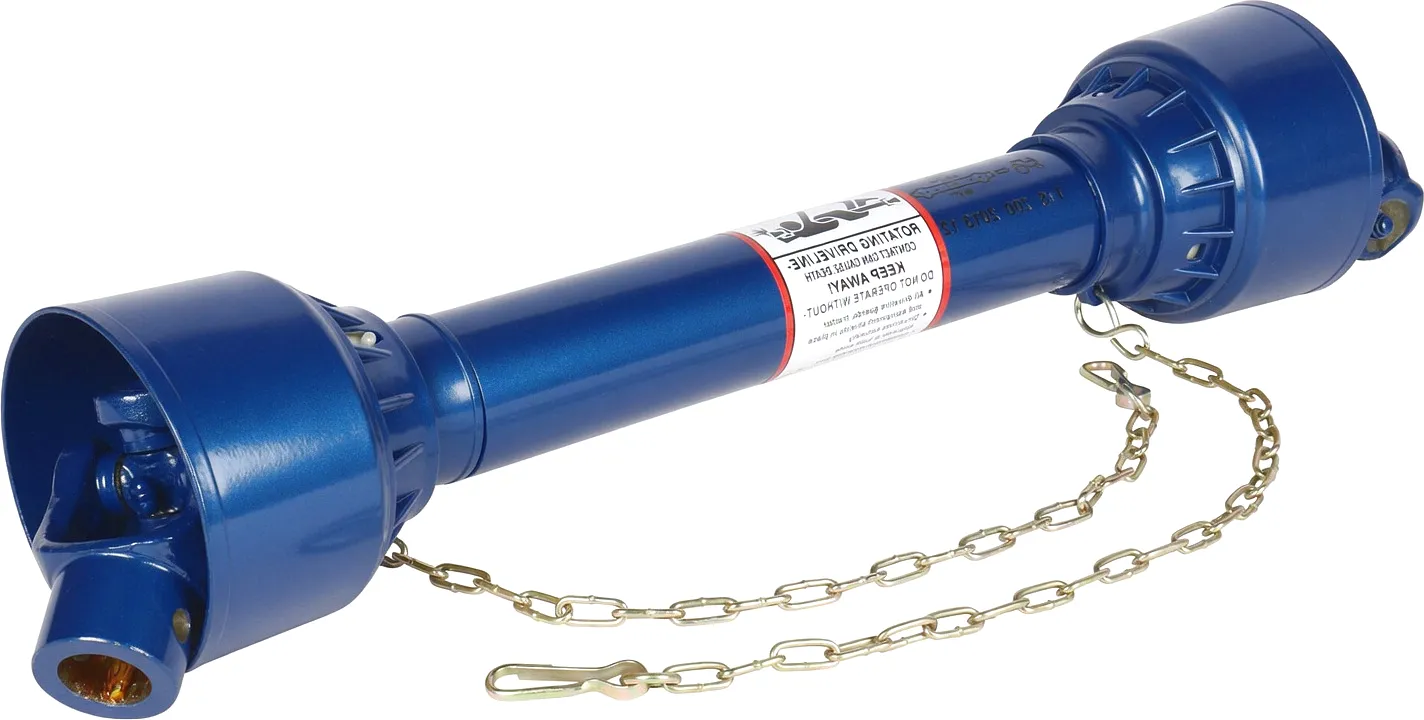
Protective guard — The plastic or metal guard covers the rotating shaft and is anchored to a fixed point on both the tractor and the implement via chains. This guard is a legal requirement in most jurisdictions and must never be removed during operation.
3. Measuring and Checking Shaft Length
Incorrect shaft length is the most common installation mistake. A shaft that is too short will pull apart at full extension; one that is too long will bottom out in the telescoping section and damage the tube ends or bow under load.
Length Verification Procedure
- Attach the implement to the tractor in its normal working position (three-point linkage at working height).
- Measure the distance from the face of the tractor PTO stub to the face of the implement input shaft flange.
- Collapse the new PTO shaft fully. Measure its collapsed length.
- Extend the shaft until it equals the measured distance from step 2. Check that the telescoping overlap is at least 1/3 of the inner tube length.
- Raise the linkage to maximum height. The shaft must not bottom out. If it does, the shaft is too short — do not use it.
- Lower the linkage fully. The shaft must not pull apart. A minimum 150mm overlap must remain.
For implements that swing laterally (such as side-discharge mowers), also check shaft length with the implement angled to its maximum working position. The shaft must remain within safe overlap limits in all operating attitudes.
4. Step-by-Step Installation Process
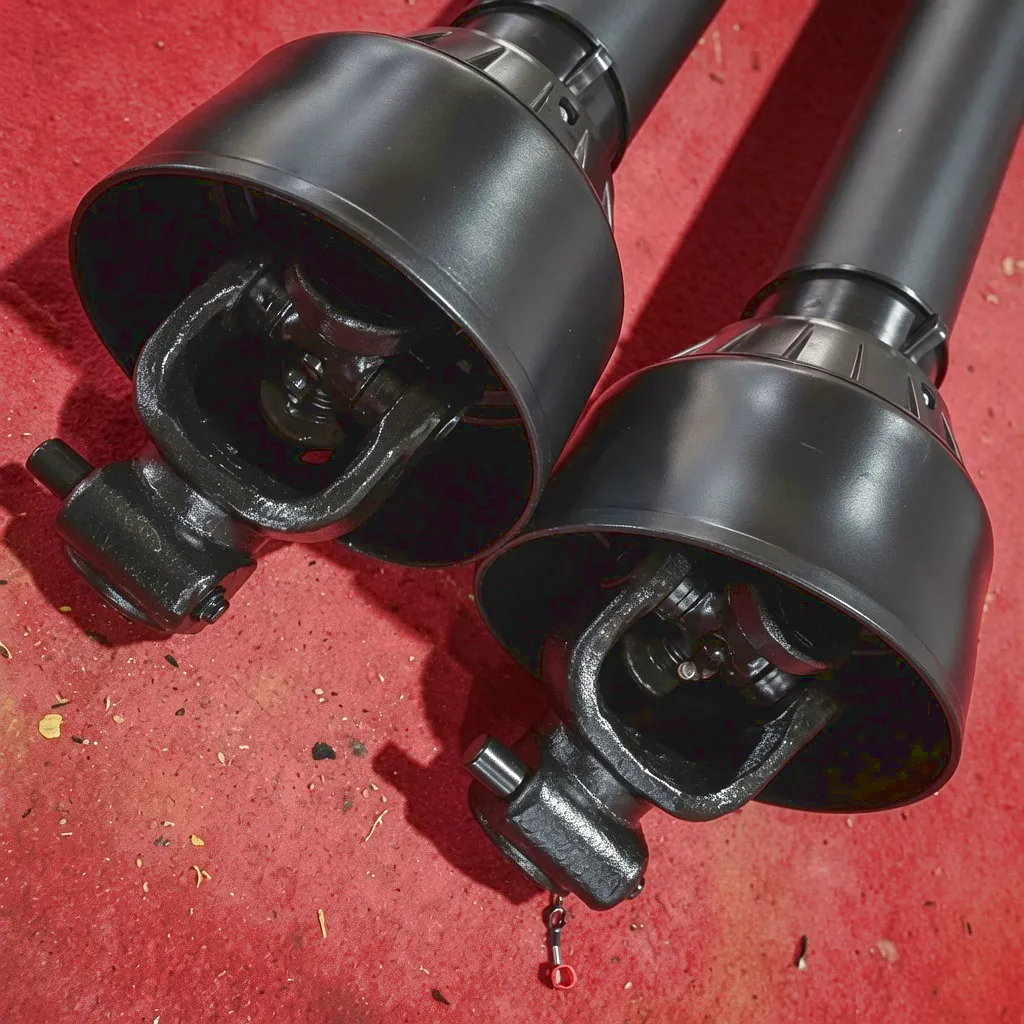
STEP 1 — Clean the Splines
Use a wire brush to remove any rust, dirt or old grease from both the tractor PTO stub splines and the implement input splines. Apply a thin coat of fresh EP2 grease to both sets of splines. Clean splines engage smoothly and reduce fretting wear over the season.
STEP 2 — Fit the Tractor-End Yoke
Slide the tractor-end yoke onto the PTO stub, aligning the splines carefully. Push firmly until the locking pin engages with a positive click. Tug the shaft rearward to verify it is locked. Do not proceed if the yoke slides off without force — the locking mechanism must be repaired or replaced.
STEP 3 — Fit the Implement-End Yoke
Extend the shaft to the pre-measured working length. Slide the implement-end yoke onto the implement input shaft, again aligning splines and pushing until locked. For shafts with a shear-bolt coupling at the implement end, fit a new shear bolt of the correct grade — never substitute a standard bolt as this defeats the torque-overload protection.
STEP 4 — Fit and Anchor the Guard
Slide the guard over the shaft. Attach the guard anchor chains at both ends — one chain to a fixed bracket on the tractor, one to a fixed bracket on the implement. The chains prevent the guard from rotating with the shaft. Ensure chains have no slack that would allow the guard to spin or contact the shaft during operation.
STEP 5 — Grease the Universal Joints
Locate the grease nipples on each U-joint cross. Apply EP2 grease until fresh grease appears at the bearing seals. On a new shaft, this may require 3–5 pumps per nipple. Also grease the telescoping profile tube via its own nipple, typically located mid-shaft. Inadequate lubrication at commissioning is the leading cause of premature cross-bearing failure.
STEP 6 — Pre-Operation Check
With the engine still off, rotate the implement by hand to verify the shaft turns freely with no binding or clunking. Check that no part of the guard contacts the shaft during rotation. Stand clear and start the tractor. Engage PTO at low engine speed initially and observe for vibration, noise or visible wobble. Any abnormal behaviour requires immediate PTO disengagement and investigation before full-speed operation.
5. PTO Shaft Specification Reference Table
| Specification | 540 rpm Series | 1000 rpm Series | Wide-Angle Series |
|---|
| Spline profile | 1-3/8 in, 6-spline | 1-3/4 in, 20-spline | 1-3/8 in or 1-3/4 in |
| Max operating angle | 15 graus | 15 graus | Up to 80 deg |
| Torque range | 300–1200 Nm | 800–3000 Nm | 500–2000 Nm |
| Tube material | Cold-drawn steel | Cold-drawn steel | High-strength alloy steel |
| Overload protection | Shear bolt or friction clutch | Friction clutch standard | Friction or ratchet clutch |
| Min tube overlap | 150 mm | 150 mm | 180 mm |
| Intervalo de lubrificação | Every 8 operating hours | Every 8 operating hours | Every 6 operating hours |
| Surface finish | Yellow zinc phosphate | Yellow zinc phosphate | Black oxide or yellow zinc |
6. Common Installation Mistakes and How to Avoid Them
Mismatched spline count
Forcing a 6-spline yoke onto a 21-spline stub will not engage and can permanently damage the stub surface. Always verify spline count before ordering a replacement shaft.
Omitting guard anchor chains
A spinning guard wraps around the shaft and generates heat, causing guard failure and potential ignition of crop debris. Fit chains every time without exception.
Operating at excessive angle
U-joints running above their rated angle wear rapidly and generate a characteristic knock at 1x rotational frequency. Reposition the implement or upgrade to a wide-angle shaft.
Insufficient telescoping overlap
The inner tube pulling completely free of the outer tube at maximum extension causes sudden implement disconnection. Always verify overlap at full linkage height before first use.
Wrong-grade shear bolt
Substituting a Grade 8 bolt where a Grade 4.6 shear bolt is specified means the clutch will not release on overload, transmitting full shock load to the implement gearbox and potentially the tractor transmission.
No pre-operation grease
New shafts ship with minimal assembly grease. Always fully charge all grease nipples before first engagement. Running dry for even a few minutes causes permanent cross-bearing damage.
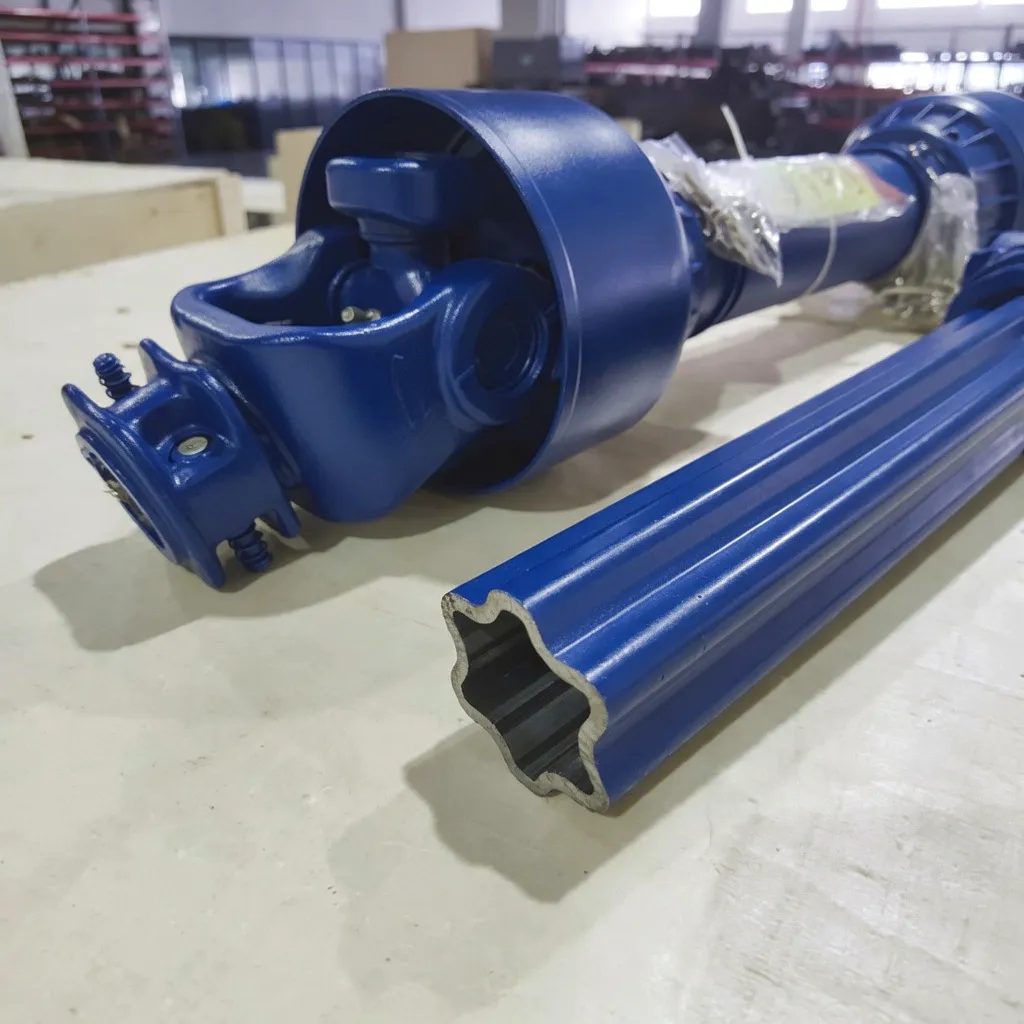
Manufactured by Ever-Power
Engineering-Grade PTO Shafts Built for Agricultural Demands
Every Ever-Power PTO shaft is manufactured in a 60,000 m² facility with full in-house forging, heat treatment, and dynamic balancing. With over 3,000 projects delivered and 68 registered patents, our engineering team understands the fatigue cycles and impact loads that agricultural shafts must withstand through a full working season.
Triple ISO certification and CE marking ensure that every shaft meets the dimensional and safety standards required for work in the UK, EU, and export markets.
Customer Case Study: Yorkshire Arable Farm, North England
Estudo de Caso
1,200-Acre Cereal Farm, North Yorkshire
Operation: Winter wheat, spring barley and oilseed rape production using a fleet of four tractors and 11 PTO-driven implements including twin-rotor rakes, disc mowers, a large square baler and a maize chopper.
O desafio: The farm had been running three different brands of eixo da tomada de força across its implement fleet, resulting in inconsistent spline fits, incompatible guard fittings and difficulty sourcing matching replacement cross-bearing kits. During the previous harvest, two shaft failures caused combined downtime of 14 hours at peak silage time. The farm manager estimated the cost at over £6,800 in delayed contractor charges and spoiled crop.
A solução: After consulting the technical team at Eixos de transmissão da tomada de força Ever-Power, the farm standardised its entire fleet on a single shaft range, choosing 540 rpm series shafts with friction-clutch overload protection for all hay and straw implements, and 1000 rpm wide-angle shafts for the maize chopper and large square baler. Guard fitting dimensions were standardised across all brackets.
O resultado: In the 18 months following the fleet standardisation, the farm recorded zero PTO shaft failures. Maintenance time for pre-season shaft inspection decreased by 62% as technicians were working with identical components. One set of cross-bearing kits now serves all shafts, reducing spare-parts inventory by four lines. The farm manager attributes an estimated £9,200 saving in the first full season to reduced downtime and simplified maintenance.
What Farm Engineers Say
“
We replaced all seven shafts on our baler, mower and rake fleet in one order. The spline fit was spot-on and the guard anchor points lined up with our existing brackets without modification. First season through with no issues at all.
James Hartley
Farm Manager — Hartley Arable Partnership, Lincolnshire
“
The wide-angle shaft for our front-mounted loader has been running at extreme angles all spring without any vibration. The cross bearings still feel tight after 200 hours. Good quality engineering at a very fair price compared to the dealer option.
Robert Calloway
Agricultural Contractor — R. Calloway Contracting, Shropshire
“
I fitted three shafts on my own as a first-time installation. The documentation was clear and the locking collars clicked positively into place first time. I rang the technical line with one question and got a straight answer in under two minutes. That kind of support matters when you are working alone on a tight harvest deadline.
David Thornton
Smallholder — Thornton Mixed Farm, North Yorkshire
Perguntas frequentes
How do I know if my PTO stub is 540 rpm or 1000 rpm rated?
The standard indicator is the spline count and stub diameter. A 1-3/8 inch stub with 6 splines is 540 rpm; a 1-3/4 inch stub with 20 or 21 splines is 1000 rpm. Some modern tractors carry both outputs at different positions on the rear axle housing. Check your tractor operator manual if you are unsure, as fitting a 1000 rpm shaft to a 540 rpm stub will result in over-speeding the implement.
Can I use the same PTO shaft on different implements?
In some cases, yes. If two implements share the same spline profile and similar operating length range, one shaft can serve both. However, if the implements have different torque requirements or overload protection ratings, it is safer to dedicate a shaft to each implement. Using a shaft rated for a light mower on a heavy baler risks overloading the shaft tubes and U-joints.
How often should I replace universal joint crosses?
On a working farm shaft used 200–400 hours per season, crosses typically require inspection every two seasons and replacement every three to four seasons. Signs of wear include roughness when rotating by hand, a ticking or knocking noise at low speed, and visible rust or play in the needle bearings. Replacing crosses is far less costly than replacing the full shaft.
What is the difference between a friction clutch and a shear-bolt overload system?
A friction clutch slips at a pre-set torque and re-engages automatically once the overload has passed, requiring no manual intervention. A shear-bolt system requires the operator to stop, disengage the PTO, fit a new bolt and resume work. Friction clutches are preferred for implements that frequently encounter variable loads such as rakes, tedders and flail mowers. Shear bolts remain standard on implements where a single catastrophic overload is the main risk, such as post-hole diggers.
Is it safe to extend a PTO shaft with a coupling adapter?
Extension adapters exist but should only be used as a short-term solution and only within the torque rating of the adapter. A purpose-made shaft of the correct length is always the preferred solution, as adapters introduce an additional joint and a potential point of weakness. Never attempt to extend a shaft by welding additional tube, as this compromises the dynamic balance and fatigue strength of the assembly.
Ready to Order
Complete PTO Drive Shaft Solutions from Ever-Power
Whether you need a standard replacement shaft or a custom-length solution for a specialist implement, Ever-Power supplies the full range. 3,000+ projects delivered, 68 patents, Triple ISO certified.
View the Full PTO Drive Shaft Range →
Ever-Power PTO Drive Shafts — Factory Direct — Engineering Support Available
editado por gzl