PTO Shaft Universal Joint Replacement Guide
A step-by-step workshop guide for replacing worn U-joint crosses on agricultural PTO drive shafts, covering tools, procedure, torque settings and post-fit verification.
View PTO Drive Shaft Range →
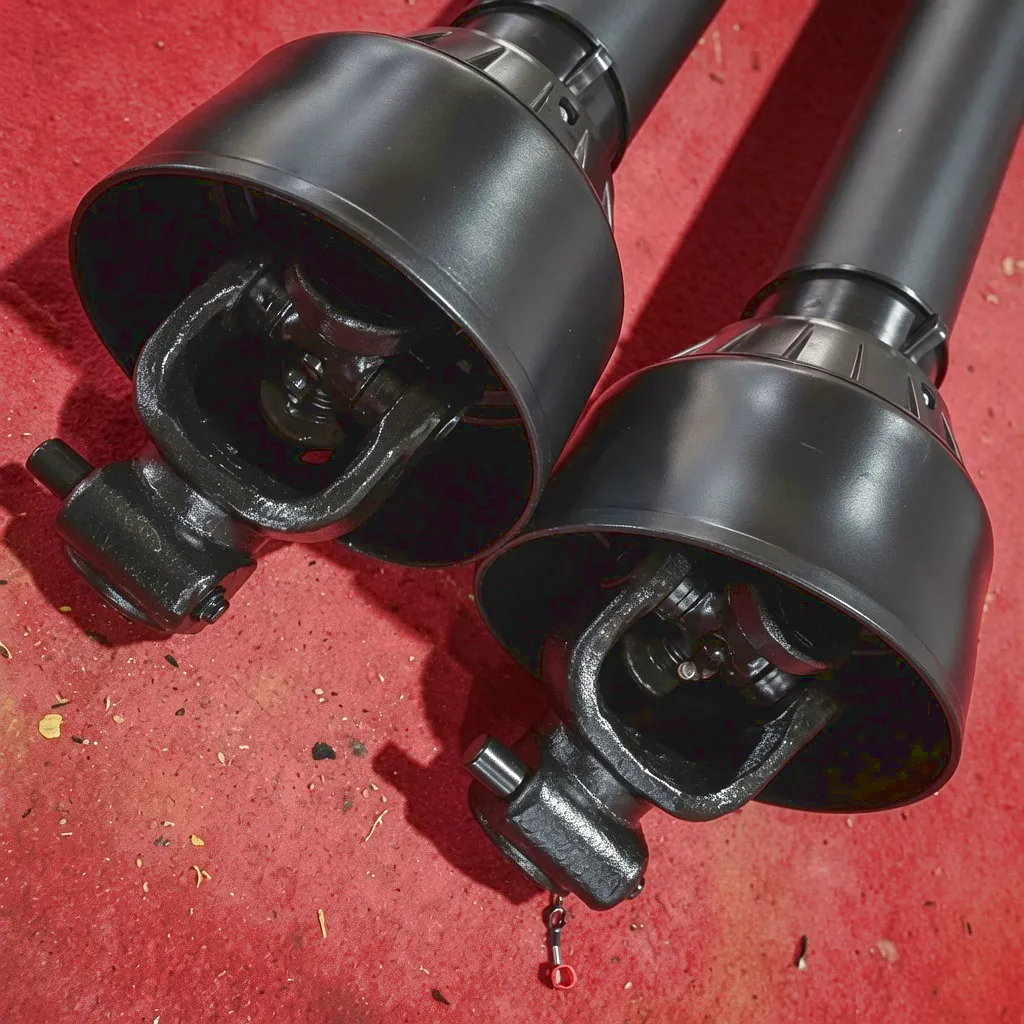 The universal joint cross is the highest-wear component in a PTO drive shaft assembly. Running continuously at 540 rpm or 1000 rpm through agricultural seasons, the four needle bearing assemblies inside each cross must transmit full shaft torque while accommodating the operating angle between the tractor PTO stub and the implement input shaft. When lubrication intervals are missed or contamination enters a seal, bearing life shortens dramatically. A cross that is replaced at the first sign of wear costs a few pounds and an hour of workshop time; one that is left until it fails in the field can fracture a yoke, damage the implement gearbox input or strand the machine at a critical point in the harvest calendar.
This guide sets out the complete replacement procedure for U-joint crosses on a standard telescoping agricultural PTO shaft. The process applies equally to shafts on round balers, disc mowers, rotary tedders, slurry tankers, wood chippers and other common implements. No specialist tooling beyond a bench vice and a basic press is required.
The guide also covers how to read the signs that a cross needs immediate replacement rather than simply monitoring, and how to verify the completed job before refitting the shaft to the tractor.
1. When to Replace: Wear Indicators
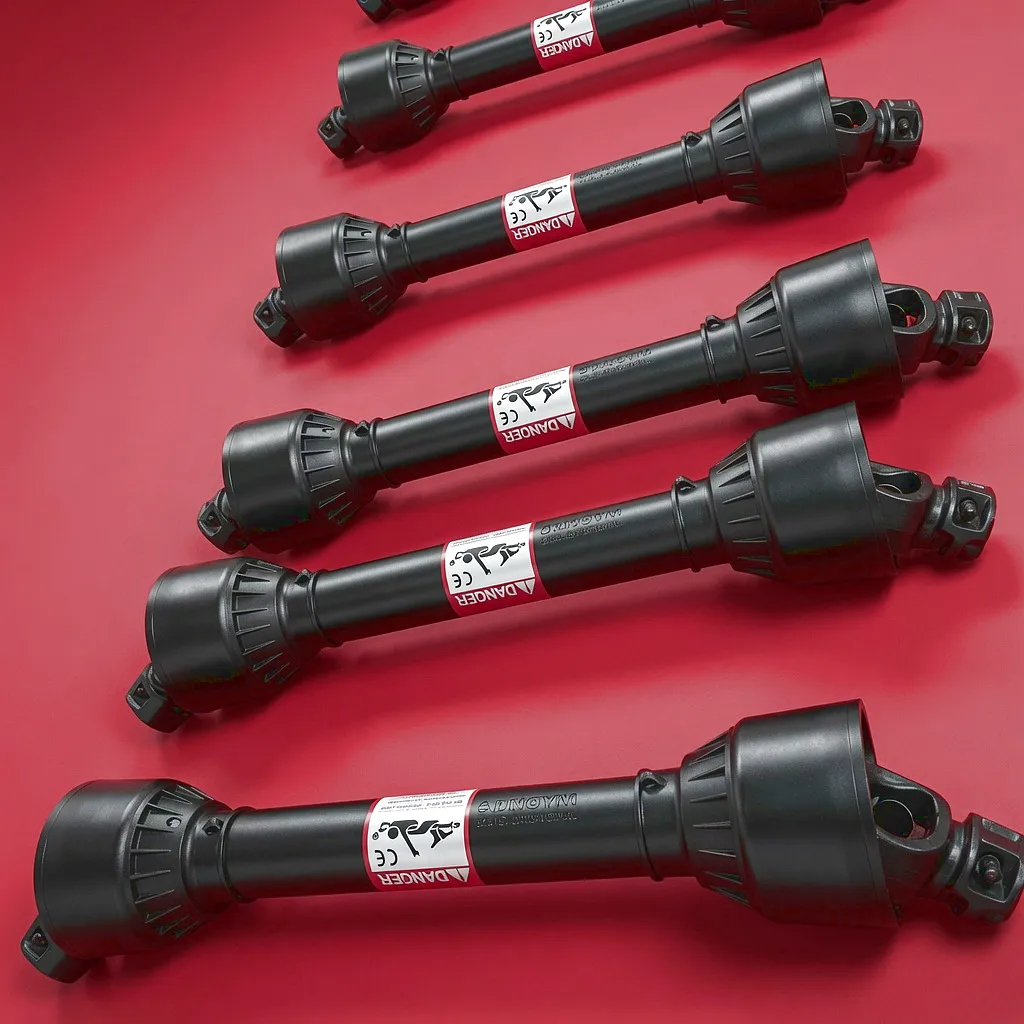
Knowing when to replace rather than monitor saves money and prevents unexpected failures. The following indicators mean replacement is required at the next available opportunity, not at the end of the season:
Measurable radial play
Grip the shaft firmly on both sides of the cross and attempt to rock the joint in all four directions. Any perceptible play, even 0.1 mm, indicates that needle bearing wear has progressed beyond the designed clearance. A serviceable cross has zero measurable play.
Rust weeping from bearing caps
Brown staining around the circlip grooves or bearing cap flanges indicates that water has entered the bearing and the seal is no longer functioning. Even if the cross feels tight, the needle surfaces will be corroded and bearing life will be measured in hours rather than seasons.
Resistance or roughness when rotating by hand
A good cross rotates smoothly through its full articulation arc with light hand pressure. Any roughness, notchiness or tight spots indicate pitting or spalling of the needle surfaces and the cross must be replaced.
Audible noise in operation
A grinding or ticking noise at low PTO speed that disappears at higher speed, or a clunk at engagement and disengagement, both point to cross bearing damage. Vibration that varies with PTO speed rather than engine speed is also characteristic of worn crosses.
Replace All Crosses at the Same Time
On a shaft with three or more seasons of work, all crosses will have experienced similar duty cycles. If one cross shows wear, the others will reach the same condition within the same season. Replacing all crosses in a single workshop session is more economical than multiple part-season interventions, and ensures the shaft returns to balanced service life across all joints.
2. Tools and Parts Required
🔧 Workshop Tools
- Bench vice with soft jaw pads
- Hydraulic press or G-clamp with sockets
- External circlip pliers (for snap rings)
- Flat-blade screwdriver (seal removal)
- Wire brush
- Clean rag and degreaser
- Rubber mallet
- Vernier calliper (bearing cap measurement)
📦 Parts and Consumables
- Replacement cross and bearing kit (correct series)
- Circlips matching original dimensions
- EP2 lithium-complex grease
- Grease gun with needle adaptor
- Workshop marker pen (phasing marks)
- Parts tray or magnetic mat
📋 Before You Start
- Shaft removed from tractor and implement
- Guard removed and set aside
- Cross part number verified against shaft series
- Work area clean and well lit
- Phasing mark applied to both telescoping tubes
Identifying the Correct Cross Kit
Cross kits are sized by the outer diameter of the bearing caps and the journal diameter of the cross itself. Measure the bearing cap outer diameter with a calliper before ordering. Common agricultural sizes are 27 mm, 30.2 mm, 35 mm and 42 mm cap diameter. The replacement kit must match the original exactly; an undersized cap will have bearing play from new and an oversized cap will not seat in the yoke bore. Cross kits include the cross body, four bearing caps with needle rollers, seals and circlips.
3. Step-by-Step Removal of the Old Cross
STEP 1 — Mark the Phasing
Before separating the shaft, use a marker pen to place an alignment mark on both the inner and outer telescoping tubes at the same clock position. This ensures the tubes are reassembled in the correct rotational relationship. A phasing error produces severe twice-per-revolution vibration that is often mistaken for a new cross problem.
STEP 2 — Remove the Circlips
Use external circlip pliers to remove all four circlips from the bearing cap grooves in the yoke ears. Work carefully as the clips are under light spring tension and can launch across the workshop if the pliers slip. Place each clip in the parts tray immediately. Examine the circlip grooves in the yoke for any corrosion or deformation; a groove that is no longer clean and square may not retain the new clips securely.
STEP 3 — Press Out the Bearing Caps
Position the yoke in the bench vice or press with one bearing cap resting on a socket large enough to pass the cap body through. Place a smaller socket or drift on the opposite cap and apply steady press or vice pressure. The cap on the receiving side will be pushed out through the yoke ear. Rotate the cross 90 degrees and repeat for the remaining caps. Do not use a hammer directly on the cross journal as this damages the bearing seats in the yoke.
STEP 4 — Inspect the Yoke Bores
With the old cross removed, clean the bearing cap bores in both yoke ears with a wire brush and degreaser. Examine each bore for scoring, pitting or out-of-round wear. The bore must be smooth, circular and free of corrosion. If a bore is damaged, the yoke must be replaced before fitting the new cross as a worn bore will allow the new bearing cap to move and will rapidly destroy the fresh bearings.
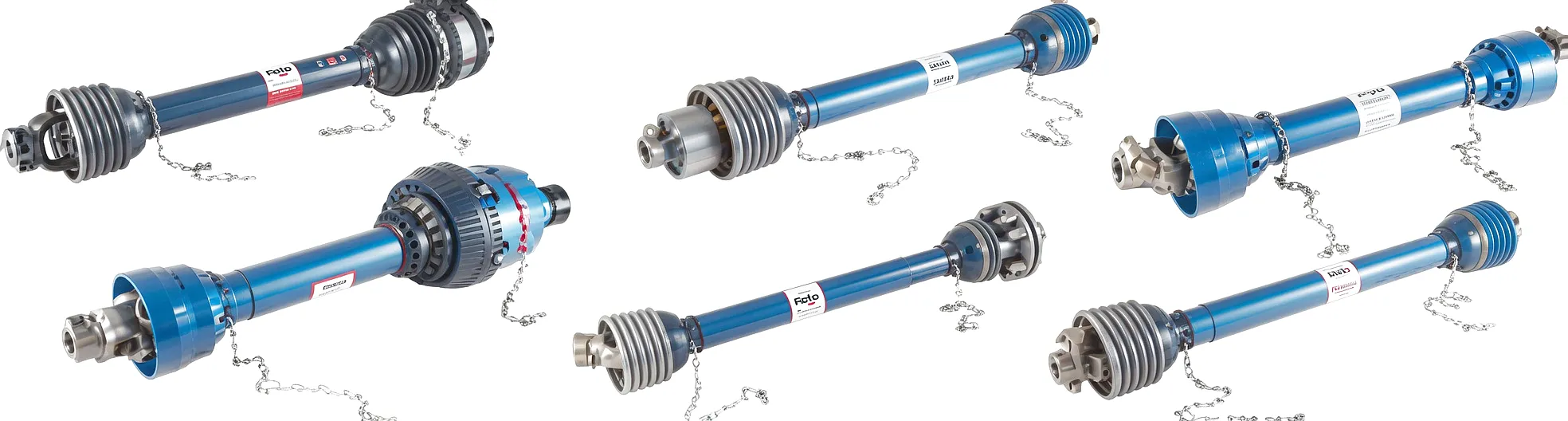
4. Fitting the New Cross
STEP 5 — Prepare the New Cross
Open the cross kit and lay out all components. Inspect the needle rollers in each bearing cap: they should be fully seated, straight and coated with the factory assembly grease. Do not wash this grease out. Handle the bearing caps with clean hands only; skin oils and grit both accelerate needle wear. Locate the grease nipple hole in the cross body and verify it is unobstructed.
STEP 6 — Start the First Two Bearing Caps
Place the cross body into the yoke with one journal aligned with a yoke bore. Slide a bearing cap over the journal by hand, taking care not to tilt it. Press the cap in by hand until it is flush with the yoke ear face. Fit the opposite cap on the same axis in the same way. With both caps started square, use the press to push them in simultaneously, switching pressure side to side to keep the cross centred. Press until the circlip grooves in the yoke bores are just clear of the cap flange.
STEP 7 — Fit Circlips on First Axis
Fit a circlip into the groove of each cap on the first axis. The clip must seat fully in the groove around its entire circumference. Use the flat-blade screwdriver to press the clip into the groove if needed. A clip that is not fully seated will allow the bearing cap to move axially, causing rapid failure of both the cross and the yoke bore. Tap the end of each capped journal lightly with the rubber mallet after fitting the circlip to ensure the cap is seated against the clip.
STEP 8 — Repeat for Second Axis
Rotate the cross 90 degrees and repeat Steps 6 and 7 for the remaining two bearing caps. Once all four caps are fitted and circlipped, articulate the cross through its full range of motion by hand. It should move smoothly in all directions with light, even resistance. Any stiffness or tight spot indicates a misaligned cap or a needle roller that has tipped during fitting; the cap must be pressed out and refitted.
STEP 9 — Grease the New Cross
Fit the grease nipple into the cross body. Using a grease gun charged with EP2 lithium-complex grease, pump until fresh grease appears at all four bearing cap seals. This may require 4 to 6 pumps on a new cross. The grease purging past the seals indicates that all four bearing cap cavities are fully charged. Wipe away excess grease from the exterior of the caps and seals.
5. Reassembly and Verification
With all crosses replaced, reassemble the telescoping shaft sections by aligning the phasing marks made before disassembly. Slide the inner tube into the outer tube in the marked orientation. Incorrect reassembly produces a 90-degree phasing error that doubles the velocity variation at both joints and causes immediate vibration in operation.
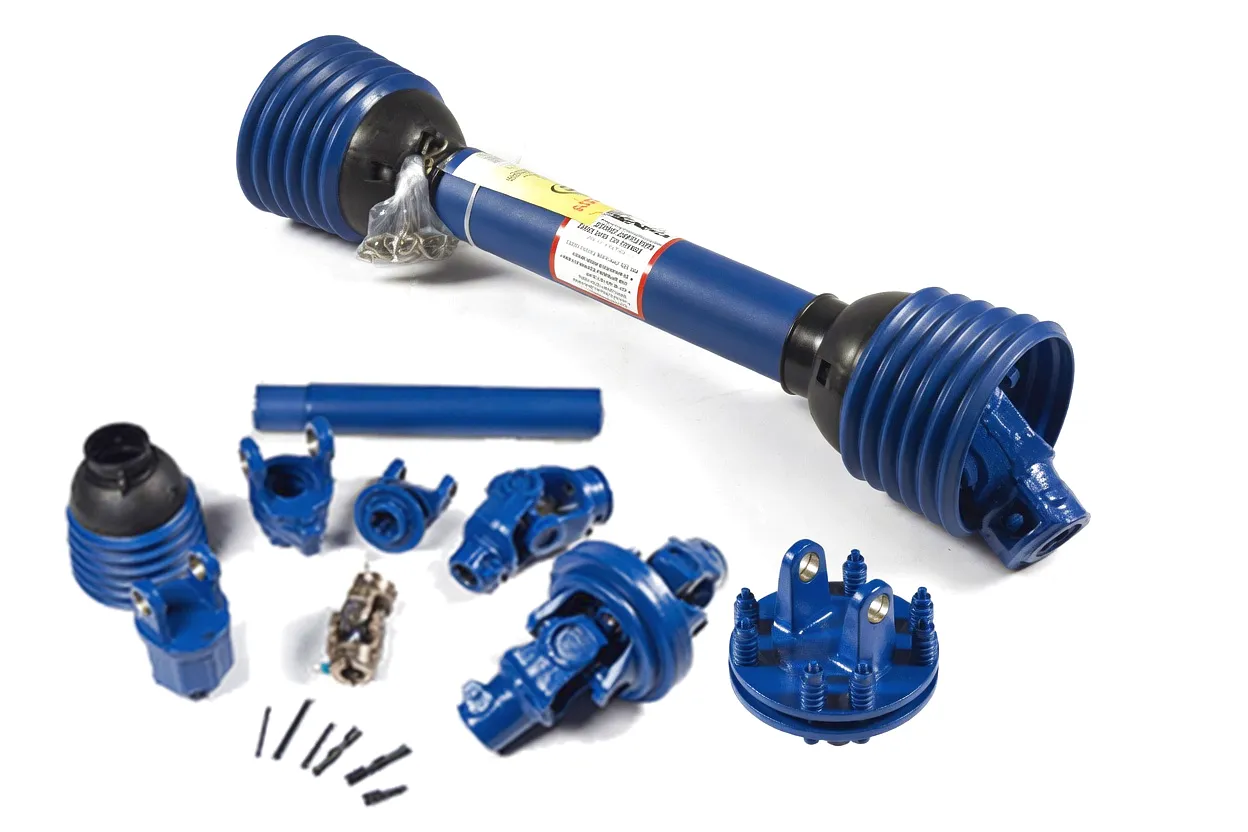
Post-Assembly Verification Checklist
Articulation check
Rotate each cross through its full range by hand. Movement must be smooth with no tight spots, roughness or play.
Circlip seating
Visually inspect each circlip groove. The clip must be visible around the full circumference of the groove with no gaps or lifted sections.
Phasing verification
Look along the shaft from one end. The yoke ears at both ends must be in the same plane, not at 90 degrees to each other.
Telescope movement
Slide the telescoping sections by hand through their full travel. Movement must be smooth with no stiff points.
Grease nipple presence
All nipples must be fitted and undamaged. A missing nipple allows contamination to enter and renders the cross unreachable for future lubrication.
Guard refitting
Refit the guard and anchor both chains before returning the shaft to the tractor. Never operate without the guard in place.
6. Cross Bearing Replacement Interval Reference
| Application | Typical annual hours | Grease interval | Cross inspection | Expected cross life |
|---|
| Round baler (1000 rpm) | 200–400 hr | Every 6 hr | Pre-season + mid-season | 3–4 seasons |
| Disc mower (1000 rpm) | 150–300 hr | Every 6 hr | Pre-season | 4–5 seasons |
| Rotary rake (540 rpm) | 100–200 hr | Every 8 hr | Pre-season | 5–7 seasons |
| Wood chipper (1000 rpm) | 300–600 hr | Every 4 hr | Every 50 hr | 1–2 seasons |
| Slurry tanker pump (540 rpm) | 100–250 hr | Every 8 hr | Pre-season | 4–6 seasons |
| Post-hole digger (540 rpm) | 50–150 hr | Every 8 hr | Pre-season | 6–8 seasons |
7. Common Fitting Errors and How to Avoid Them
Tilted bearing cap during installation
If a cap enters the yoke bore at an angle, needle rollers will tip and jam. The cross will feel stiff or lock up when articulated. Always start both caps on the same axis simultaneously and press evenly.
Circlip not fully seated
A clip sitting proud of the groove allows the bearing cap to work axially in operation. This quickly damages the needle bearing and the yoke bore. Verify visually and tap the cap end with the rubber mallet after fitting each clip.
Wrong-size cross kit
An undersized cap sits in the bore with a gap, creating immediate play. An oversized cap cannot be pressed fully home. Always measure the original cap diameter before ordering. A 1 mm error in cap size makes the kit unusable.
Phasing error on reassembly
Reassembling the telescoping tubes without reference to phasing marks produces a 90-degree error that causes severe vibration from first use. Mark the tubes before any disassembly without exception.
No initial grease charge
New crosses ship with minimal assembly lubricant. Failing to fully grease the cross before first operation causes dry running of the needle bearings within the first few minutes of use, permanently reducing bearing life.
Reusing old circlips
Circlips that have been removed and refitted lose some of their spring tension and may not seat fully in the groove. Always fit the new circlips supplied with the replacement cross kit.
Manufactured by Ever-Power
Cross Bearing Kits and Complete Replacement Shafts Available Direct
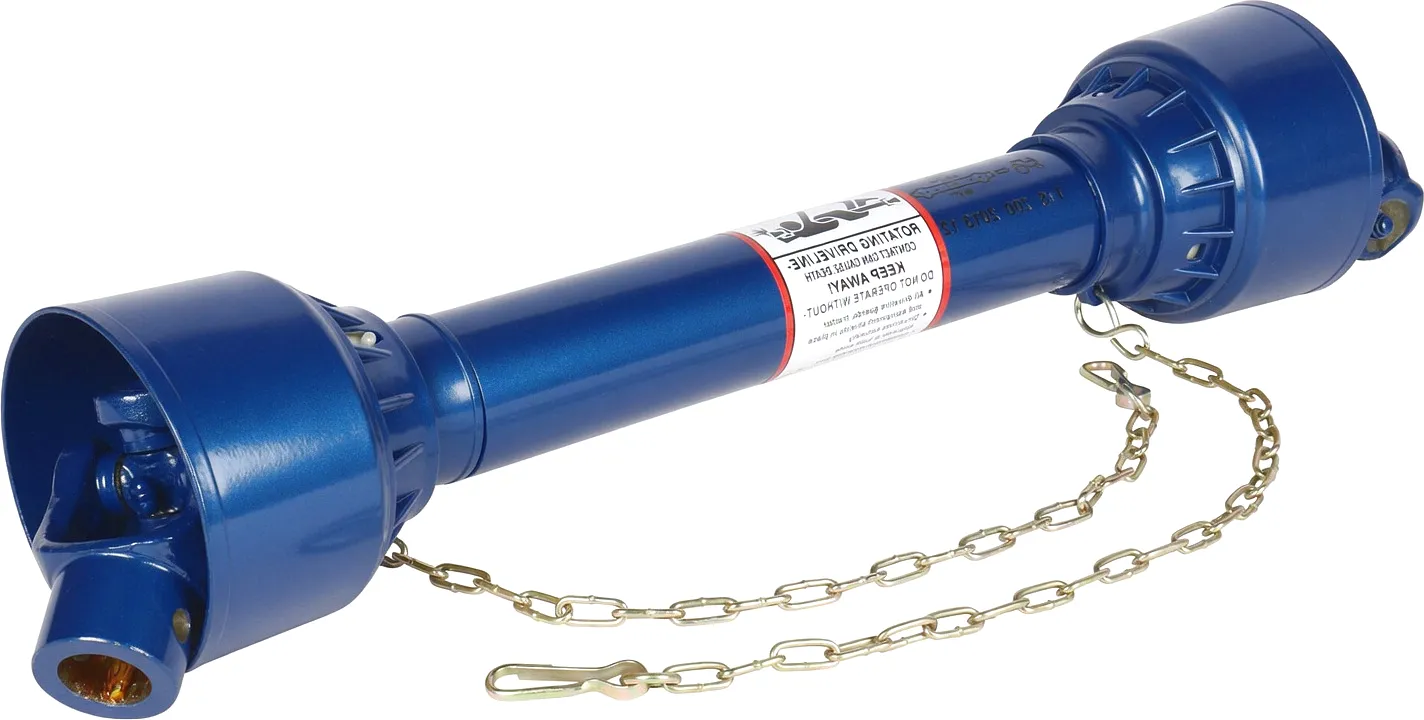 Ever-Power supplies cross bearing kits across the full range of agricultural shaft series, in all standard cap diameters from 27 mm through 42 mm. Each kit includes the cross body, four bearing caps with pre-installed needle rollers, triple-lip seals, circlips and a grease nipple. Kits are manufactured to the same dimensional standards as the original shaft components and carry full traceability under our Triple ISO quality system.
Where a yoke bore is damaged beyond repair, complete replacement shafts are available factory direct through Ever-Power PTO Drive Shafts, with technical support available to match the correct specification to your implement.
Customer Case Study: Arable and Livestock Farm, County Durham
Studi Kasus
Mixed Arable and Livestock Farm, County Durham
Operation: 850-acre mixed enterprise with winter cereals, a 300-head suckler herd and an in-house round bale silage operation. PTO-driven implements include two round balers, a wrapper, a disc mower, twin-rotor rake and a loader-mounted round bale handler.
 The challenge:
 The farm had been experiencing recurring cross bearing failures on its high-output round baler shaft, averaging two cross replacements per season. Each failure required the baler to be towed to the farm workshop, costing approximately three hours of downtime at a critical silage period. Investigation revealed that the baler shaft was being greased only at the start of the season rather than at the recommended 6-hour interval, and that the crosses were being sourced from an agricultural merchant who supplied a 29 mm cap kit rather than the correct 30.2 mm specification, resulting in slight cap movement from new that accelerated wear.
The solution: The farm manager contacted the technical team at
Ever-Power PTO Drive Shafts, who supplied correctly sized 30.2 mm cross kits along with a maintenance schedule card for the tractor cab specifying a 6-hour grease interval. The farm also fitted a new complete baler shaft with a pre-greased cross assembly to start the following silage season from zero hours.
The outcome: In the two seasons following the change, the baler shaft required no unplanned cross replacements. The planned pre-season cross inspection took 45 minutes and found the bearing caps still tight with no measurable play. The farm manager estimates a saving of approximately £4,200 in avoided downtime and contractor charges across the two-season period.
What Workshop Engineers and Farm Managers Say
“
The cross kits came with everything needed including new circlips, which is something cheaper kits often omit. The cap diameter was spot on and pressed in cleanly first time. The quality of the needle assemblies is noticeably better than the generic parts we had been using.
Stewart Nicholson
Farm Workshop Manager — Nicholson Farms, Northumberland
“
We replaced all three crosses on our mower shaft as part of a pre-season workshop day. The whole job took under two hours including cleaning and greasing. The shaft has been running smoothly all season without any of the roughness we had been experiencing by mid-summer on the old crosses.
Timothy Grayson
Arable Farmer — Grayson Cereals, Lincolnshire
“
The technical support line helped me identify the correct cross size from the shaft serial number rather than needing to measure the old caps. That saved time and ensured the parts were correct before the job started. I would not source cross kits from anywhere else for our machinery now.
Patricia Ogden
Farm Manager — Ogden Estate, West Yorkshire
Pertanyaan yang Sering Diajukan
Can I replace just one cross or do I need to replace all of them?
You can replace a single cross if the shaft is relatively new and only one joint shows wear. However, on a shaft that has been in service for three or more seasons, replacing all crosses at the same time is strongly recommended. The crosses will have experienced similar wear cycles and replacing them together avoids a repeat workshop job mid-season when a second cross reaches the end of its life.
Do I need a hydraulic press or can I use a vice?
A bench vice with suitable sockets can remove and fit most agricultural PTO cross caps, provided the vice has adequate jaw opening and a screw mechanism rather than a quick-release type. A hydraulic press gives more controlled and even pressure, which is particularly helpful when fitting new caps to avoid tilting the cap during entry. For light-duty shafts up to 35 mm cap size, a good bench vice is adequate. For heavy 42 mm caps on high-torque shafts, a press is recommended.
How do I know if the yoke itself needs replacing rather than just the cross?
Inspect the bearing cap bores in the yoke ears after removing the old caps. A serviceable bore is smooth, circular and free of scoring or rust pitting. Run your finger around the bore; it should feel like a machined surface. If you can feel ridges, pitting or a visible worn oval shape, the bore has been damaged by cap movement and will destroy a new cross within a short period. In this case the yoke must be replaced along with the cross.
What happens if I operate the shaft immediately without greasing the new cross first?
The factory assembly lubricant on a new cross is sufficient for a few minutes of operation at most. Running the shaft at full PTO speed without first charging the grease nipple will cause the needle rollers to run dry against the cross journal surfaces within the first operating period. This causes micro-welding and surface pick-up of the needle surfaces that permanently reduces bearing life, even if the cross is subsequently greased correctly. Always charge the nipple before first engagement.
Is it worth fitting a wide-angle cross kit if I have repeated wear problems at one joint?
If rapid cross wear is occurring consistently at the tractor-end joint, it is likely that the shaft is operating at an angle above its design limit at that end. A standard cross replacement will experience the same accelerated wear pattern. In this situation, upgrading to a wide-angle shaft with a constant velocity joint at the tractor end is the correct long-term solution rather than repeated cross replacements. The additional cost of the wide-angle shaft is typically recovered within one to two seasons of avoided cross replacement and downtime.
Cross Kits and Complete Shafts
Source the Right Cross Kit or a Complete Replacement Shaft
Ever-Power supplies cross bearing kits and complete PTO drive shafts direct from the factory across the full 540 rpm and 1000 rpm range. Technical support is available to match the correct specification to your implement. Triple ISO certified, 3,000+ projects delivered, 68 patents.
View Ever-Power PTO Drive Shafts →
Factory Direct — Engineering Support Available — Full Cross Kit Range in Stock
diedit oleh gzl