 Wind energy now accounts for more than 29% of the United Kingdom’s total electricity generation, making it the single largest source of electricity in the country. Behind every megawatt generated, a precisely engineered drivetrain is working under continuous mechanical stress — transferring rotational energy captured from the wind through main shafts, gearboxes, and ultimately to the generator. Within this chain, the PTO shaft for wind turbine drivetrain assemblies plays a role that is easy to overlook on a specification sheet yet catastrophic to ignore in the field.
A PTO (Power Take-Off) drive shaft in this context is a flanged or splined coupling shaft that transmits torque between the primary mechanical components of the turbine drivetrain. It must absorb angular misalignment caused by thermal expansion, nacelle flexing, and rotor imbalance; it must withstand shock torque loads during grid-fault events; and it must do all of this across a 20-year operational lifespan with minimal scheduled maintenance. Getting this specification wrong adds failure risk — and, in offshore environments, that means expensive mobilisation costs running into tens of thousands of pounds per intervention.
With over 18 years of application engineering in industrial power transmission, the team at Ever Power has worked alongside wind-sector OEMs, tier-1 gearbox suppliers, and independent service operators across the UK to develop PTO shaft solutions that are genuinely fit for purpose — not adapted from agricultural or general-industrial catalogues. The following sections walk through what sets wind-duty PTO shafts apart, the technical benchmarks that matter, and how to specify the right component for your installation.

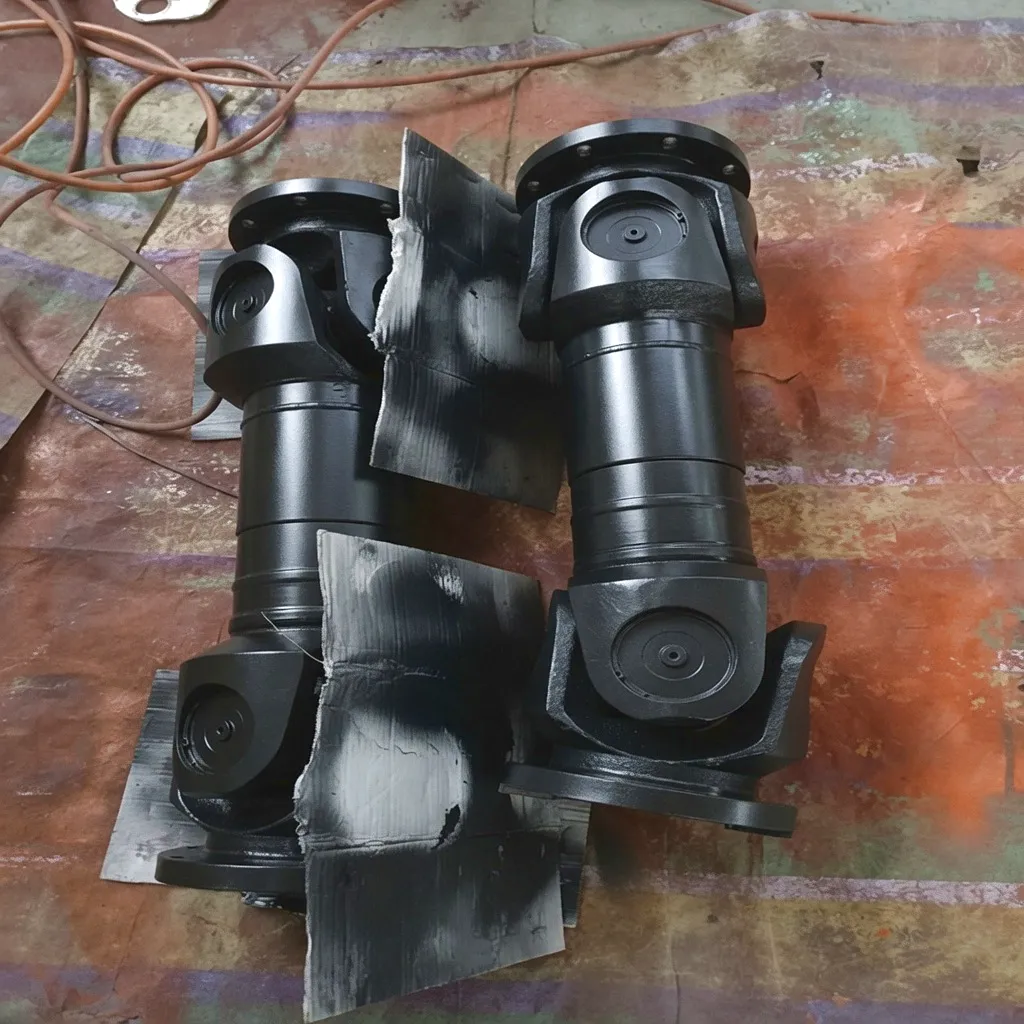
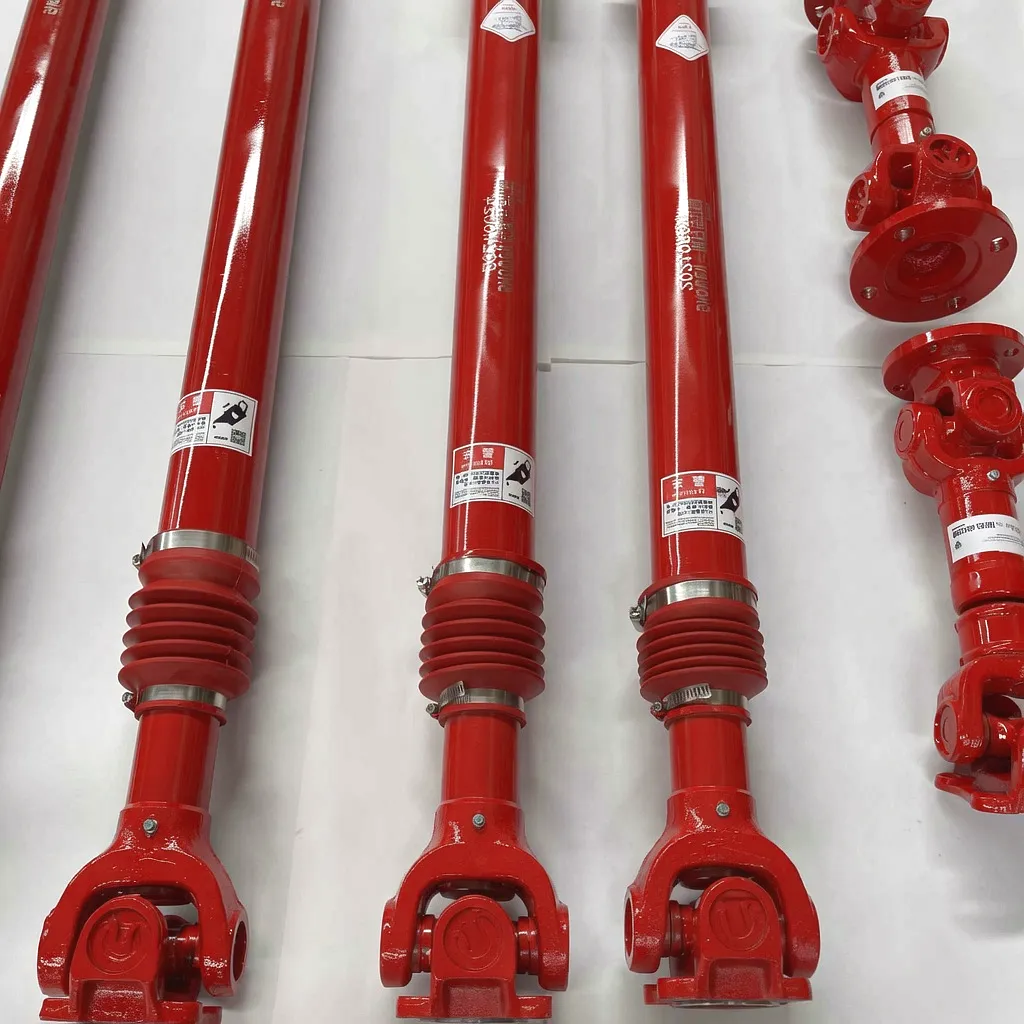
Ever Power precision-engineered PTO drive shafts — designed for wind energy drivetrain environments.
Response within 24 hours · UK & international enquiries welcome
What Does a PTO Shaft Do Inside a Wind Turbine Drivetrain?
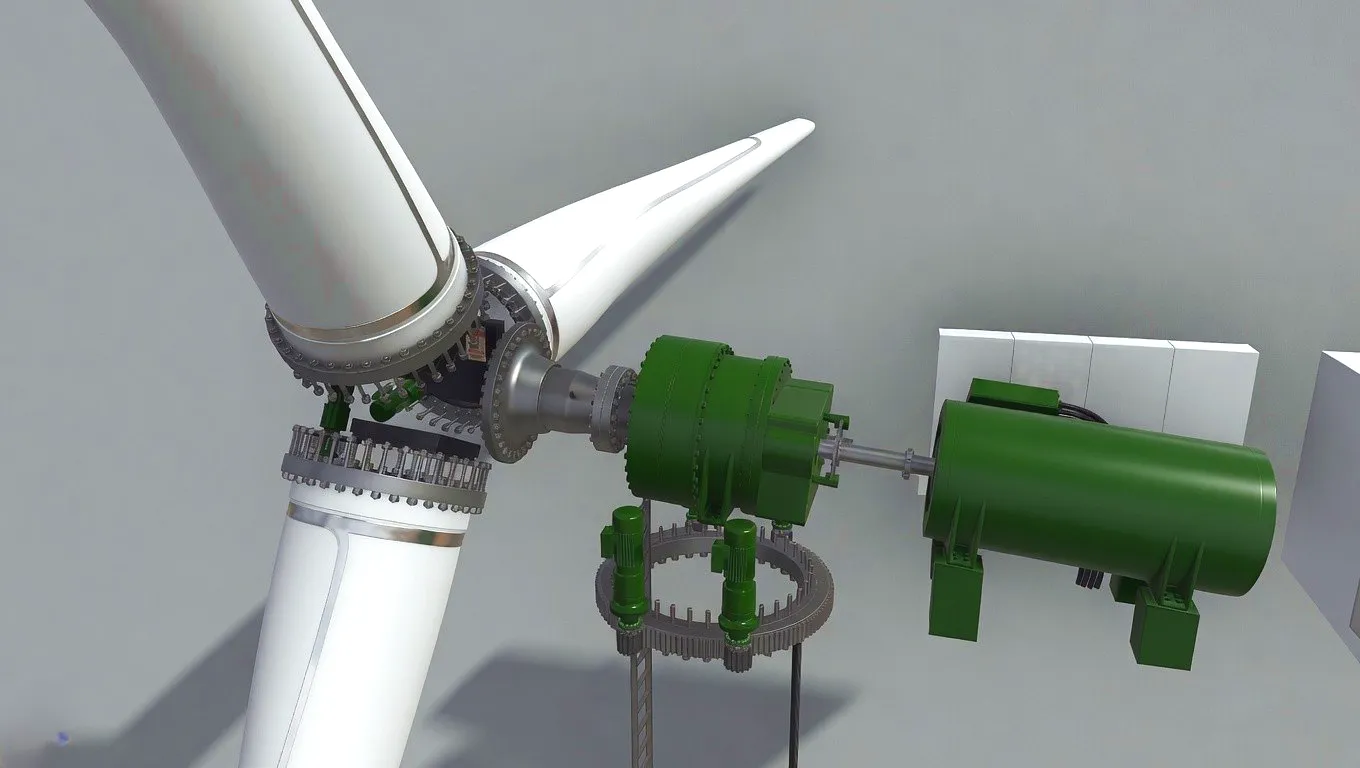
Modern horizontal-axis wind turbines — the type you see across wind farms from the Yorkshire Moors to the Orkney Islands — rotate their three-blade rotors at very low speeds, typically 6 to 20 RPM depending on blade length and wind conditions. This low-speed, extremely high-torque rotation must be converted into the 1,500 RPM (or 1,800 RPM for 60 Hz markets) required by the generator. The mechanical pathway for this transformation is the drivetrain.
Within that drivetrain, PTO drive shafts serve as the torque-coupling interfaces at critical junctions: between the main rotor shaft and the planetary gearbox input, between intermediate gearbox stages, and between the high-speed output shaft and the generator. Each location presents distinct loading characteristics. The low-speed interface, for example, carries peak torques exceeding 2,000 kNm on a 5 MW turbine, while the high-speed generator coupling must handle rapid torsional transients during fault conditions without transmitting destructive impulse loads into the generator windings.
PTO shafts in this application differ substantially from the PTO shafts found on tractors or agricultural machinery. They require far greater torsional rigidity to maintain gearbox timing, integrated spline geometry that accommodates thermal expansion without fretting wear, and surface hardening treatments that resist the cyclic contact stresses imposed by 20+ years of continuous operation at 20–50 million load cycles per year. The engineering tolerances involved are typically at the DIN 5480 or AGMA 9 standard level, not standard agricultural profiles.
Technical Performance Specifications
The table below outlines the core engineering parameters for Ever Power’s wind-duty PTO drive shafts. All figures represent standard catalogue ranges; custom specifications outside these ranges are routinely produced on a made-to-order basis.
Materials, Manufacturing Principles & Engineering Design
The material selection process for a wind turbine PTO drive shaft begins with a fatigue-life calculation under the full range of load spectra defined in IEC 61400-4, the international standard governing wind turbine gearbox design. This means considering not just rated torque under normal wind conditions, but extreme loads during 50-year wind gusts, emergency stops, and grid fault events where torque spikes can momentarily reach 3× rated load. The two most commonly selected base materials are 42CrMo4 (a chromium-molybdenum steel offering an excellent balance of tensile strength, toughness, and machinability) and 34CrNiMo6 (used where higher impact resistance is needed in low-temperature offshore environments).
Forgings are the preferred starting form — not bar stock — because the continuous grain flow in a forged billet provides substantially higher fatigue resistance than machined-from-bar alternatives. After rough machining, shafts are heat-treated to achieve the specified core hardness (typically 280–340 HB), then finish-ground on journal diameters to achieve the surface finishes (Ra 0.4–0.8 µm) required for reliable bearing and seal interfaces. Spline profiles are hobbed to DIN 5480 or custom OEM profiles, then induction-hardened to provide the contact-fatigue resistance needed to survive millions of torque reversals.
For offshore wind PTO shafts — an increasingly important segment as the UK expands its offshore capacity across the Dogger Bank and East Anglia ONE zones — corrosion protection is an integral part of the design, not an afterthought. Ever Power applies a multi-layer marine-grade coating system comprising zinc phosphate conversion treatment, high-build epoxy primer, and two-component polyurethane topcoat, achieving ISO C5-M classification. Critical internal spline bores receive PTFE-fortified grease fills with positive sealing to prevent salt-water ingress during nacelle flooding scenarios.
Dynamic balancing is carried out at two planes to achieve ISO 1940 Grade G2.5 or better — a tighter standard than most catalogue shafts, and one that reduces vibration-induced bearing wear and nacelle structural fatigue. Final inspection includes dimensional verification with CMM (Coordinate Measuring Machine) traceability, magnetic particle inspection of all radius fillets, and full material certification to EN 10204 3.1 standard. Every shaft despatched from our facility is accompanied by a test certificate traceable to UKAS-accredited laboratory standards — a requirement increasingly specified by UK wind asset owners and their insurers.
Application Scenarios: Where PTO Shafts Work in Wind Energy
The following scenarios represent the primary drivetrain positions and turbine classes where Ever Power’s wind-duty PTO drive shafts are deployed.
Onshore Wind Turbines (1–5 MW)
Onshore installations across the Yorkshire Dales, Scottish Highlands, and Welsh uplands represent the core volume market. Turbines in the 1.5–3 MW range, using three-stage helical-planetary gearboxes, require PTO shafts at the low-speed input and intermediate shaft positions. These shafts experience diurnal temperature cycles of ±35°C in UK conditions, driving the need for spline clearances calculated to prevent stick-slip fretting while maintaining torque transmission efficiency above 99.2%. Annual maintenance windows are narrow, so service life between inspections must comfortably exceed 50,000 operating hours.
Offshore Wind Platforms (5–15 MW+)
Projects such as Hornsea One, Dogger Bank, and the expanding East Anglia zone push turbine ratings above 10 MW, with rotor diameters exceeding 200 metres. PTO drive shafts at the low-speed rotor interface on these machines carry torques above 2,000 kNm while operating in salt-laden air at relative humidities regularly approaching 100%. Every element of the shaft design — from material grade and heat treatment to coating specification and grease type — is selected with this environment in mind. Access for replacement is expensive and weather-dependent; design life targets are therefore set at 25 years minimum.
Gearbox Retrofit & Drivetrain Upgrades
A significant proportion of the UK’s onshore wind fleet is entering its second decade of operation. Gearbox rebuilds and replacement often require new PTO shafts manufactured to the original OEM drawing or to an improved, fatigue-optimised design. Ever Power’s reverse-engineering capability — backed by CMM dimensional capture and FEA-validated redesign — means that even where original drawings are unavailable, replacement shafts can be produced to match or exceed the original specification. This service has reduced drivetrain rebuild lead times for several UK wind operators from 20+ weeks to under 10 weeks.
Small Wind & Community Turbines
Community-owned wind projects and small commercial turbines in the 50–500 kW range have distinct drivetrain requirements: compact overall dimensions, lower minimum-order quantities, and fast delivery to keep small-scale project budgets under control. Ever Power’s modular shaft design approach allows standard spline interfaces and cross-hole patterns to be combined with custom shaft lengths and diameter steps, reducing lead times for small-turbine applications to as little as 4–6 weeks from drawing approval. Several community energy cooperatives in the Scottish Borders and Cumbria have sourced replacement shafts through this route.
Test Rigs & R&D Drivetrain Platforms
Universities and research institutes involved in wind turbine drivetrain testing — including facilities connected to the Offshore Renewable Energy Catapult network — regularly require PTO shafts with instrumentation ports, integrated torque-measurement flanges, or non-standard material certifications for research traceability. Ever Power has supplied custom instrumented shafts for drivetrain test rigs at rated torque levels matching full-scale turbine conditions, enabling research teams to validate computational models against physical measurements with hardware that mirrors real operational geometry.
Direct-Drive & Hybrid Drivetrain Couplings
While direct-drive turbines eliminate the main gearbox, they still require precision coupling shafts between the rotor hub and the permanent magnet generator rotor. These are low-speed, extremely high-torque interfaces — similar in form to traditional low-speed PTO shafts — but with specific requirements around concentricity tolerances (to maintain air-gap uniformity in the generator) and non-magnetic material grades at the generator interface. Ever Power supplies direct-drive coupling shafts for retrofitted and new-build direct-drive platforms, including applications where partial permanent magnet or wound-rotor generator arrangements create mixed interface requirements.
Why Engineers Specify Ever Power PTO Drive Shafts
🎯
IEC 61400-4 Design Compliance
All wind-duty shafts are designed and calculated to IEC 61400-4, the international standard specific to wind turbine gearbox design. Load spectra calculations are shared with customers on request, providing documented assurance that fatigue life targets are engineering-substantiated rather than assumed.
🔧
Forged Billet Construction
Manufacturing from closed-die forgings rather than bar stock delivers 25–40% improvement in fatigue strength at equivalent section size. For high-cycle applications like wind turbine drivetrains operating at 15 RPM for 175,000 hours over 20 years, this material advantage translates directly into service life.
📌
Full Material Traceability
EN 10204 3.1 inspection certificates are standard, with 3.2 (third-party witnessed) available. Heat numbers are stamped on each shaft and traceable through our QMS to the original mill certificate. This level of documentation is increasingly required by UK wind asset owners for insurance and financing compliance purposes.
⚙
Precision Ground Surfaces
Journal diameters are ground to h5/h6 tolerance with surface finish Ra 0.4–0.8 µm, ensuring correct fit and minimal fretting with bearing inner rings and sealing lips. Spline flanks are held to DIN 5480 quality level 7 or better — verified with gear-inspection equipment rather than gauges alone.
🌈
Offshore-Ready Corrosion Protection
ISO C5-M marine coating system applied as standard for offshore-rated shafts, with independent adhesion and thickness verification. Internal spline bores are sealed and grease-filled. This protection is specified to cope with nacelle condensation and spray exposure throughout the full design life without periodic recoating.
🕑
Rapid Delivery for Urgent Replacements
Emergency shaft supply for wind turbines that have suffered unexpected drivetrain failure is handled through our expedite programme. For standard configurations, target lead time from drawing approval is 4–6 weeks. A stock buffer of semi-finished forging blanks in common diameter ranges reduces delivery time further for frequent sizes.
Product Gallery — Wind Energy PTO Shafts
Customer Case Study: Onshore Wind Operator, Scotland, UK

| Company: | Independent wind energy operator (name withheld commercially) |
| Location: | Dumfries & Galloway, Scotland, UK |
| Fleet: | 14 × 2 MW onshore turbines (commissioned 2007) |
| Challenge: | Low-speed PTO shaft fretting wear at spline interface, 3 turbines flagged for drivetrain rebuild in same maintenance cycle |
The existing OEM shafts had been operating for 16 years with fretting wear accumulating at the spline bore interface. Ever Power’s application engineers reviewed the original drawings, performed a dimensional survey on a removed shaft, and proposed a redesigned profile with increased spline length, an optimised interference fit at the hub interface, and molybdenum-disulphide-fortified surface treatment on the spline flanks to reduce wear rates.
62%
Reduction in spline wear rate (compared to OEM design, measured at 12-month inspection)
8 wks
Delivery for all three shafts from drawing approval to site, against 20+ weeks quoted by OEM
£88k
Estimated saving vs. extended downtime and OEM pricing across the three-turbine rebuild
What Our Clients Say
"
We had a shaft failure on a turbine offshore Aberdeenshire with a weather window of three weeks before the next maintenance vessel slot. Ever Power turned around a replacement shaft in six weeks from our scanned drawing — actual measurement, not estimated delivery. The shaft has been in service for 14 months without issue. That kind of responsiveness is genuinely rare in this supply chain.
David M.
Asset Integrity Manager — Offshore Wind Operator, Aberdeen, Scotland
"
The technical support from Ever Power during the shaft selection phase saved us significant time. They provided full fatigue calculation documentation, which our asset owner required for insurance purposes, and matched the spline profile exactly to our existing gearbox housing without any site modification. The pricing was also considerably more competitive than the OEM catalogue price — without any compromise on certification standard.
Rebecca L.
Procurement Specialist — Wind Turbine Service Company, Yorkshire, England
"
We run a research drivetrain test rig at rated 3 MW conditions and needed instrumented PTO shafts with built-in strain gauge lands and balanced mass properties matched to our existing coupling flanges. Ever Power handled every aspect — FEA confirmation, balancing to G1.0, and the full traceability documentation our funding body requires. Delivery was on schedule; documentation was complete. Would use again without question.
Prof. James T.
Lead Researcher — Renewable Energy Drivetrain Lab, Loughborough University, England
Custom Manufacturing & Supply Capability
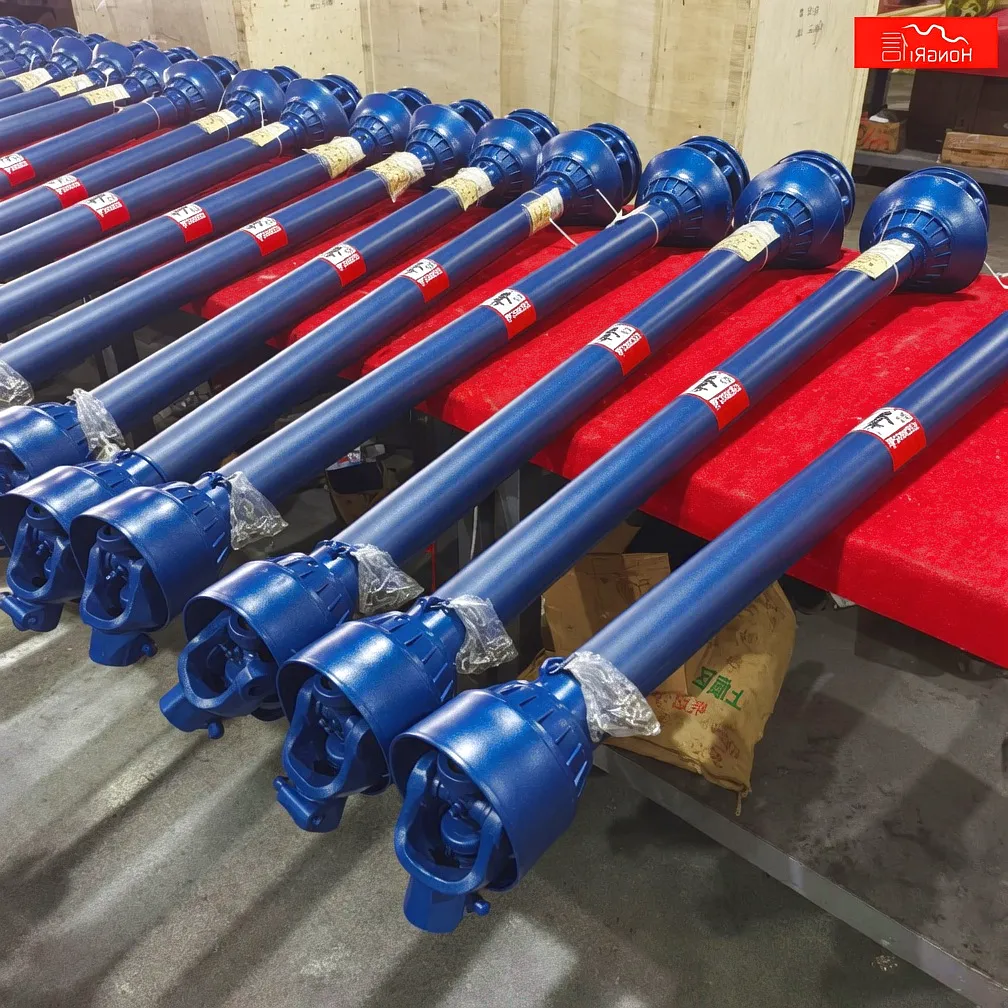
The Ever Power manufacturing facility operates a vertically integrated production process for wind-duty PTO shafts: from forging procurement and heat treatment through to precision turning, grinding, gear-cutting, non-destructive testing, and coating application. This vertical integration eliminates the subcontracting delays that frequently extend lead times at other suppliers, and gives our quality engineering team full control over every critical process parameter. The machine shop includes large-capacity CNC turning centres capable of handling shaft diameters to 600 mm and lengths to 4 metres, supported by cylindrical grinding machines maintaining journal tolerance to ISO grade h5.
Custom specification work is a core competency — not an exception. Wind turbine drivetrain shafts are by nature bespoke components, because every turbine model and gearbox design has its own flange bolt circle, spline module, shaft length, and surface treatment requirement. Our application engineers work from customer drawings, OEM part numbers, or reverse-engineered measurements to produce replacement and new-design shafts that meet or exceed original specification. Application-specific FEA calculations, material selection consultations, and prototype review meetings are all part of the standard project process for complex or high-value orders.
Custom Services Include
✓ OEM drawing-matched replacement shafts | ✓ Reverse-engineered design from physical sample | ✓ Fatigue-life optimised redesigns | ✓ Instrumentation ports & torque-flange integration | ✓ Non-magnetic material grades | ✓ Third-party witnessed inspection (3.2 certificates) | ✓ Expedited delivery programme
Serving the UK Wind Energy Supply Chain
The United Kingdom operates the world’s largest installed offshore wind capacity and ranks among the top five globally for total wind power. Projects spanning Hornsea One and Two (off the Yorkshire coast), Dogger Bank (the world’s largest offshore wind farm, located 130+ kilometres off the Teesside coast), East Anglia ONE, and the expanding ScotWind leasing round represent a multi-decade pipeline of drivetrain component demand. Ever Power has established direct supply relationships with gearbox rebuilders, drivetrain service specialists, and turbine asset managers operating across this geography.
🏴
Scotland & Northern England
Onshore wind hub covering the Scottish Borders, Grampian, Dumfries & Galloway, Cumbria, and the Yorkshire Dales. Retrofit and new-build shaft supply for independently operated wind farms.
🌊
North Sea Offshore Sector
High-torque, marine-grade PTO shafts for offshore array drivetrains. ISO C5-M coating system. Packaging specified to survive CTV and jack-up vessel logistics to offshore installations.
🏭
Gearbox Rebuild Specialists
Trade supply to gearbox repair facilities in Hull, Aberdeen, and the East of England. OEM-matched shaft supply supporting Winergy, Vestas, Siemens Gamesa, and other gearbox platforms.
📚
Engineering Standards Alignment
All PTO shafts produced to IEC 61400-4, BS EN 10083-3, and AGMA 6006 where applicable. Documentation and testing aligned to UK insurance and financial lender requirements for wind energy assets.
Ofte stillede spørgsmål
Ready to Specify Your Wind Turbine PTO Shaft?
Get a Custom Engineering Quote Today
Tell us your turbine model, rated power, and gearbox make. Our application engineers will respond within 24 hours with a technical proposal and competitive pricing — no obligation.
📧 Get a Quote — [email protected]
Ever Power · Industrial PTO Drive Shafts · Serving the UK Wind Energy Sector · edit by gzl